English
 русский
 Español
Content
- 1 What defines a double suction split case pump?
- 2 Performance range and applications of double suction split case pumps
- 3 Material selection: what to specify for your fluid
- 4 Installation, alignment, and maintenance practices
- 5 How to size a double suction split case pump correctly
- 6 Frequently asked questions
At a desalination plant in the Middle East, a process engineer watched a 4,200 m³/h cooling water loop surge by almost 15% on every flow change. The problem was not the motor, and it was not the piping. It was the pump architecture: two single-suction pumps on duty/standby could not deliver the pressure stability the process demanded. The replacement was a double suction split case pump, and the loop returned to within 2% of setpoint within a week. That outcome repeats every year in municipal water intake, power plant cooling, and petrochemical circulation services.
What defines a double suction split case pump?
A double suction split case pump is a centrifugal pump with an axially split casing and an impeller that draws liquid from both sides. Fluid enters through two suction nozzles located on opposite sides of the casing. The flow splits at the impeller eye, passes through the vanes, and exits through a single discharge nozzle in the top half of the case.
The horizontal split is the practical advantage. The upper half of the casing can be lifted off without touching the suction or discharge pipework, and without removing the motor from its baseplate. A maintenance team can inspect the impeller, replace a mechanical seal, or swap out a bearing in a few hours instead of a multi-day teardown.
For the petrochemical process pump category, the S/SH double suction pump at Jiangsu Huanyu Chemical New Materials Co., Ltd. follows this architecture. It is produced in the company's own foundry and machining shops, giving the manufacturer control over wall thickness, impeller balance, and casing alignment from casting to assembly.
The result is a pump family that handles flow rates far beyond the single-stage single-suction range, while keeping NPSH requirements low because the double-eye impeller creates a more uniform entrance velocity.
Performance range and applications of double suction split case pumps
These pumps cover flow rates from roughly 300 to 15,000 m³/h and heads from 15 to 200 m. At the design point, a well-engineered unit reaches 82 to 88 percent efficiency.
Typical services include:
- Municipal drinking water intake and distribution booster stations
- Power plant condenser circulating water pumps
- Large-scale irrigation and flood control systems
- Refinery and petrochemical cooling tower circulation
- Seawater lift and desalination plant intake
The reason these applications favor a split case design is simple: continuous process loops cannot afford a long shutdown. With top-half removal, a rotating element can be accessed without disturbing the foundation or re-aligning the coupling. This is one of the factors that separates a well-planned cooling water station from a maintenance bottleneck.
Material selection: what to specify for your fluid
The fluid chemistry decides the wetted materials. A corrosion allowance that looks reasonable on paper can become an unplanned shutdown in the field when chloride content has been underestimated.
| Fluid type | Recommended wetted materials | Main failure risk |
| Fresh water | Cast iron, ductile iron | General corrosion, erosion |
| Brackish water | Bronze, 304 stainless steel | Chloride pitting |
| Seawater | Duplex 2205, 2507 | Crevice corrosion |
| Dilute acids | 316L, 904L | Uniform corrosion |
| Strong acids, high chlorides | Hastelloy, titanium | Rapid chemical attack |
| Slurry with solid particles | CD4MCu, duplex | Erosion-corrosion |
Jiangsu Huanyu processes 304, 316L, 904, 2205, 2507, CD4, Hastelloy, and titanium alloys in-house. This material range matters because a split case pump is a long-lived asset. You are not buying a pump for one year; you are buying a rotating machine for fifteen years of service. The cost difference between 316L and duplex is small compared with the cost of a single unplanned shutdown.
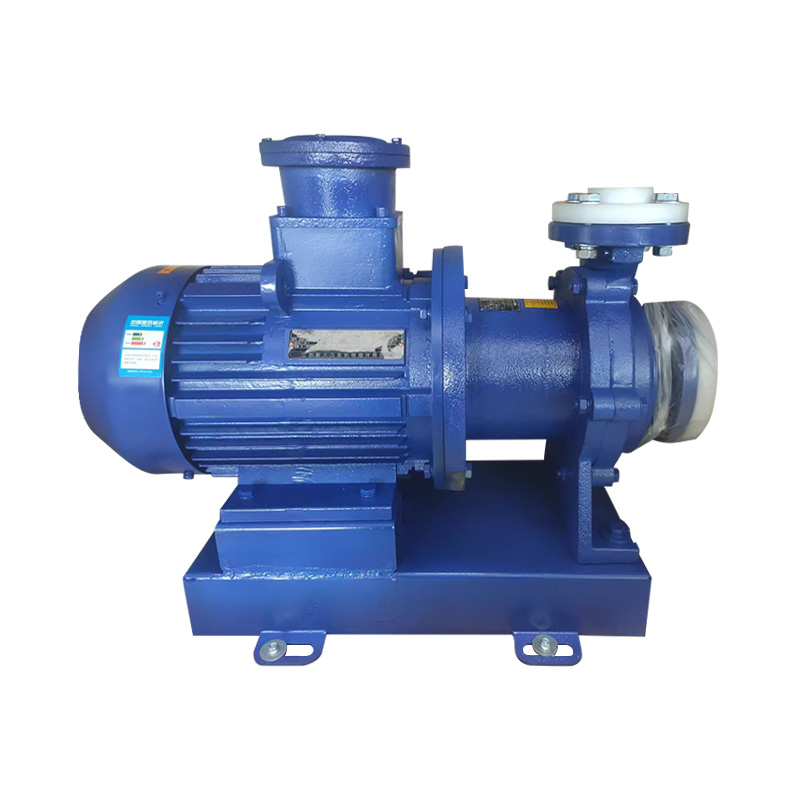
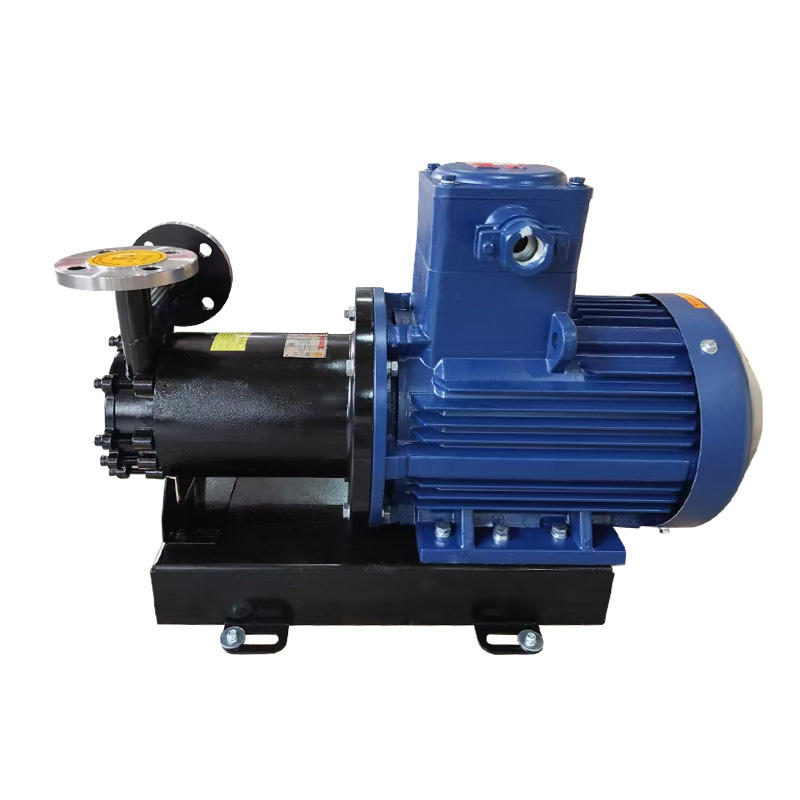
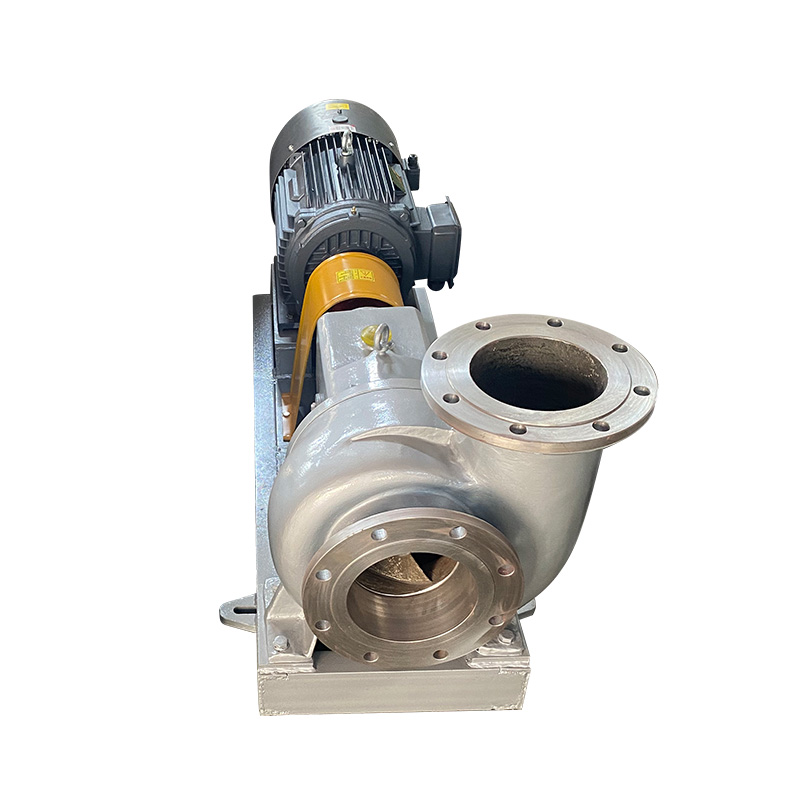
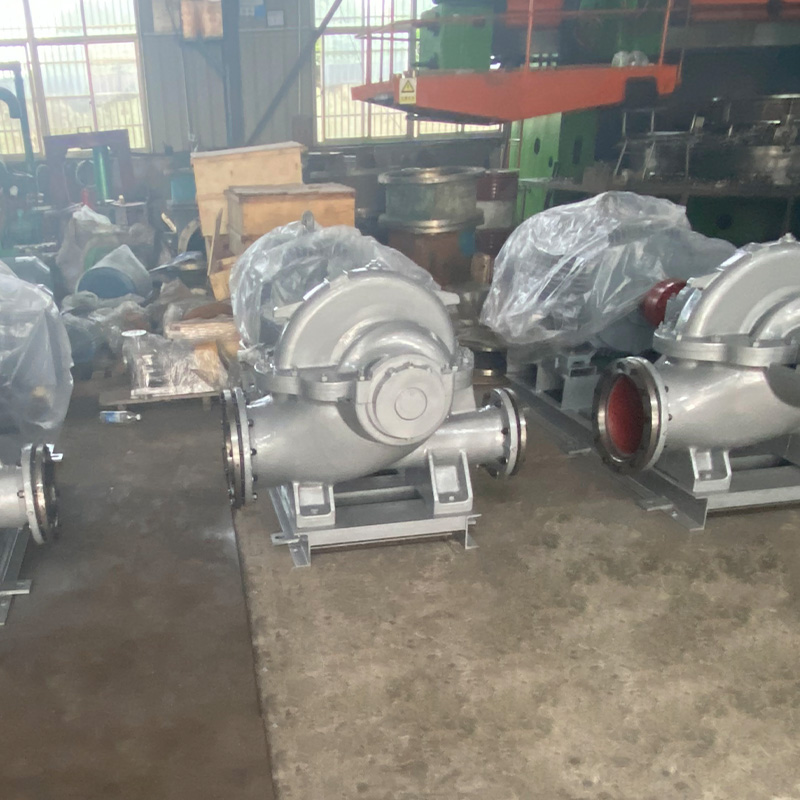 S SH Double Suction Pump with Axially Split CasingThis pump features an axially split casing that allows top-half removal without disturbing pipework, reducing maintenance time. Its in-house processing of various alloys ensures durability for long-term service.View Product →
Installation, alignment, and maintenance practices
The axially split casing is the number one reason maintenance teams prefer this pump in continuous plants. The fact that the top half can be lifted off while the pipework remains in place drives down mean time to repair.
Installation quality determines the actual service life. Shaft alignment between the pump and the motor should be checked with a laser alignment tool at three points: cold, after the first warm-up, and after the first full load run. A misalignment of 0.15 mm at the coupling flanges can raise bearing temperature by 10 to 15 degrees Celsius.
On the foundation side, the concrete block should be sized to absorb vibration. Anchor bolts must be set before grouting, not after. And the alignment must be re-checked after the grout cures.
Gland packing versus mechanical seal
Gland packing
Lower upfront cost. Small, controlled drip of liquid provides lubrication. Requires a cooling water supply for the stuffing box and regular tightening of the gland nuts.
Mechanical seal
Higher upfront cost. No visible leakage. Longer shaft sleeve life and lower friction loss. Requires a clean flush plan when pumping slurries or hot fluids.
For most petrochemical and water services, mechanical seals are the default. For older or less critical water installations, gland packing remains a practical option.
How to size a double suction split case pump correctly
Sizing starts with the system curve, not with the manufacturer's selection table. A pump cannot be chosen on the basis of rated flow alone. The total head at that flow drives the impeller selection, the motor rating, and the NPSH margin.
- Define the design flow rate from the process demand, then add a 10% margin for future capacity.
- Calculate the total dynamic head at the design flow by summing static lift, pipe friction, fittings losses, and control valve margin.
- Check the net positive suction head available at the pump flange and confirm it exceeds the required NPSH by at least 1 m.
- Locate the pump performance curve and identify the impeller sweep that places the design point within 80 to 100% of the best efficiency point.
- Confirm the impeller can be trimmed if the duty point changes, instead of assuming a variable speed drive will solve every mismatch.
- Select the motor with 10 to 15% ratings margin above the maximum absorbed power, accounting for viscosity and impeller wear.
If the system curve is not calculated, the pump will be oversized or undersized. An oversized pump runs on the right side of the curve, with higher vibration and bearing load. An undersized pump stalls in surge. Both scenarios show up as energy bills and maintenance costs.
For a deeper look at the selection process, read this petrochemical pump selection guide.
If you need a performance curve for a specific duty, contact our engineering team with the flow rate, head, fluid, and available NPSH.
Frequently asked questions
What is the difference between a double suction pump and a single suction pump?
A double suction pump routes flow into both sides of the impeller, which nearly balances the axial thrust and doubles the effective eye area. A single suction pump takes flow from one side, generating a net axial thrust that the bearings or a balance mechanism must absorb. For large volumes, double suction is the more stable and efficient choice.
Can a double suction split case pump handle corrosive fluids?
Yes. With wetted parts in 316L, 904L, duplex 2205 or 2507, Hastelloy, or titanium, the split case design handles dilute acids, seawater, and chloride-rich media. The split casing also simplifies material substitution during casting or machining because the internal passages are accessible.
Do I need a special foundation?
No. A concrete block with sufficient mass to damp vibration is the standard requirement. Use anchor bolts, set the unit on steel rails or sole plates, and grout after alignment. Re-check alignment at cold and operating temperature.
What efficiency should I expect at the design point?
Modern double suction split case pumps typically deliver 82 to 88 percent efficiency at the best efficiency point. On a large pump, a 3 percentage point efficiency gain can reduce energy costs by tens of thousands of dollars per year.