English
 русский
 Español
Content
What Is a Chemical Process Pump?
A plant we supplied once lost six process pumps in a single quarter. The common thread was not operator error; it was procurement decisions based on price and flow rate alone, with no formal review of wetted materials or seal environment. The lesson applies to every chemical facility: a chemical process pump is a centrifugal pump engineered for continuous duty in aggressive service — corrosive chemicals, hazardous solvents, hot slurries — and its selection logic is fundamentally different from buying a utility water pump. Choose the right material and sealing arrangement, and the pump can run reliably for years. Miss either one, and no maintenance program will save it.
Chemical process pumps are built to recognized dimensional and design standards. The most common references are ISO 5199, which defines technical requirements for class II centrifugal pumps, and API 610, which governs centrifugal pumps for refinery and severe petrochemical duty. The ISO 2858 family covers the dimensional interchangeability of end-suction centrifugal pumps. Compared with standard industrial pumps, chemical process pumps carry heavier bearing housings, thicker casing walls, impellers designed for low net positive suction head (NPSH), and seal chambers that accept modern single or dual mechanical seals — or a sealless magnetic drive. Back pull-out construction allows the rotating assembly to be removed without disturbing the casing or piping.
Features that separate a chemical process pump from a general-purpose pump include:
- Wetted parts available in 316L, 904L, duplex 2205 and 2507, Hastelloy, titanium, or fluoroplastic linings
- Back pull-out design that shortens maintenance time and preserves piping alignment
- Strengthened shaft and bearing ratings for continuous 24/7 operation
- Compliance paths covering ISO 5199 for chemical duty and API 610 for refinery or high-energy services
Main Types of Chemical Process Pumps
Most chemical process pumps fall into a few construction families. Selection starts with the medium, the sealing requirement, and the installation layout, then moves to hydraulics and efficiency.
Single-Stage Centrifugal Chemical Process Pumps
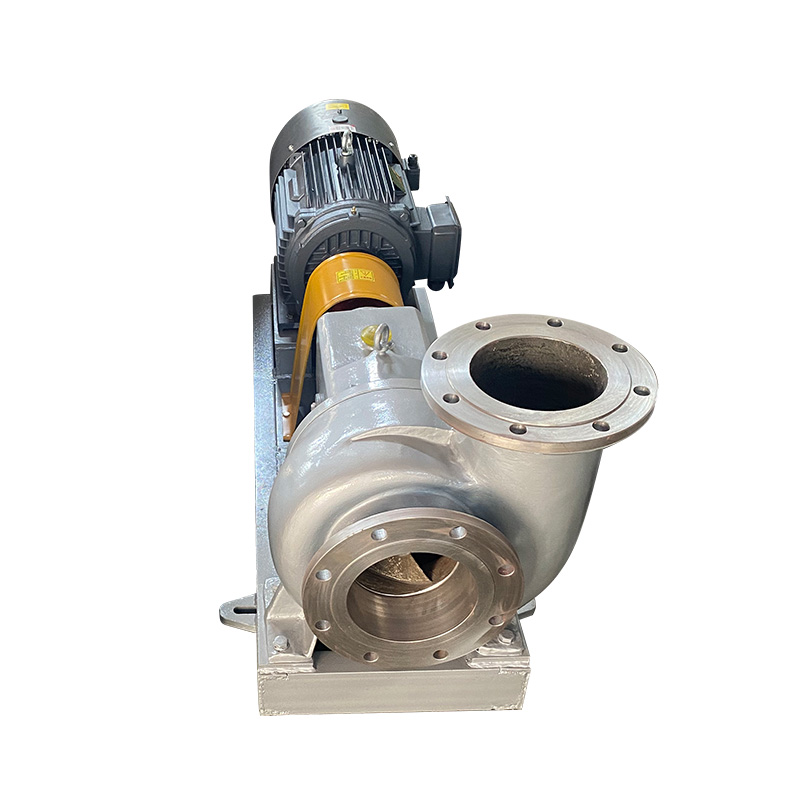
This is the workhorse of the chemical plant. End-suction, single-stage pumps in the ISO 2858 dimensional range handle the bulk of clean or mildly contaminated liquids — acids at moderate concentrations, caustic solutions, solvents, and process water. The IH series chemical process pump is a typical example, available with wetted parts from 304 or 316L stainless through duplex alloys. It covers most flows of a few cubic meters per hour up to several hundred, with heads to roughly 120 meters.
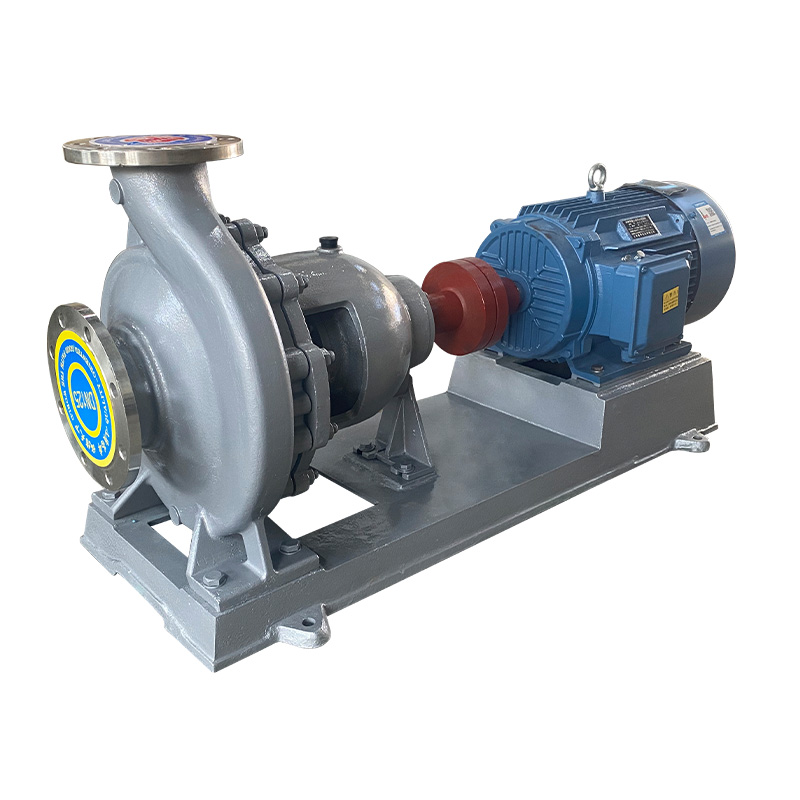 Wholesale IH Suppliers, Manufacturers, CompanyJiangsu Huanyu Chemical New Materials Co., Ltd is China Wholesale IH Supplier, Manufacturers and IH Company, Type IH pump is a single-sta...View Product →
Sealless Magnetic Drive Pumps
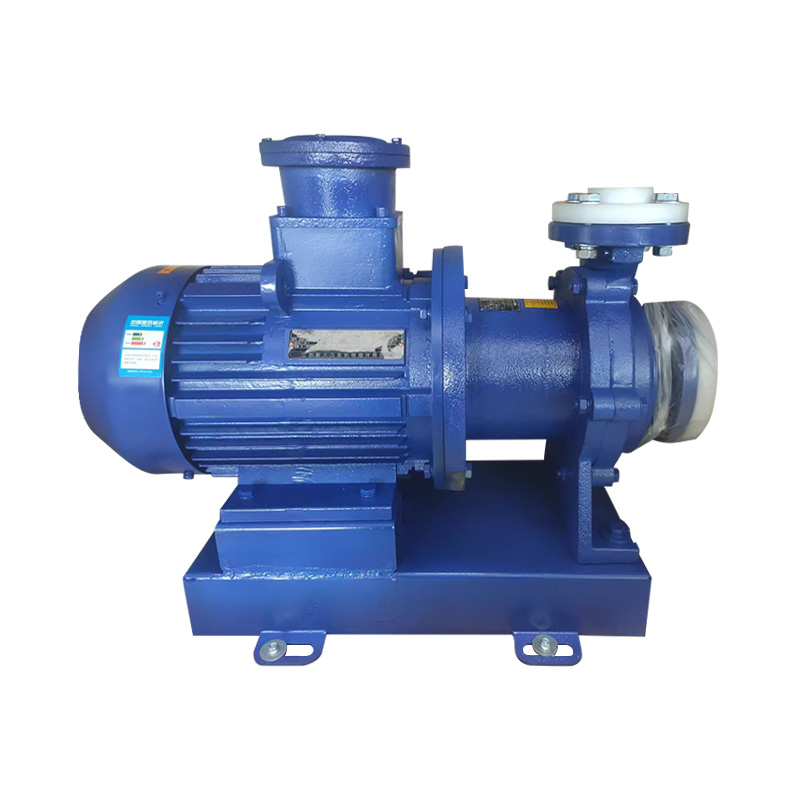
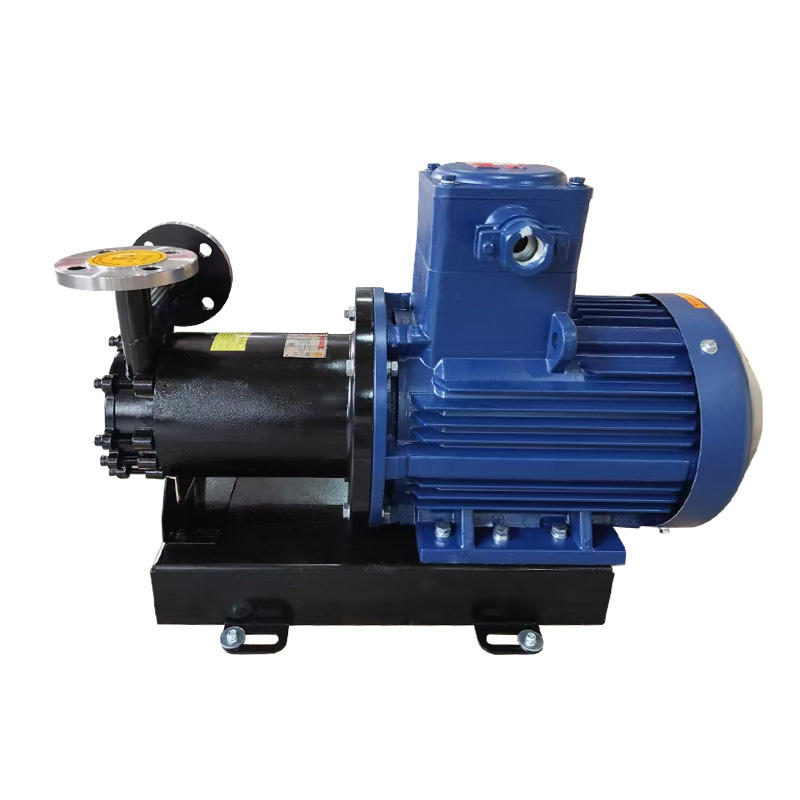
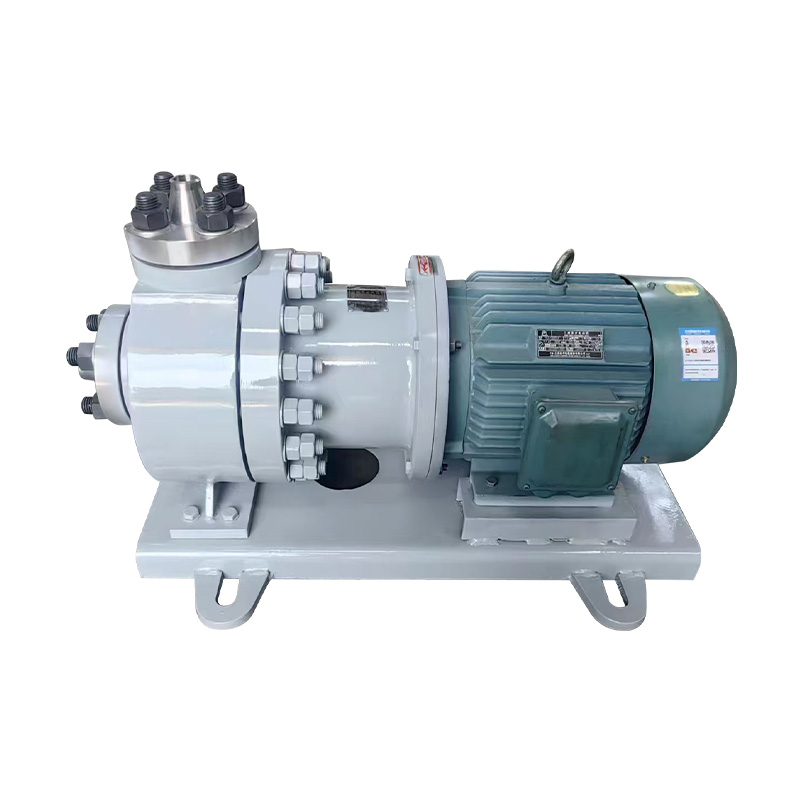
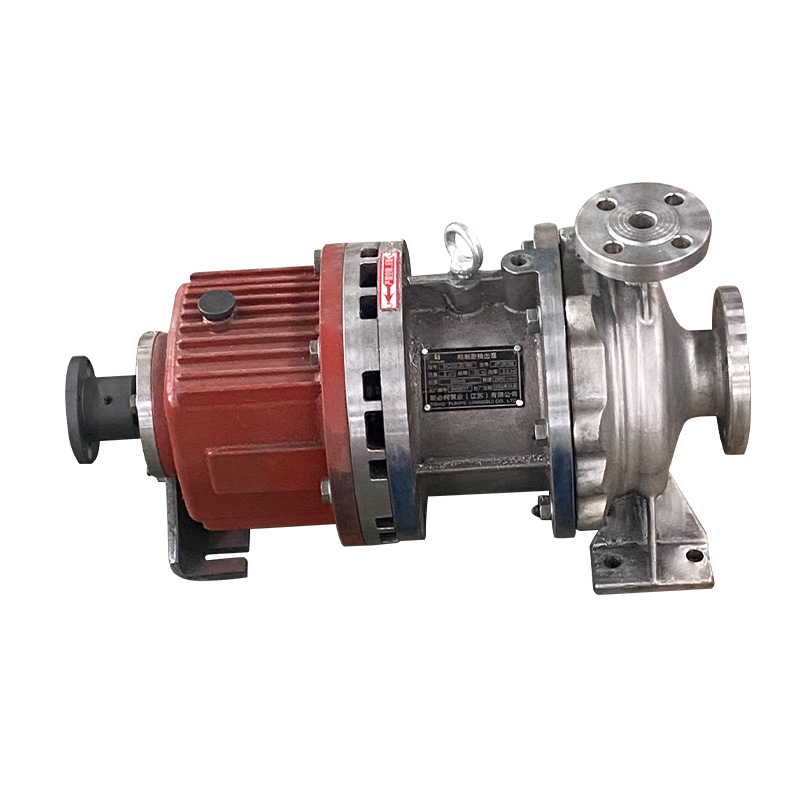
When the fluid is toxic, volatile, expensive, or subject to strict emission limits, a magnetic drive pump removes the dynamic seal completely. Torque passes from the motor to the impeller through a containment shell, so there is no rotating shaft penetration and therefore no conventional leak path. This group is as much a containment strategy as a pump type, and its selection logic is discussed further in the sealing section.
Fluoroplastic-Lined Pumps
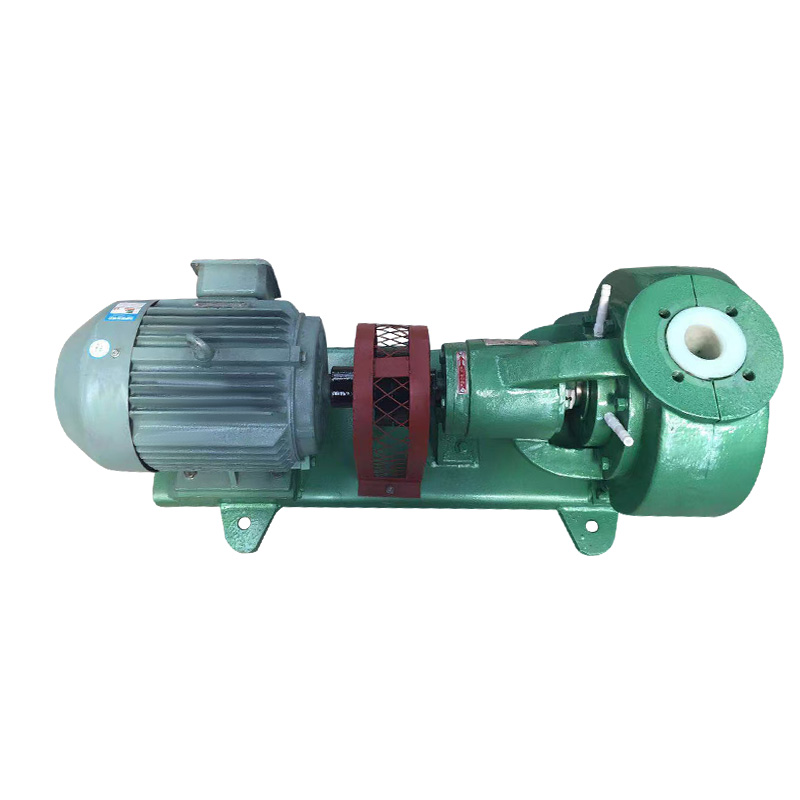
For strong mineral acids — hydrochloric acid, sulfuric acid over a wide concentration range, mixed acids, sodium hypochlorite — fluoroplastic-lined pumps are often the most economical solution. A metal casing carries the pressure while a PTFE or PFA lining provides corrosion resistance. These pumps cover duties where stainless steel corrodes too quickly and solid alloy construction becomes prohibitively expensive.
Self-Priming and Vertical Liquid Pumps
Tank unloading, sump drainage, and low-NPSH installations need self-priming or vertical configurations. Self-priming pumps clear entrained air without a foot valve; vertical pumps lower the suction element below the liquid surface. Both families are available in stainless steel or fluoroplastic-lined versions for corrosive service.
| Pump family | Typical service | Sealing approach | Representative materials |
|---|---|---|---|
| Standard centrifugal (IH, CZ, ZA) | Clean or mildly contaminated chemicals | Single or dual mechanical seal | 316L, 904L, duplex alloys |
| Magnetic drive (CQB, IMC) | Toxic, volatile, leak-critical fluids | Sealless containment shell | Stainless, Hastelloy, high alloys |
| Fluoroplastic-lined (IHF, FSB) | Strong acids and oxidizing media | Mechanical seal or sealless | PTFE/PFA-lined metal casing |
| Vertical and self-priming (FY, WFB, ZXB) | Sump, pit, tank, low-NPSH duty | Mechanical seal | Stainless or fluoroplastic-lined |
Wetted Materials: Where Most Selection Errors Happen
In chemical service, the wetted material determines pump life more than any other single factor. Compatibility is concentration- and temperature-dependent. Type 316L stainless steel handles dilute nitric acid well but pits in chloride-bearing media; 304 is unsuitable for hydrochloric acid at almost any concentration; Hastelloy C-276 survives both oxidizing and reducing conditions; and titanium, excellent for wet chlorine and hypochlorite, can ignite in fuming nitric acid under impact. Always evaluate corrosion data at the actual operating concentration and temperature instead of relying on a generic chemical name.
| Material | Typical service | Main limitations |
|---|---|---|
| 304 / 316L stainless | Neutral brines, dilute acids, organic solvents | Chloride pitting, hot concentrated acids |
| 904L stainless | Sulfuric acid at moderate concentrations, chloride-bearing streams | Cost; not for very hot strong acids |
| Duplex 2205 / 2507 | Chloride environments, seawater, stress-corrosion resistance | Welding and heat treatment require strict control |
| Hastelloy C-276 | Severe mixed acids, oxidizing and reducing media | High cost; longer lead times |
| Titanium | Wet chlorine, hypochlorite, seawater | Reaction with fuming nitric acid; cost |
| PTFE / PFA lining | Hydrochloric acid, hot mixed acids | Pressure and temperature limits; permeation risk |
For strong acids such as hydrochloric acid and hot sulfuric mixtures, a lined pump is frequently the most economical route: the metal casing carries the pressure while the lining does the corrosion work. The IHF fluoroplastic-lined pump is a common specification in this duty class. Confirm the lining temperature rating and the manufacturer's permeation data before finalizing the specification, because lining failures are usually caused by operation beyond the intended pressure-temperature envelope.
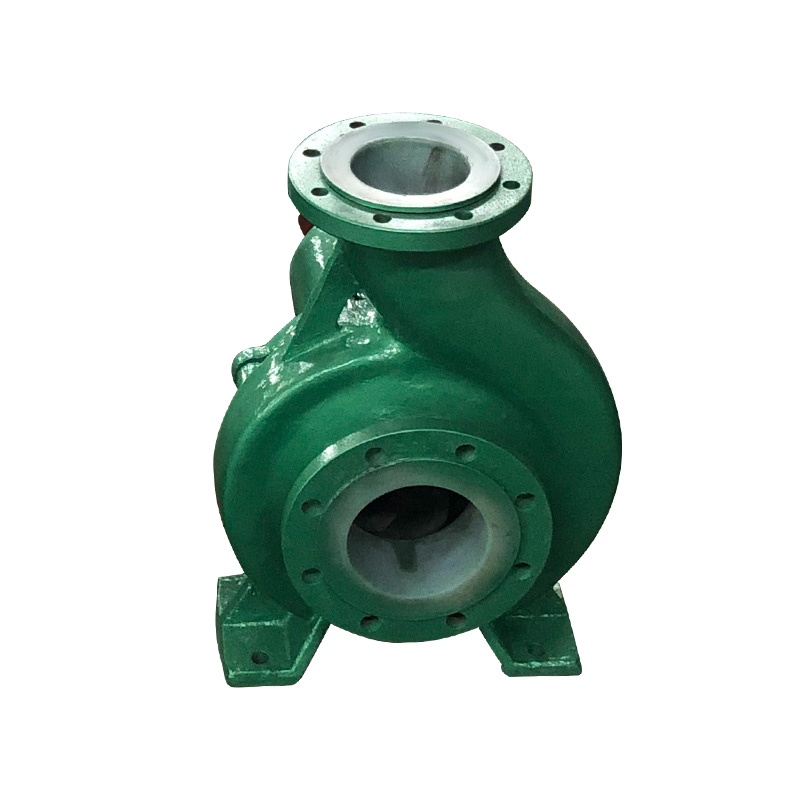 Wholesale IHF Fluorine Lined Pump Suppliers, Manufacturers, CompanyJiangsu Huanyu Chemical New Materials Co., Ltd is China Wholesale IHF Fluorine Lined Pump Supplier, Manufacturers and IHF Fluorine Lined ...View Product →
Sealing and Containment: The Leak-Free Decision
The shaft seal is the most frequent source of leakage and maintenance in chemical pumping. Two strategies exist: manage the seal or eliminate it.
Mechanical Seal Systems
A single mechanical seal handles the majority of chemical duties. Dual seals, arranged in tandem or back-to-back with a barrier fluid, are specified for toxic, flammable, or polymerizing media. Piping plans such as API 682 Plan 11, 13, and 53 control flush flow, quench, and barrier-fluid pressure so the seal faces always see a clean, stable film. Seal-chamber design matters as much as the seal itself: adequate pressure, temperature control, and the right flush rate prevent dry running, flashing, and crystallization.
Sealless Magnetic Drive Pumps
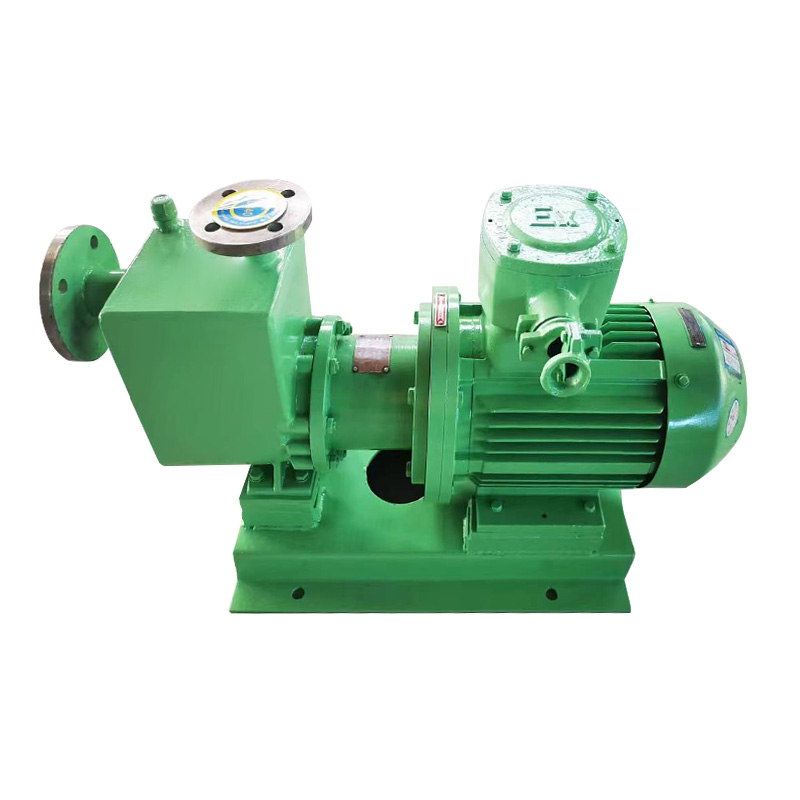
A magnetic drive pump replaces the dynamic seal with a static containment shell. With no rotating shaft penetration, fugitive emissions are limited to the containment-shell gasket, and seal-related maintenance largely disappears. That is why plants handling volatile organic compounds and highly toxic chemicals increasingly specify sealless units; the operational logic is explained in our review of why chemical process pumps improve production safety. The CQB magnetic drive pump is a widely used example, offered in stainless and high-alloy versions for leak-free transfer of hazardous chemicals. The trade-off: magnetic pumps must not run dry, need media free of ferromagnetic particles, and require careful NPSH management because the coupling adds heat to the fluid.
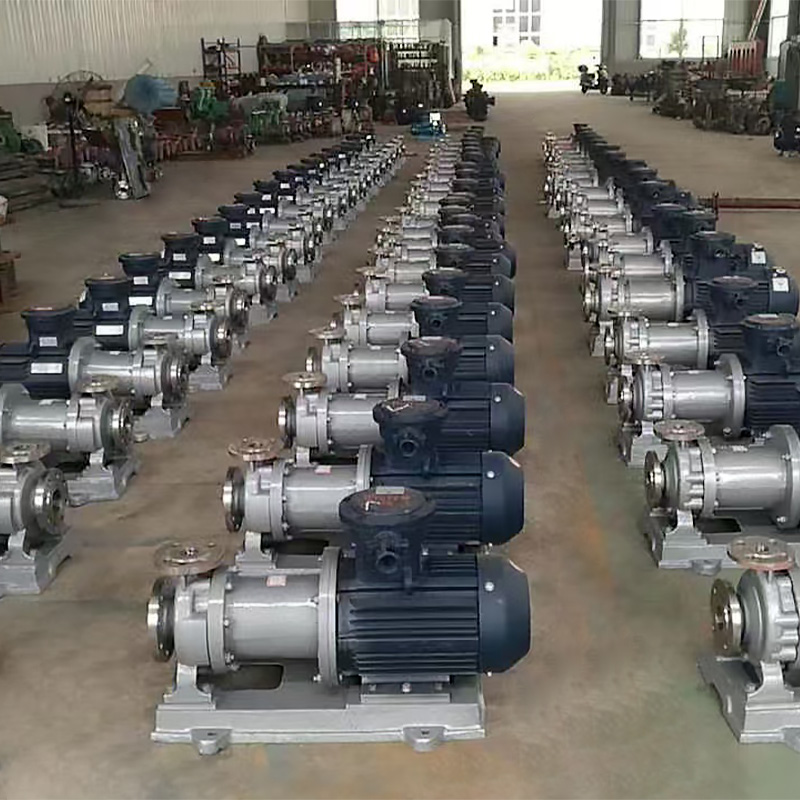 Wholesale CQB Ordinary Magnetic Pump Suppliers, Manufacturers, CompanyJiangsu Huanyu Chemical New Materials Co., Ltd is China Wholesale CQB Ordinary Magnetic Pump Supplier, Manufacturers and CQB Ordinary Mag...View Product →
How to Size and Select a Chemical Process Pump
Selection is a sequence, not a single calculation. Define the process data first, then the material, then the seal, and only then the hydraulics. Two pumps with the same flow and head can behave very differently once the chemistry is considered.
- Define the fluid composition: exact chemical species, concentration, temperature, density, viscosity, vapor pressure, and solids content with particle size.
- Establish the duty envelope: normal flow, maximum and minimum flow, required head, and the NPSH available in the piping system.
- Screen wetted materials against corrosion data at the actual concentration and temperature, and set a corrosion allowance for known attack rates.
- Choose the sealing concept: single seal, dual seal, or sealless magnetic drive.
- Apply the correct design standard: ISO 5199 for general chemical duty, API 610 for refinery, high-energy, high-temperature, or high-consequence services.
- Require vendor performance data: pump curves, NPSH required, allowable operating region, and hydrostatic or performance test certificates.
Work through this procedure before any price comparison whenever the duty is severe. A structured approach prevents the most common field failures — wrong alloy, undersized seal, inadequate NPSH margin, or operation far outside the preferred operating region. For a more detailed walk-through, our step-by-step petrochemical process pump selection guide applies the same method with refinery examples.
Sourcing With Confidence: What to Verify Before You Order
Once the specification is complete, the supplier's manufacturing depth becomes the governing factor. An integrated plant that performs its own casting, non-metallic pressing, machining, and assembly can control material traceability, respond faster to design changes, and compress lead times. An assembly-only shop cannot offer the same control over castings, heat treatment, and dimensional consistency. That is why Jiangsu Huanyu, which has manufactured chemical pumps since 1987 and now offers more than 300 specifications across ten pump series, keeps the entire chain under one roof and exports to markets including Malaysia, Russia, Thailand, and Tanzania.
Before placing an order, confirm that the manufacturer can deliver:
- Mill certificates and material traceability for every wetted component
- Dimensional inspection reports and rotor balancing records in line with ISO 1940
- Hydrostatic and performance test data for the actual pump, not a generic curve
- Documented spare-parts availability and a defined maintenance procedure for seals and bearings
These checks matter most when pumps are procured from overseas. Practical guidance on inspection, testing, and documentation is available in our article on sourcing reliable petrochemical process pumps from China.
The Bottom Line
A chemical process pump is an engineered asset, not a commodity. Its service life is decided by the chemistry of the fluid, the sealing strategy, and the manufacturing quality behind the casting. Define the process data first, choose the wetted material and seal before the shaft diameter, and buy from a manufacturer that can prove material control and testing depth. Do that consistently, and the pump moving your corrosive or hazardous fluid will remain a quiet, reliable part of the plant for years.