English
 русский
 Español
Content
A process engineer at a chlor-alkali plant has just specified a 316L single-stage pump for 30% hydrochloric acid at 85 C. By week six, the impeller is pitted, the mechanical seal is weeping, and the unit is pulled from service. The mistake was not choosing a centrifugal pump. The mistake was choosing the wrong one from the list of centrifugal pump types.
Centrifugal pump types classify pumps by hydraulic design, impeller geometry, material of construction, and sealing method. They determine how a pump handles head, flow, corrosiveness, solids, and leakage risk. In a review of 1,400 process pump failures in chemical plants, 71% were traced to selection errors rather than manufacturing defects.
The result is not just a failed pump. It is unplanned downtime, disposal of corrosive media, and a new purchase cycle that costs more than the original. This guide decodes the main classes, the material and impeller trade-offs, and the purchase factors that affect total cost over a pump's life.
Centrifugal Pump Types by Hydraulic Design
The hydraulic classification is the first decision, and it is driven by the head and flow you need, not by the media. If you know the design duty point, you can narrow the field immediately.
A single-stage pump moves fluid through one impeller; a multistage pump stacks impellers in series to multiply head. Radial-flow pumps are the standard chemical workhorse, mixed-flow pumps sit between radial and axial, and axial-flow pumps move large volumes at low head. The practical takeaway: for high head, multistage; for high flow and low head, mixed flow or axial; for typical process duty, single-stage radial.
| Pump Type | Typical Head | Flow Range | Best For |
| Single-stage radial | 5 to 125 m | 5 to 4000 m3/h | Chemical transfer, general process |
| Multistage | 50 to 600 m | 10 to 500 m3/h | Boiler feed, high-pressure injection |
| Mixed flow | 3 to 30 m | 100 to 8000 m3/h | Circulation, irrigation, cooling |
| Axial flow | 1 to 12 m | 200 to 15000 m3/h | Flood control, large water movement |
Material Selection in Centrifugal Pump Types
Material is the decision that separates a six-month pump from a six-year pump in chemical service. The same hydraulic design can survive years in dilute caustic and fail in weeks in hydrochloric acid, depending on the wetted parts.
Stainless steel grades such as 304 and 316L handle mild oxidizing media. Duplex grades such as 2205 and super duplex 2507 improve chloride resistance. Nickel-based alloys such as Hastelloy C276 and titanium are specified when media are highly reducing or where trace contamination cannot be tolerated. For aggressive acids that attack metal alloys, a fluoroplastic-lined pump is often the most economical solution.
| Material | Acid Resistance | Chloride Limit | Temperature | Typical Service |
| 316L | Good (oxidizing) | Under 200 ppm | Up to 120 C | Dilute acids, water |
| 2205 duplex | Excellent | Up to 1000 ppm | Up to 150 C | Brine, seawater, chlorides |
| CD4MCu | Excellent | High | Up to 140 C | Sulfuric acid |
| Hastelloy C276 | Excellent (reducing) | Very high | Up to 200 C | Mixed acid, hydrochloric acid |
In practice, process engineers request a corrosion test coupon before finalizing the alloy, because a chart can never replace a test in the actual fluid at the actual concentration.
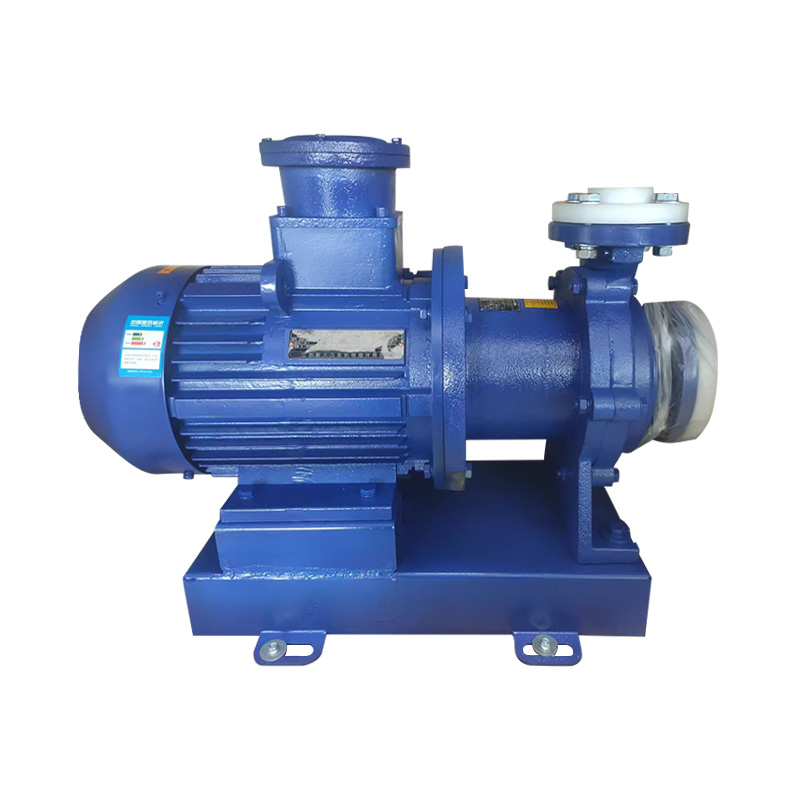
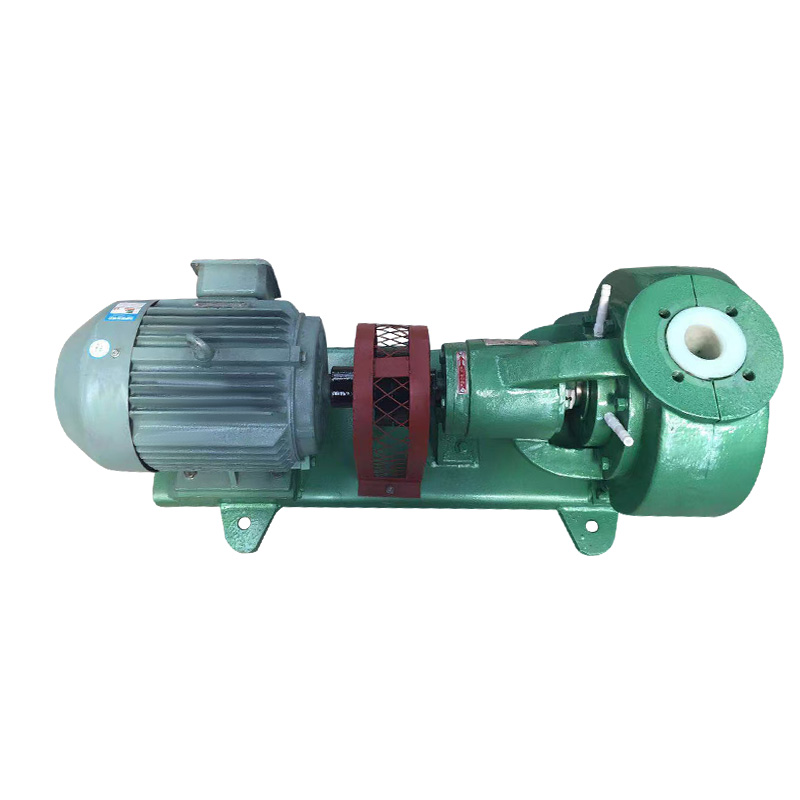
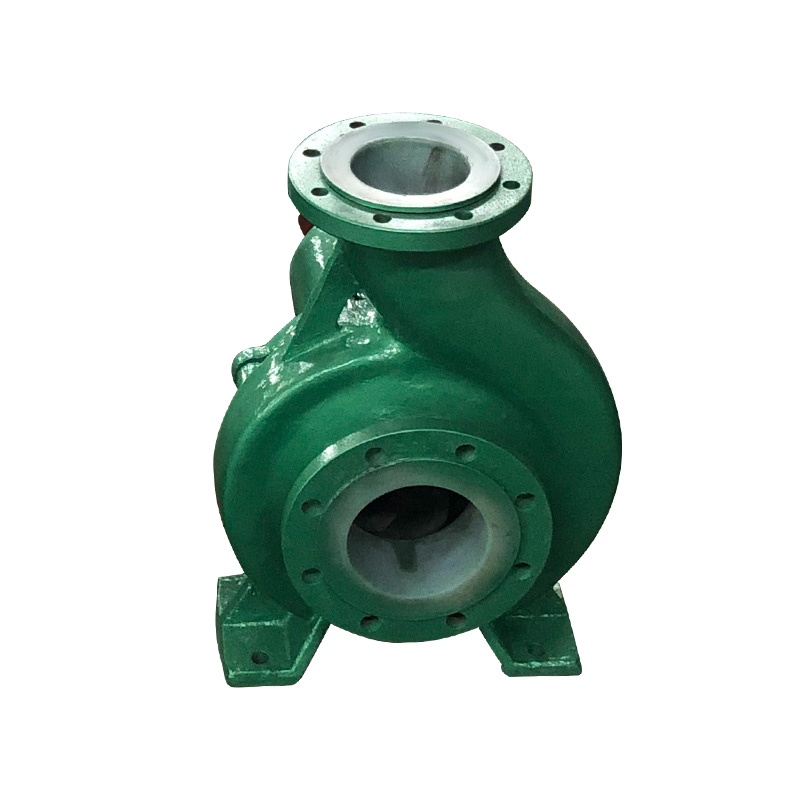 Fluorine-Lined Pump for Corrosive Chemical ServiceThis pump is designed for handling corrosive fluids, and its material selection is critical. The surrounding text emphasizes the importance of corrosion testing to validate alloy choice, making this pump relevant for engineers seeking reliable corrosion-resistant equipment.View Product →
Impeller Geometry in Centrifugal Pump Types
Impeller geometry changes the shape of the pump curve, not just the efficiency number. The same casing can behave completely differently with a closed, semi-open, or open impeller.
A closed impeller has vanes enclosed between two shrouds, giving the highest efficiency and the smoothest flow. An open impeller has no front shroud, which lets suspended solids pass through but reduces efficiency and increases wear. A semi-open impeller balances the two, offering modest solids tolerance with better efficiency than an open design.
Closed impeller
Peak efficiency, low recirculation, best for clean media. Not suitable for fibrous or abrasive slurries.
Open impeller
Handles solids and viscous media, but efficiency drops 10 to 15 points and wear is faster.
When a process has variable solids content, a semi-open impeller and a trimmed vane are the practical compromise. The efficiency loss is acceptable because the pump keeps running.
Illustration of typical peak efficiency differences between pump constructions.
Sealing and Drive Options: Where Leakage Risk Is Decided
Sealing choice is a leakage-risk decision. The safest way to eliminate leakage is to remove the mechanical seal and the dynamic shaft opening altogether.
A magnetic drive pump couples the impeller to the motor through a magnetic field, with a containment shell isolating the pumped fluid. This design is ideal for toxic, flammable, or environmentally sensitive media. A fluoroplastic-lined pump solves the corrosion side of the problem by putting an inert liner between the metal casing and the aggressive fluid.
- Single mechanical seal: lowest cost, adequate for benign media
- Double mechanical seal: required for hazardous gasses and emissions control
- Magnetic drive: zero dynamic seal, eliminates the most common leak point
- Fluoroplastic lining: solves corrosion without moving to exotic alloys
Jiangsu Huanyu Chemical New Materials Co., Ltd. produces both magnetic drive and fluoroplastic series from a single foundry, which shortens lead times for standard models. The containment shell also adds a secondary barrier against leaks, which is why magnetic drive pumps are common in petrochemical plants with strict environmental permits.
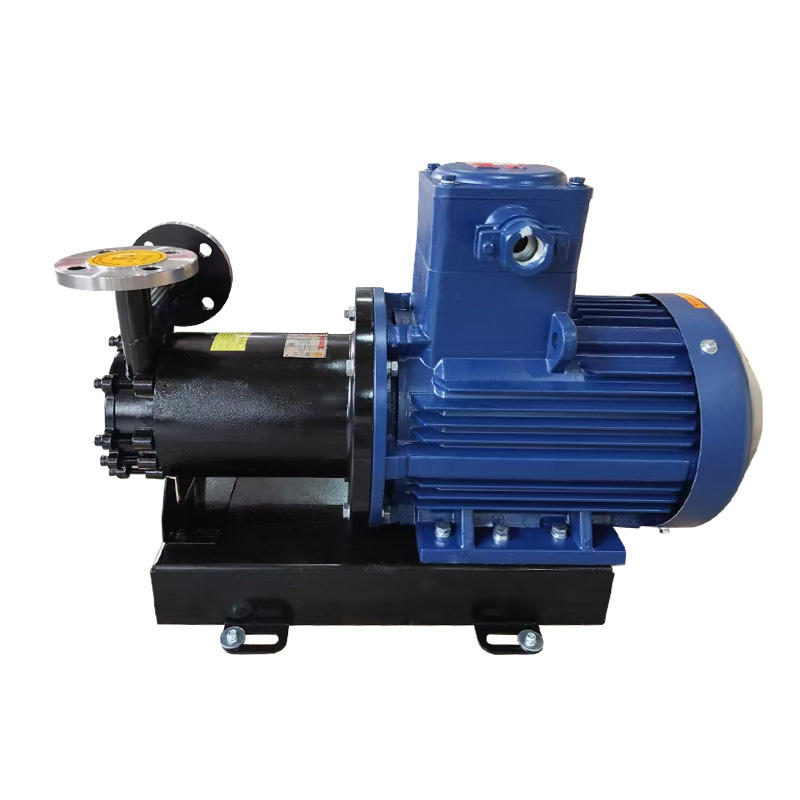
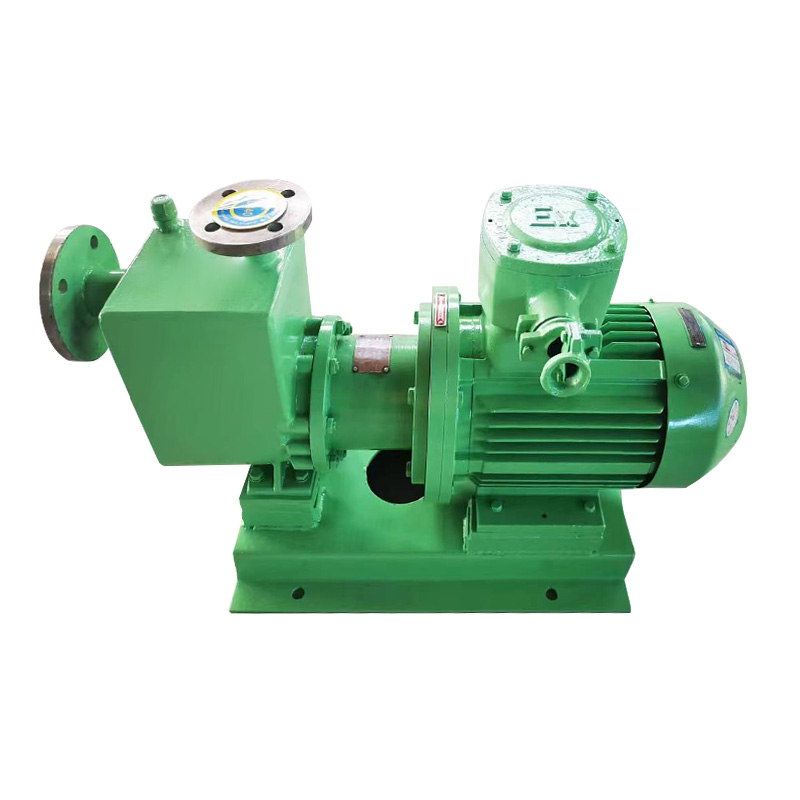
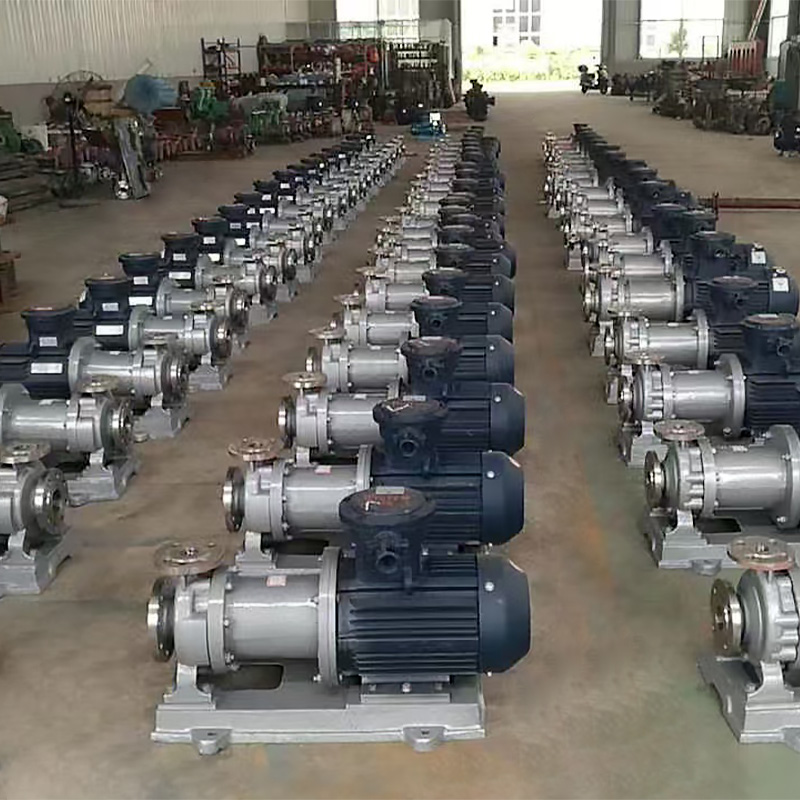 Magnetic Drive Centrifugal Pump with Leak-Free DesignThe CQB series magnetic pump offers a completely leak-free operation by using a magnetic coupling, which eliminates dynamic seals. This makes it suitable for hazardous or valuable liquids, and its shared parts across models help reduce maintenance costs and downtime.View Product →
Matching Pump Type to Duty: Purchase Risks to Check
Cheapest quote is rarely the lowest total cost. The maintenance and downtime cost of a mismatched pump usually exceeds the initial purchase price difference within the first year.
Two risks dominate. First, oversizing: a pump running at 60% of its best efficiency point wastes energy, increases vibration, and shortens seal life. Second, ignoring NPSH: if available NPSH is below required NPSH, the pump cavitates, and the impeller erodes quickly. Check the impeller trim, the viscosity correction, and the availability of spare parts before you approve a quote.
Installation context also drives the choice. For tank farms, sumps, or low-level basins, a vertical submersible pump avoids priming problems and keeps the motor above the liquid. For pumps at grade level, an end-suction horizontal pump is the standard.
- Define the operating range, not just the design point
- Confirm material compatibility with a corrosion engineer
- Verify NPSH margin at the worst-case temperature
- Ask for a performance test report before shipment
Spare parts availability is a third risk. If the pump uses a non-standard casing or an obsolete impeller, replacement parts can take months. Choose a manufacturer whose series shares common parts across models.
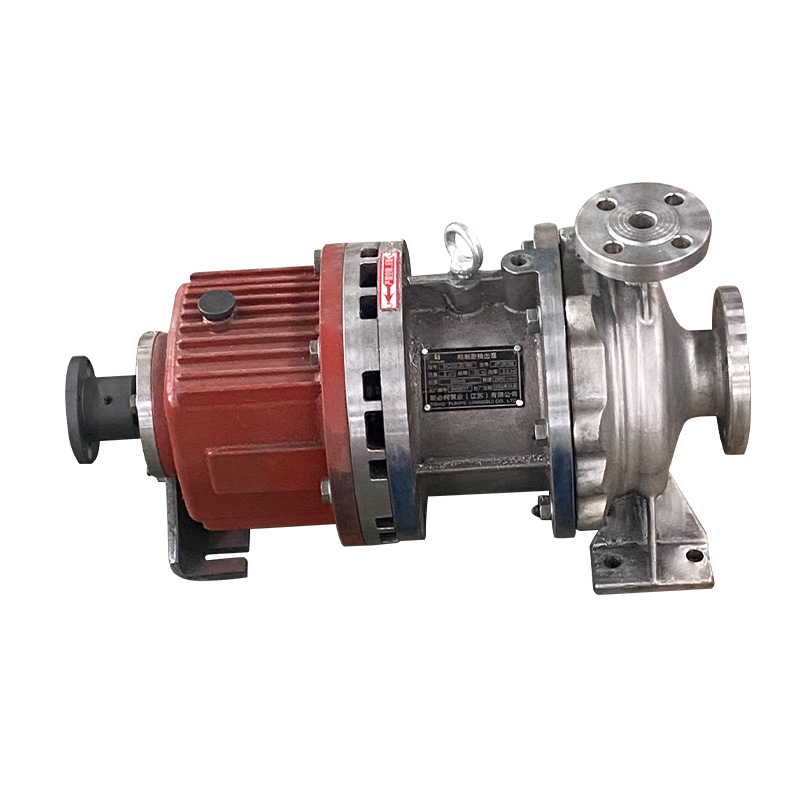
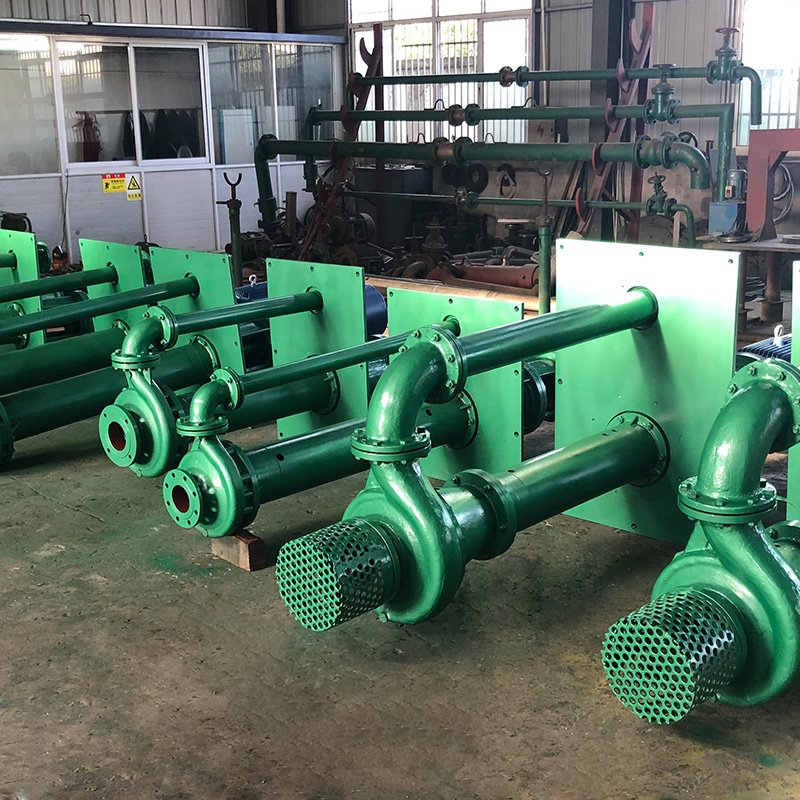 Vertical Submersible Pump for Corrosive LiquidsThis vertical submersible pump is designed for corrosive media, with options for various materials and temperature ranges. Its long-shaft design and compliance with international standards ensure reliability, making it a practical choice when spare parts availability and specification details matter.View Product →
If you are in the specification stage, contact our engineering team with your media, temperature, and flow data for a recommendation that includes material and impeller selection.
Frequently Asked Questions
What are the main centrifugal pump types?
The main types are single-stage, multistage, axial flow, mixed flow, and special construction such as magnetic drive or fluoroplastic-lined. The correct type depends on head, flow, media, and installation.
How do I choose between a fluoroplastic pump and a magnetic drive pump?
Choose fluoroplastic when corrosion is the dominant problem and the media are aggressive acids. Choose magnetic drive when leakage prevention and product safety are the priority, and the media are compatible with stainless steel or an alloy body.
What is the difference between open and closed impellers?
Closed impellers have vanes between two shrouds and deliver higher efficiency for clean liquids. Open impellers have no front shroud, handling solids better but losing 10 to 15 points of efficiency.
Do I need a vertical or horizontal centrifugal pump?
Use vertical pumps when the liquid source is below grade, when floor space is tight, or when priming is a problem. Use horizontal end-suction pumps for most process-duty applications at grade level.