English
 русский
 Español
Content
What a Radially Split Centrifugal Pump Is
A radially split centrifugal pump is a pump whose casing divides on a plane perpendicular to the shaft axis, so the casing closes around the impeller as a cylinder with an end cover instead of opening along the rotor centreline.
The arrangement changes what the pressure boundary looks like. In a single-stage overhung pump it is usually a back pull-out cartridge, where bearing frame, seal chamber and impeller withdraw as one unit while the suction and discharge nozzles stay piped. In multistage machines the same idea is pushed further: ring-section casings stack stage bowls and clamp them with tie bolts, and barrel casings enclose the whole rotor bundle inside a cast or forged cylinder with one main joint.
API 610, the refinery pump standard now in its 11th edition, assigns these machines type codes. OH2, BB2, BB4 and BB5 are radially split; BB1 and BB3 are axially split. The casing, testing and documentation requirements behind those codes are set out in this review of API 610 process pump compliance for refinery projects.
Why High-Pressure Duty Favors the Radial Split
A radially split casing keeps every pressure boundary joint circular and short, which is why barrel and ring-section pumps built this way are specified for refinery duties up to roughly 250 bar.
A bolted circular joint is predictable. Bolt load, gasket compression and flange rotation can be calculated, and a round face stays round when the casing heats faster than the rotor. An axially split casing has to seal along a seam that runs the full length of the pump, across the suction chamber and past every stage bowl. The longer that seam, the heavier the bolting and the more it distorts during a thermal transient.
The trade-off is access. A radially split casing cannot be opened in place. On a barrel pump the cartridge bundle leaves only after the discharge piping, coupling and usually the seal support system are removed, and the main joint must be re-made to a controlled torque sequence. Buyers who compare only the pump price miss that labour line entirely.
Radially Split vs Axially Split: Where Each Casing Wins
Below about 40 bar an axially split casing usually wins on maintenance time; above roughly 60 bar the radially split casing is the lower-risk pressure boundary and the longer overhaul is accepted.
| Criterion | Radially split | Axially split |
| Split plane | Perpendicular to the shaft axis | Parallel to the shaft, through the rotor centreline |
| API 610 types | OH2, BB2, BB4, BB5 | BB1, BB3 |
| Indicative pressure ceiling | 40 to 250 bar depending on type | 20 to 40 bar |
| Rotor removal | Bundle withdrawn after piping is broken | Top half lifted with piping connected |
| Seal access | Seal and bearing frame pulled as a cartridge | Direct access from above |
| Typical services | Hydrotreating, hydrocracking, boiler feed, injection | Cooling water, crude transfer, general process |
Two application patterns follow. Refinery hydroprocessing, boiler feed and injection service sit in the radially split column, because a gasket seam running the length of a hot casing is a leak path with no good answer at 100 bar. Cooling water, crude transfer and general chemical transfer at moderate pressure sit in the axially split column, where lifting the top half with the piping connected saves a full shift of work.
Radial split is the right call when
- Maximum allowable casing pressure exceeds 60 bar
- The fluid is a light hydrocarbon, hydrogen-rich stream or hot oil
- One main joint is easier to inspect and certify than a long seam
Axial split stays the better call when
- The duty sits below 40 bar and turnaround hours matter
- The rotor must come out without breaking nozzle piping
- The process permits a horizontal joint with a confined gasket
Three Design Details That Decide Reliability
Three details decide whether a radially split pump reaches a 20-year design life: joint register fit, thrust balance across the rotor, and the seal chamber environment.
Casing joints and gasket control
A spiral-wound 316L and graphite gasket on a properly registered joint holds for years. The same gasket on faces scratched during a bundle change will not. Two habits matter: torque the main joint in the sequence stamped on the casing, and check joint face flatness at every overhaul instead of waiting for a visible weep.
Rotor, bearings and thrust balance
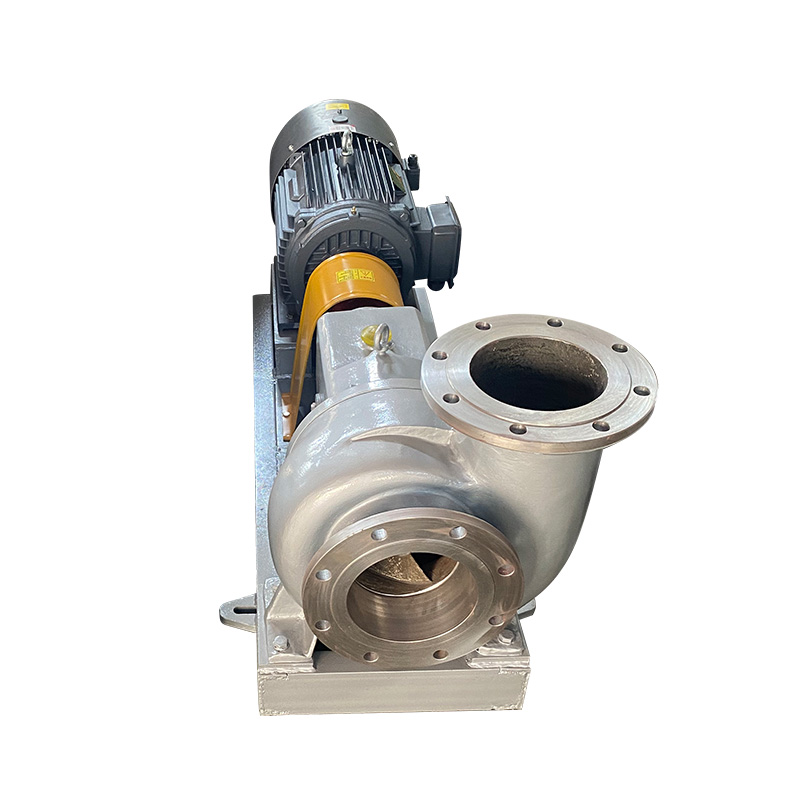
Multistage radially split pumps carry axial load on a balance drum or balance disk, with the thrust bearing as the final restraint. Wear rings and throat bushings set the internal clearances that hold head and efficiency; a fraction of a millimetre lost at each stage shows up as reduced head and higher power draw at the same flow. For single-stage duty the back pull-out layout keeps that work simple, and a standard process pump such as the CZ series can be serviced without disturbing the nozzle piping.
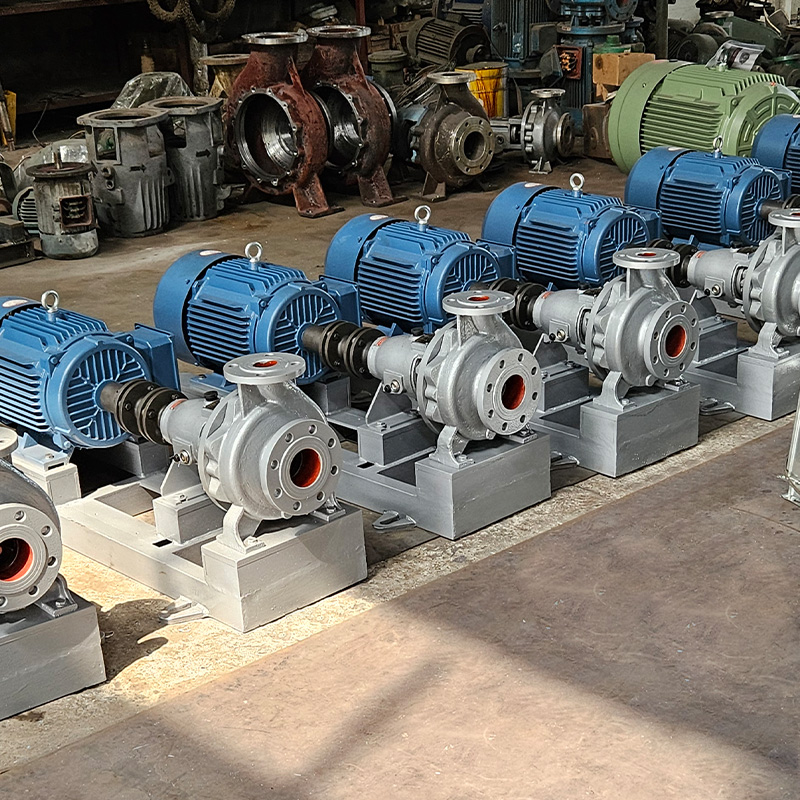 CZ Series Standard Chemical Process PumpSingle-stage back pull-out pump conforming to DIN 24256/ISO 2858, suited to chemical and petrochemical duties with flows up to 2000 m3/h.View Product →
Seal chamber and leak path
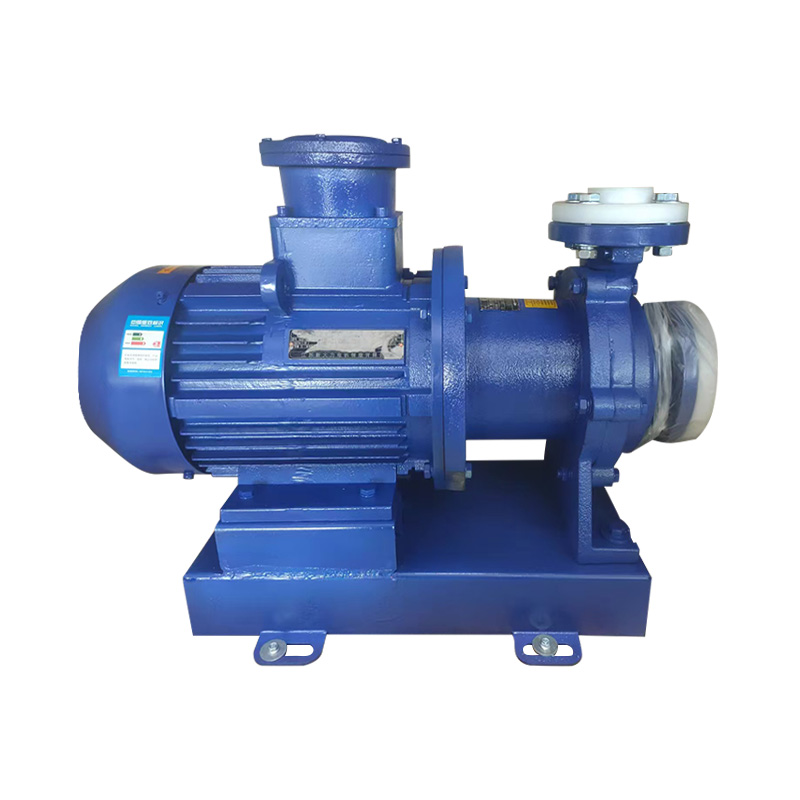
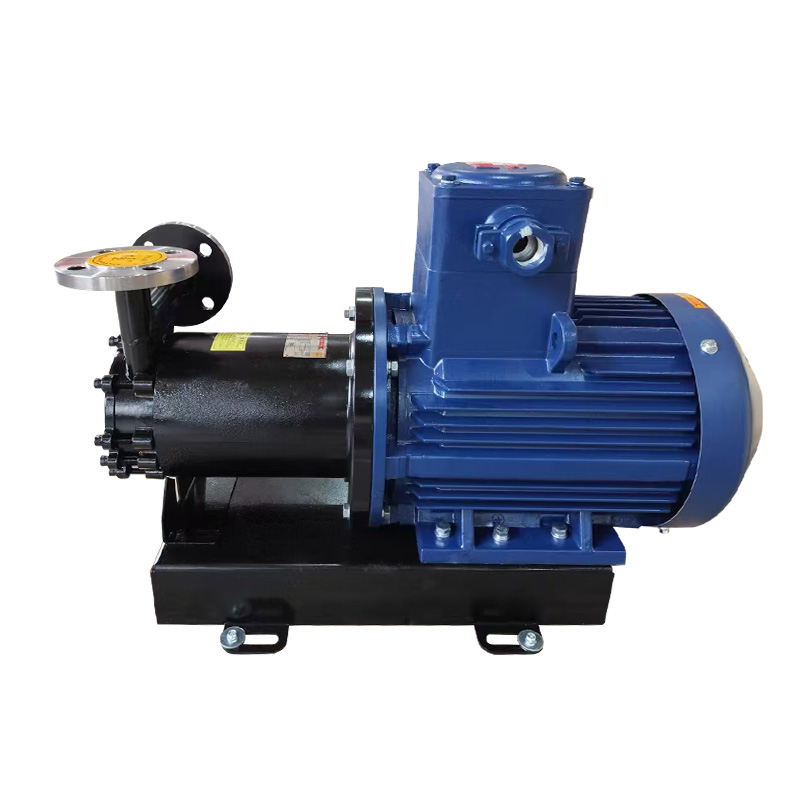
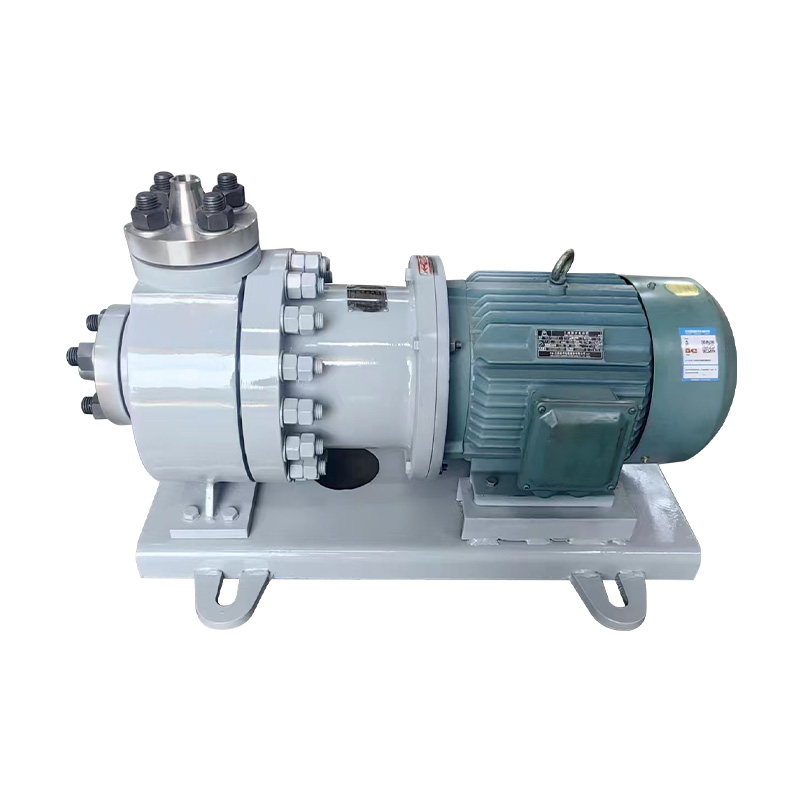
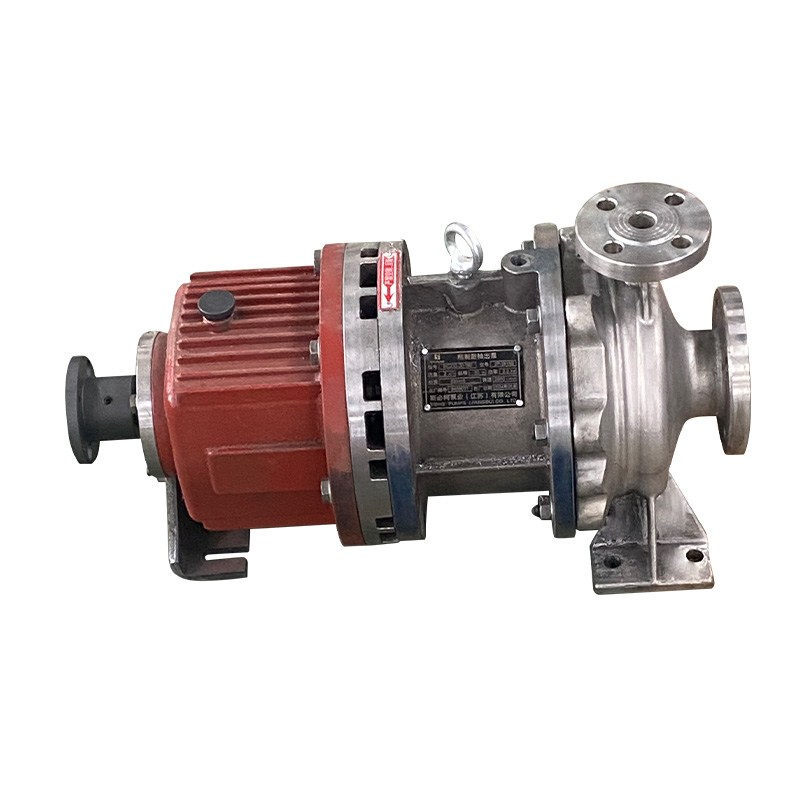
API 682 governs the seal chamber, and the piping plan matters more than the face material. Plan 11 suits clean, cool service; Plan 53 or 54 dual pressurized arrangements are used where the pumped fluid must never reach atmosphere. When a leak is unacceptable regardless of seal quality, a magnetic drive removes the shaft penetration altogether, which is where a high-pressure magnetic drive becomes the practical alternative to a sealed barrel pump.
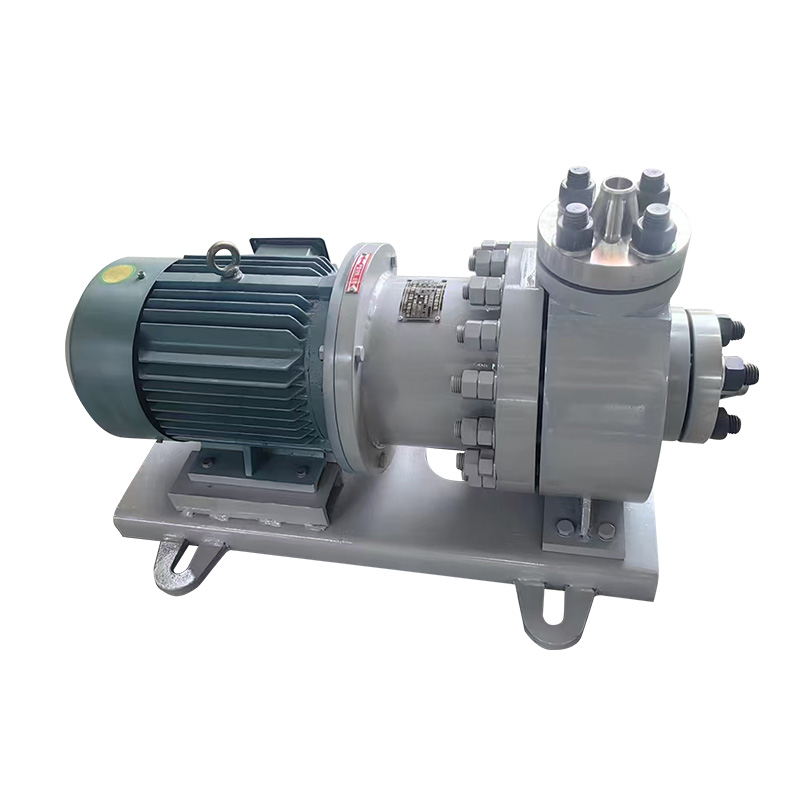 HMD High Pressure Sealless Magnetic Drive PumpSealless magnetic drive centrifugal pump for leak-free chemical duty, with ISO-2858/ISO-3661 dimensions and flow from 1.5 to 300 m³/h.View Product →
Specifying a Radially Split Pump: Six Data Points
Six data points settle most radially split selections: rated flow and head, maximum allowable casing pressure, temperature range, material class, seal plan and allowable nozzle loads.
- Fix the rated point and the maximum allowable casing pressure, then multiply by 1.5 to confirm the hydrotest condition the supplier must meet.
- State the temperature range and any thermal cycling, because ramp rate decides joint design and warm-up provisions.
- Name the material class in API 610 terms rather than a generic stainless label.
- Define the seal plan and the flush medium, including its pressure and temperature.
- Give nozzle loads and piping configuration, since a barrel casing tolerates less pipe strain than a horizontally split body.
- Ask for the casing drawing, material certificates and test reports with the quotation.
For refinery and petrochemical process duty, a purpose-built between-bearings machine such as the ZA process pump line is normally quoted against these six points, with the casing arrangement, bearing type and seal chamber confirmed on the datasheet.
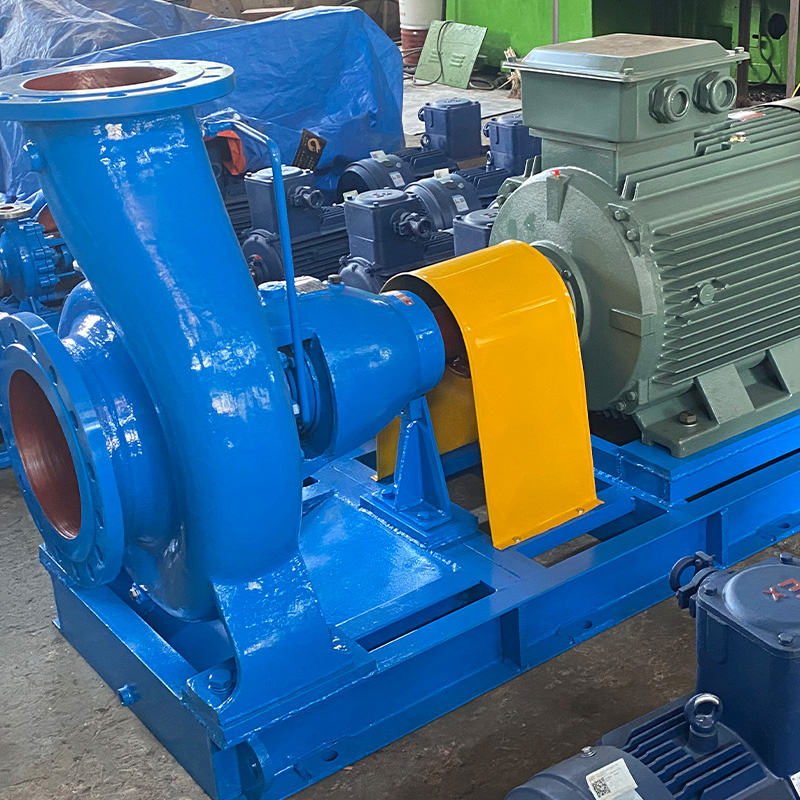 ZA, ZAO and ZE Petrochemical Process PumpsAPI 610 process pump line for refinery and petrochemical duty, covering flows up to 2600 m³/h and pressures up to 10 MPa.View Product →
Send the completed datasheet through the contact page and ask for the joint face finish, bolting torque values and material certificates alongside the price. A supplier who cannot produce all three is not ready for high-pressure work.
Practical Questions from the Specification Desk
Does a radially split pump cost more than an axially split one?
At the same duty point the casing usually does. A radially split body needs more machining passes, at least one register fit and a heavier bolted joint, so cast and machined weight rises. The gap narrows once an axially split alternative would need thicker walls to control joint distortion above 40 bar.
Can a radially split casing survive thermal cycling?
Yes, within a stated ramp rate. A circular joint tolerates thermal shock better than a long horizontal seam, but a barrel pump still needs a warm-up line and a controlled heating rate so rotor and casing expand together. Check the permitted rate against the unit start-up procedure before ordering.
How long does a bundle change take?
Plan for a full shift on a barrel pump and roughly half of that on a back pull-out single stage. Piping removal, seal system isolation, bundle extraction and a torqued main joint sit on the critical path, and cool-down time before the casing may be opened often exceeds the mechanical work itself.
Which materials suit chloride and acid service?
API 610 material class codes such as C-6 for 316 stainless and D-1 for duplex cover the common cases. Beyond the range where 316L suffers chloride stress corrosion cracking, the practical upgrades are duplex 2205 or 2507, then Hastelloy and titanium for wet chlorine or hot acid; Jiangsu Huanyu Chemical New Materials casts 304, 316L, 904, 2205, 2507, CD4, Hastelloy and titanium in-house.