English
 русский
 Español
Content
Structural Configuration and API 610 Classification Standards
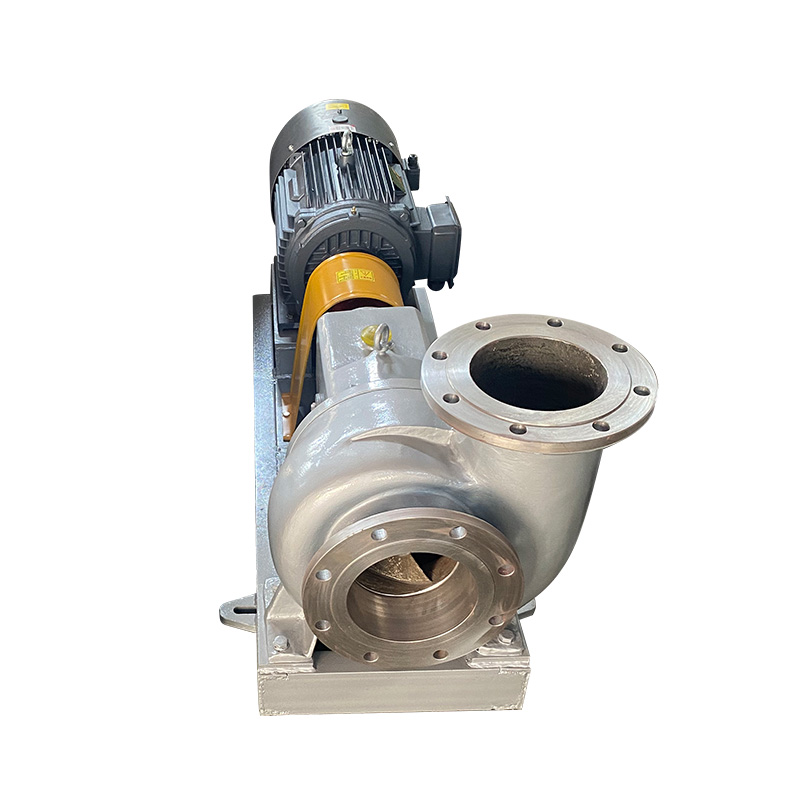
- In modern refinery operations, the petrochemical process pump is a critical component that must adhere to the API 610 12th Edition standards. This compliance is not merely regulatory but a mechanical necessity to ensure the safety of volatile fluid transport. The most common configuration for high-temperature service is the OH2 (overhung, centerline-mounted) design, which provides the necessary thermal expansion clearance to prevent shaft misalignment.
- When discussing why API 610 is mandatory for refinery pumps, the primary factor is the robustness of the pressure-containing casing. For temperatures exceeding 200 degrees Celsius, a centerline-mounted pump casing is required to ensure that thermal growth occurs symmetrically around the shaft centerline, maintaining precise coupling alignment with the driver. This is a fundamental advantage of API 610 OH2 pumps over standard industrial designs that utilize foot-mounted casings.
- The material classes for petrochemical pumps, such as S-1, C-6, or A-8, are selected based on the corrosivity and temperature of the process media. In high-temperature refinery units, utilizing ASTM A216 WCB or ASTM A351 CF8M ensures that the tensile strength of pump components remains within safety margins even under extreme thermal stress.
Hydraulic Efficiency and Cavitation Control in Volatile Environments
- Handling high-temperature hydrocarbons requires meticulous control over the NPSHr margins of petrochemical pumps. As process temperatures rise, the vapor pressure of the fluid increases, significantly reducing the Net Positive Suction Head available (NPSHa). To mitigate this, a petrochemical process pump often features an optimized impeller eye area to achieve low NPSHr performance, preventing the destructive effects of cavitation on the impeller vanes.
- The thermal expansion management in refinery pumps extends to the rotating assembly. API 610 mandates specific shaft stiffness and vibration limits to ensure that the MTBF of petrochemical process pumps is maximized. Vibration levels must typically stay below 3.0 mm/s RMS (unfiltered) to prevent premature bearing failure caused by thermal-induced resonance.
- Proper pump nozzle load capacity is another engineering benchmark. High-temperature piping systems exert massive forces on the pump flanges. An API-compliant pump is designed to withstand these loads without distorting the internal clearances, which are often as tight as 0.2mm to 0.5mm depending on the specific gravity of the media.
Mechanical Seal Reliability and API 682 Flushing Protocols
- The containment of hazardous fluids is governed by API 682 mechanical seal standards. For a petrochemical process pump, the seal chamber dimensions must accommodate heavy-duty cartridge seals. The use of an API Plan 53B seal flushing system or Plan 21/52 is common to provide cooling and lubrication to the seal faces, preventing dry-running and subsequent leakage of flammable hydrocarbons.
- A petrochemical process pump vs standard centrifugal pump comparison highlights the superior cooling jackets and bearing housing designs found in the former. High-temperature units utilize 360-degree cooling jackets and oil mist or forced oil lubrication to maintain bearing temperature stability, ensuring the lubricants do not oxidize at operating temperatures reaching 450 degrees Celsius.
- Maintaining the structural integrity of refinery pumps involves rigorous hydrostatic testing, usually at 1.5 times the maximum allowable working pressure (MAWP). This ensures that the pressure boundary of petrochemical pumps can handle sudden surges or blocked-discharge events without catastrophic rupture.
| Engineering Feature | API 610 Compliant Pump | Standard Industrial Pump |
| Mounting Type | Centerline-Mounted (Thermal Balanced) | Foot-Mounted (Asymmetric Expansion) |
| Design Life | Minimum 20 Years | 5 to 10 Years |
| Casing Thickness | Heavy Duty (Corrosion Allowance Included) | Standard (Minimum Thickness) |
| Shaft Deflection | Limited (API 610 Compliance) | High (No Strict Limitation) |
| Nozzle Load Limit | High (Per API Table 5) | Low to Moderate |
Operational FAQ
- What is the maximum operating temperature for a centerline-mounted pump? While material-dependent, OH2 designs are typically used for applications up to 450 degrees Celsius.
- Why is a cooling jacket necessary for the bearing housing? It prevents the heat from the process fluid from reaching the oil, maintaining the viscosity required for the 25,000-hour L10 bearing life.
- How does API 610 address shaft vibration? It sets strict limits on balance grades (G1.0) and peak-to-peak displacement to ensure mechanical seal longevity.
- Can these pumps handle sour water or acidic hydrocarbons? Yes, provided the material class is upgraded (e.g., Duplex or Hastelloy) to meet the corrosion resistance requirements.
- What is the typical MTBF for an API 610 pump? With proper seal flushing and alignment, a mean time between failures of over 48 months is standard in the petrochemical industry.
Technical References
- API Standard 610: Centrifugal Pumps for Petroleum, Petrochemical, and Natural Gas Industries.
- API Standard 682: Pumps - Shaft Sealing Systems for Centrifugal and Rotary Pumps.
- ISO 13709: Centrifugal pumps for petroleum, petrochemical and natural gas industries.