English
 русский
 Español
Content
- 1 What Priming a Water Pump Actually Means
- 2 Why Suction Lift Has a Hard Ceiling
- 3 Which Pumps Need Priming and Which Do Not
- 4 Priming a Self-Priming Pump, Step by Step
- 5 Flooded Suction or Suction Lift
- 6 Diagnosing a Pump That Loses Prime
- 7 Priming in Chemical Service: Use the Process Liquid
- 8 Questions That Come Up Before Start-Up
A centrifugal pump casing that is two thirds air will not move water, however long the motor runs. The impeller turns, the discharge gauge holds near zero, the mechanical seal runs dry, and the fault is usually found only after the faces are scored. Priming is the step that prevents this, and in chemical plants it fails for three reasons that repeat: a suction joint drawing air, a worn foot valve, or an operator assuming the pump is self-priming when the model on the plinth is not.
What Priming a Water Pump Actually Means
Priming a water pump means replacing the air in the suction line and casing with liquid before start-up, so the impeller has a fluid dense enough to accelerate.
An impeller develops head in proportion to the density of what it moves. Air at 20 C sits at 1.204 kg/m3 and water at the same temperature at 998 kg/m3, a ratio close to 830 to 1. A pump rated at 50 m of head therefore develops a few centimetres on air, which is nowhere near enough to pull liquid up a suction pipe. The air stays where it is and the pump idles at shut-off head.
The volume involved is larger than most operators expect. A single 8 m length of DN100 suction pipe holds about 63 litres of air that must be displaced before water reaches the impeller eye. That is why a casing filled to the priming port can still fail to catch: the pipe, not the casing, is the real air reservoir.
Why Suction Lift Has a Hard Ceiling
A pump cannot lift water higher than atmospheric pressure pushes it. At sea level, 101.3 kPa supports a theoretical column of 10.33 m, and vapour pressure plus NPSHr pull the practical figure for a self-priming pump down to 6 m or 7 m.
Vapour pressure is the part most often ignored. Water at 20 C has a vapour pressure of 2.34 kPa; at 60 C it is 19.9 kPa; at 90 C it is 70.1 kPa. Every degree of temperature removes part of the lift budget before the pump is even switched on.
Temperature, altitude and the NPSH margin
At 80 C only 5.6 m of theoretical lift remains. Take off 2.5 m of NPSHr and 1.5 m of suction friction and less than 2 m of usable lift is left, which is why hot condensate and warm solvent duties belong on flooded suction rather than a longer suction pipe.
Altitude moves the same number. At 2,000 m the atmosphere falls to roughly 79.5 kPa, cutting the ceiling to about 8 m at 20 C, so a curve drawn at sea level overstates what the pump will do on an inland plateau site. ANSI/HI 9.6.1 handles the margin rather than a single figure: available NPSH should exceed required NPSH by 1.1 times on high-energy pumps, or by 0.6 m on standard end-suction units, whichever is larger.
Which Pumps Need Priming and Which Do Not
Only pumps that start with the impeller above the liquid surface need priming. A submersible pump is already below the level, so its impeller is flooded before the motor turns and the start-up risk shifts to dry running when the sump empties.
| Pump family | Typical models | Priming at start-up |
| Chemical process pump | IH, CZ, ZA | Flooded suction or manual fill every start |
| Self-priming centrifugal | WFB, ZXB, HLX | Fill casing once, chamber retains liquid |
| Magnetic self-priming | ZCQ | Fill casing once, seal-less, no gland leak |
| Vertical submersible | FY, FYL, LGY | None, impeller sits below the liquid |
| Submersible slurry | YZ, LJYA | None, but keep the suction submerged |
| Axial and mixed flow | FJX, SP | None, flooded installation only |
| Metering pump | GM, JD, JDM | Self-priming by displacement, vent the head |
A self-priming label describes a chamber, not a guarantee. The casing must hold enough liquid at rest to re-circulate through the impeller and pull the suction line down to vacuum. If the pump drains back after every stop, the fault sits in the foot valve, and no amount of restarting will fix it.
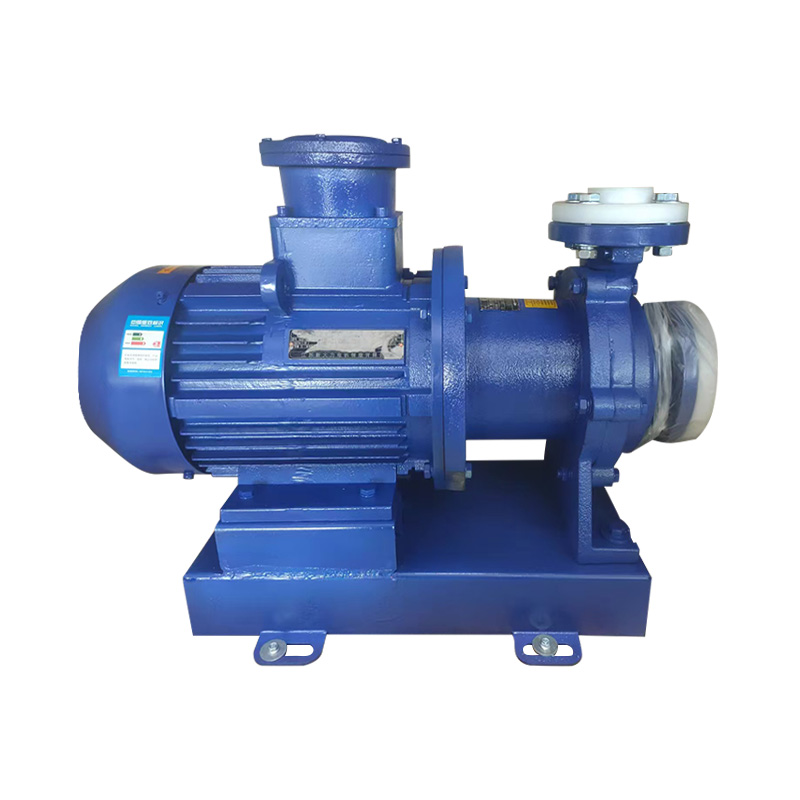
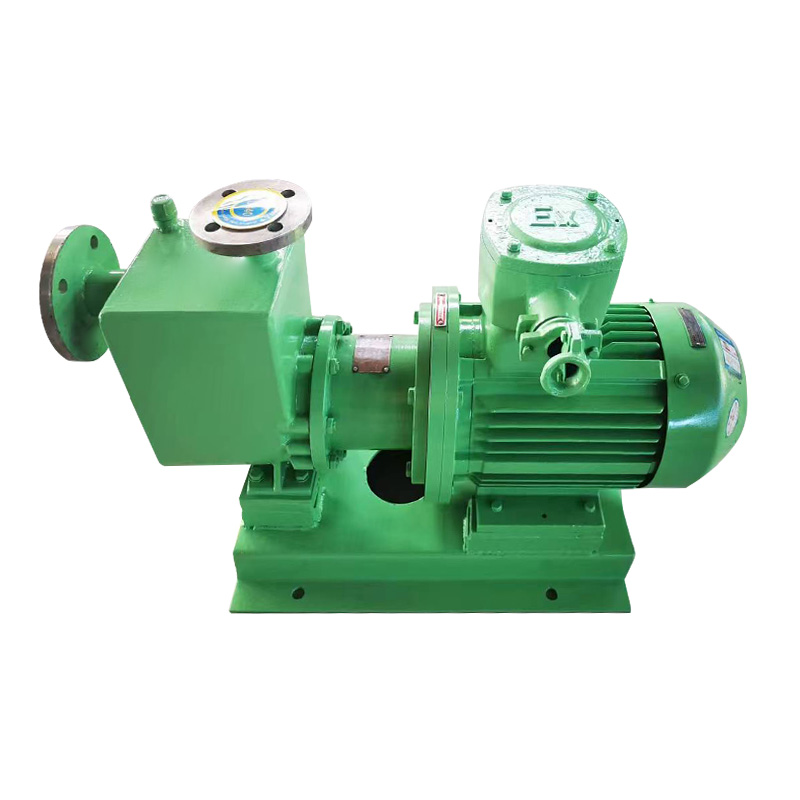
 ZCQ Magnetic Self-Priming Pump with Static SealFor suction-lift duties where shaft-seal leakage is unacceptable, this self-priming magnetic pump uses a static seal and needs no bottom valve or water diversion.View Product →
The ZCQ magnetic self-priming pump is the model most often specified where a suction lift cannot be avoided and leakage from a shaft seal is unacceptable, because the driven magnet sits inside a containment shell and there is no packing to drip air inward on shutdown.
Priming a Self-Priming Pump, Step by Step
A self-priming pump should catch in 30 to 180 seconds from a 3 m to 5 m lift, provided the casing is filled to the priming port at the first start and the suction line holds vacuum.
- Close the discharge valve and open the suction valve fully. Confirm the foot valve is seating by watching the gauge for any slow fall.
- Remove the priming plug and fill the casing until the level stops dropping. On a 4 m lift, expect to pour 20 to 40 litres on a DN80 unit.
- Vent the highest point of the suction line and the seal chamber. Trapped air at the top of the volute lengthens priming time more than any other single fault.
- Start the motor and watch the discharge gauge, not the flow. Pressure should climb steadily; a needle that flickers indicates air still entering.
- Crack the discharge valve open once pressure stabilises, then open slowly to the duty point. Never leave a pump at zero flow for more than two minutes.
- Record priming time, suction vacuum and discharge pressure as a baseline. A drift of more than 30 seconds against that baseline means wear or air ingress.
The full sequence for a casing that has to clear a deep suction line is covered in the note on how a self-priming casing clears air, which explains the internal recirculation path that makes the first 90 seconds possible.
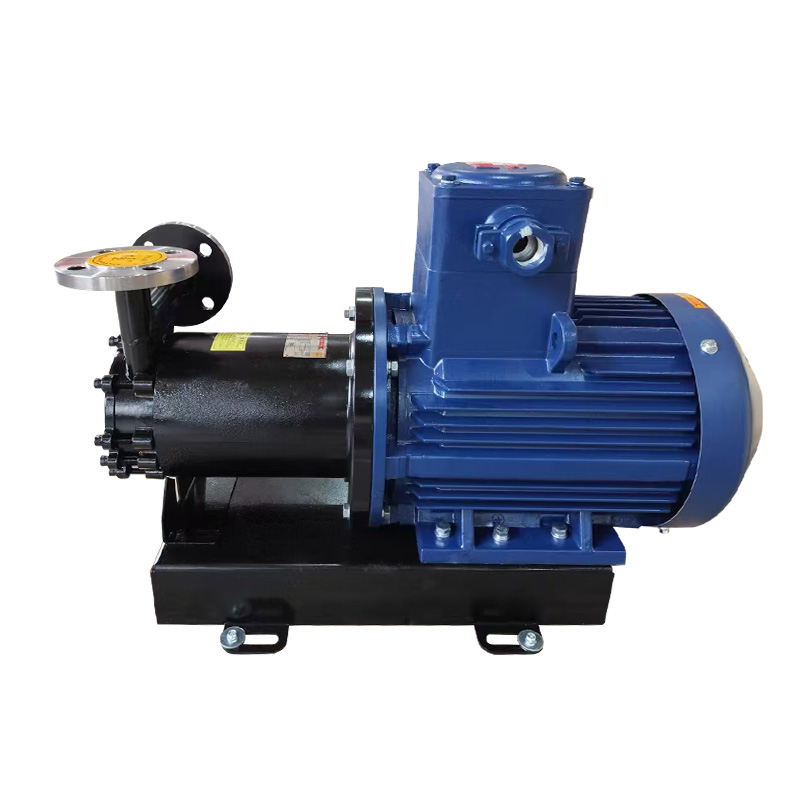
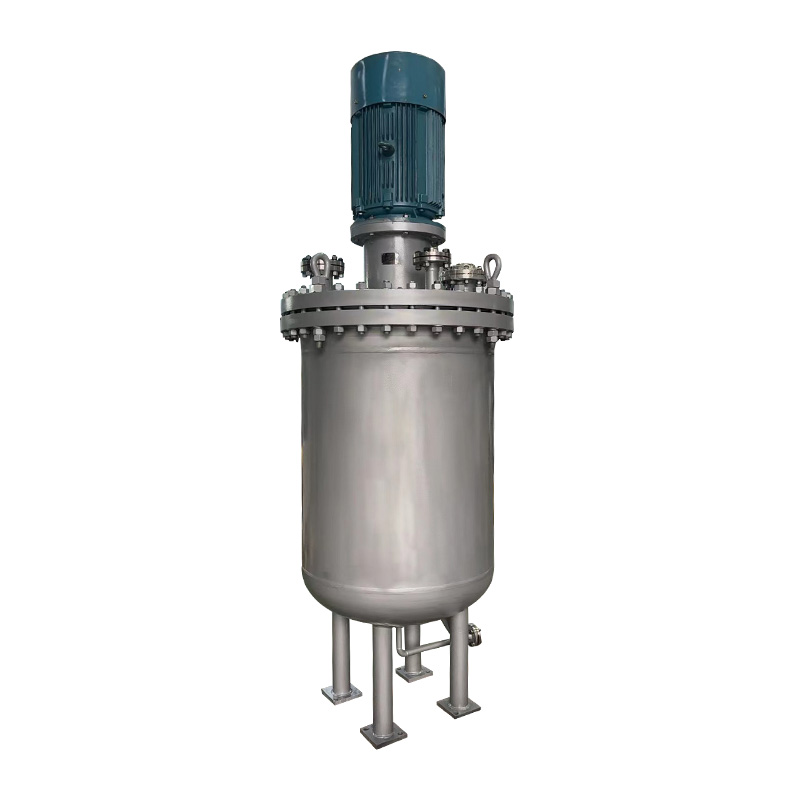
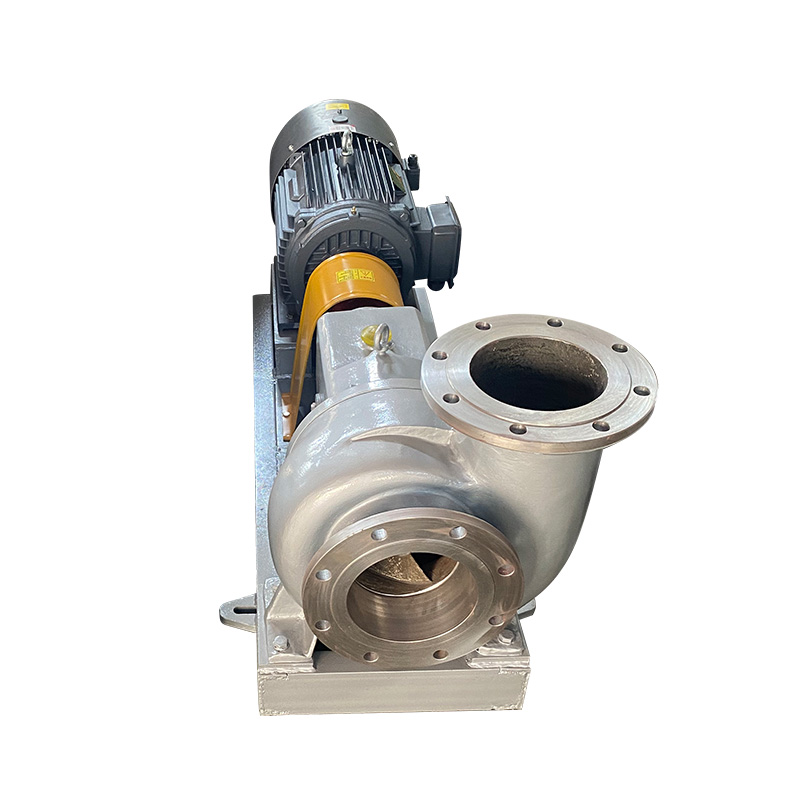
 WFB Seal-Less Self-Priming Pump for Industrial DutiesA no-seal self-suction pump with multi-faced sealing, available in stainless steel, polypropylene, or cast steel for steel, petrochemical, paper, and wastewater service.View Product →
On the WFB seal-less self-priming pump, the same routine applies with one addition: check the liquid level in the priming chamber before every shift, because a seal-less design has no gland to show you that the chamber has drained away.
Flooded Suction or Suction Lift
Flooded suction removes priming from the operating routine entirely and should be the default for any duty above 60 C or any liquid within 1 m of its vapour pressure.
- Liquid arrives at the impeller by gravity, so priming happens once at commissioning.
- No foot valve to wear, no vacuum leak to hunt for during a production run.
- NPSH margin is set by tank level, which is easy to guarantee and easy to audit.
- Costs a taller tank skirt or a pit, and must be planned at the civil stage.
- Works with buried tanks, road tankers and temporary transfer jobs.
- Demands a foot valve and a pump with a genuine priming chamber.
- Loses lift quickly as liquid temperature and altitude rise.
- Every joint on the suction side becomes a potential air path under vacuum.
Air ingress is the hidden cost of lift. A foot valve passing just 0.5 litre per minute will empty a 30 litre suction line in an hour, so the pump starts dry on the next shift even though it was full when the operator left. Leak tightness on the suction side must be judged under vacuum, not under pressure, which is why a hydrostatic test tells you nothing useful.
Diagnosing a Pump That Loses Prime
A pump that primes and then falls away within 60 seconds is drawing air, not suffering a worn impeller. Check the suction side before opening the casing.
| Symptom | Likely cause | Action |
| Motor runs, gauge stays near zero | Casing not filled, air pocket at the top of the volute | Refill through the priming port and vent the highest point |
| Pressure builds then collapses after 30 to 60 seconds | Suction joint or mechanical seal drawing air | Vacuum test the suction line, renew gaskets and seal faces |
| Loses prime on every stop | Foot valve worn or missing | Fit a new foot valve or convert to flooded suction |
| Priming takes over 3 minutes at 4 m lift | Wear plate clearance opened up, recirculation lost | Measure impeller and wear plate clearance against the manual |
| Seal squeals and casing feels hot | Dry running during a failed prime | Stop immediately, reprime, inspect or replace the seal |
Priming in Chemical Service: Use the Process Liquid
Prime a chemical pump with the process liquid, never with water, unless the line is drained and dried afterwards. Water left in a line holding an acid or a reactive intermediate creates a diluted slug that arrives at the reactor at the wrong concentration.
Dry running matters more here than on water duty. Fluoroplastic linings such as PTFE and PFA conduct heat at roughly 0.25 W/mK, against about 16 W/mK for 316L stainless steel, so frictional heat from a dry running impeller has nowhere to go and the lining blisters away from the metal. On a magnetic drive pump the inner magnet and the bearing bushes are cooled and lubricated by the pumped liquid itself, which means 30 seconds of dry running can seize a bush that has run happily for three years.
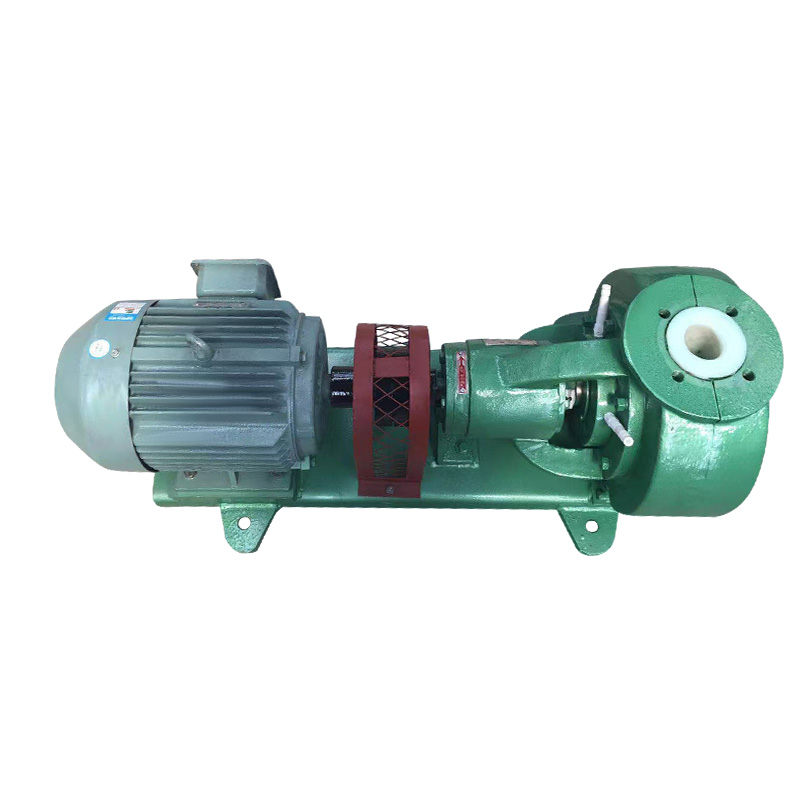
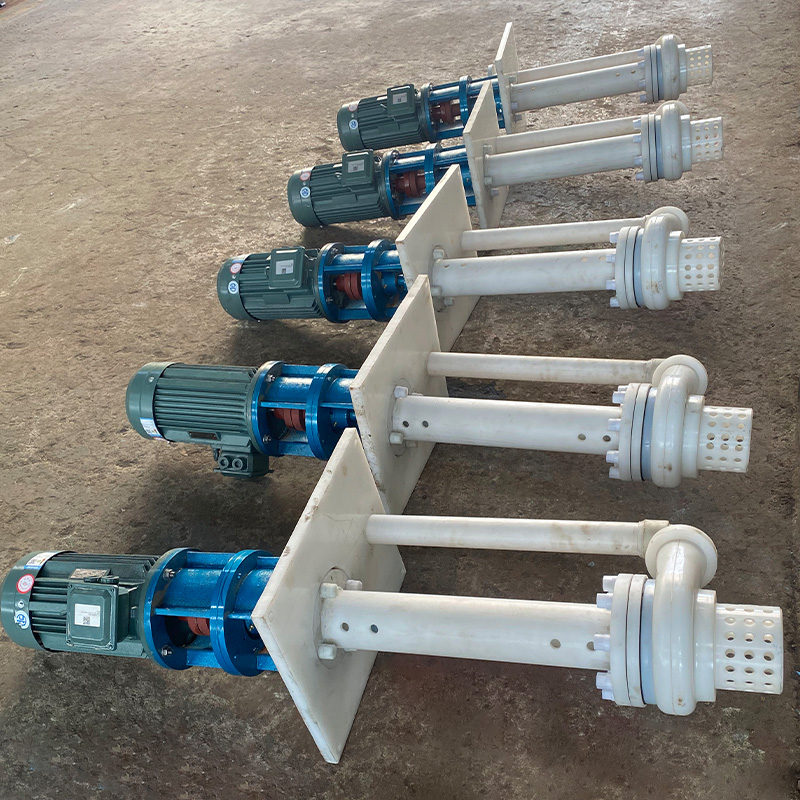 FYS Fluoroplastic Submersible Pump for Aggressive Chemical MediaA submerged fluoroplastic pump that avoids shaft-seal leakage and priming for acid, alkali, salt, and similar chemical media in demanding industries.View Product →
The FYS fluoroplastic submersible pump sidesteps the whole question for aggressive media, because the impeller is immersed in the tank and priming is not part of the start-up sequence at all. Where a lift cannot be avoided, the priming liquid must match the process fluid, and the vent line must be routed to a safe location rather than to the floor.
Questions That Come Up Before Start-Up
How long should priming take at 4 m of lift?
Expect 30 to 180 seconds on a self-priming pump, with the shorter figure on a short, tight suction line and the longer one on a cold, viscous liquid. Priming beyond three minutes at 4 m points to air ingress or worn clearance, not to a weak motor.
Can I prime with the discharge valve closed?
Yes, and you should. A closed discharge keeps the casing full while the pump builds vacuum, which is exactly what the priming chamber needs. Open the valve slowly once pressure stabilises, and never run at zero flow for longer than two minutes, because the liquid inside the casing will heat at the rate of the absorbed power.
Do submersible pumps need priming?
No. The impeller on an FY, FYL or LGY unit is already submerged, so the inlet is flooded before the motor starts. The equivalent risk is minimum submergence: if the liquid falls below the level given in the installation drawing, the pump breaks suction and the motor windings lose their cooling path within minutes.
What is the difference between priming and venting?
Priming fills the casing, venting removes the air that the fill cannot displace. A top-entry casing can be completely full of liquid and still hold a bubble under the discharge flange, so both steps belong in the start-up procedure on every centrifugal unit.
Suction lift, temperature and material choice are settled at the selection stage, not on the plinth at 2 am. If a duty sits close to the limits described here, send the liquid, temperature, lift and pipe run to the engineering team through the contact page and have the NPSH margin checked before the pump is ordered rather than after it loses prime.