English
 русский
 Español
Content
- 1 What a Horizontal Centrifugal Pump Actually Is
- 2 The Duty Point Is a Range, Not a Number
- 3 Metallurgy Sets Service Life, Not the Purchase Price
- 4 The Seal Decides Maintenance Cost
- 5 ISO 2858 or API 610: Decide by Consequence of Failure
- 6 Installation Details That Outlive the Warranty
- 7 Where It Belongs, and Where It Does Not
- 8 Six Checks Before the Purchase Order
- 9 Practical Questions Buyers Ask
Three suppliers quoting the same duty point will return three different casings, two different seal plans and one price that quietly assumes a lower specific gravity. In a chemical plant the pump is rarely the weak link; the gap between the nameplate duty point and the real operating window is. What follows is the order experienced buyers work in: hydraulic margin first, then wetted metallurgy, then the seal environment, and finally the install.
What a Horizontal Centrifugal Pump Actually Is
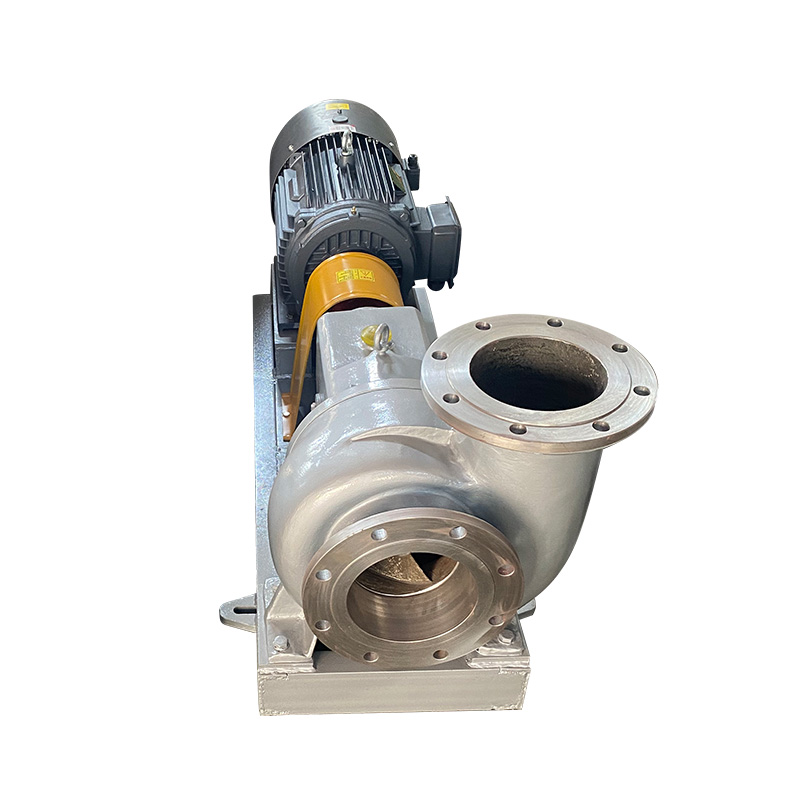
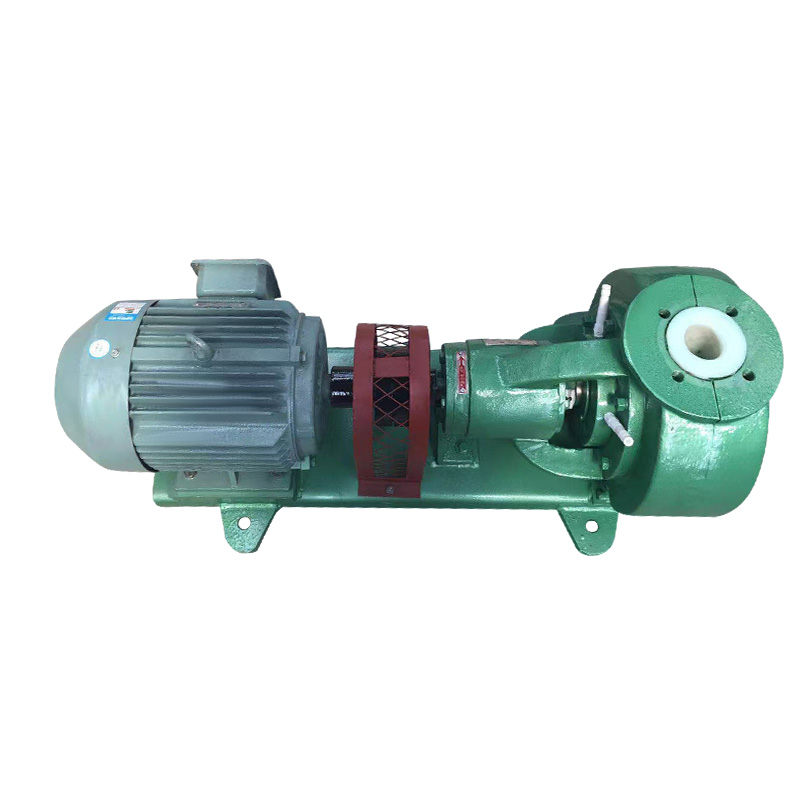
A horizontal centrifugal pump is a rotodynamic machine with a horizontal shaft, an overhung impeller and a volute casing that converts shaft power into flow and pressure; in chemical service the standard form is single-stage, end-suction, back-pull-out, built to ISO 2858 dimensions and ISO 5199 technical class II.
ISO 2858 fixes the nominal duty points and the external dimensions, which is why an ISO 2858 pump from one maker bolts into another maker's baseplate. ISO 5199 adds the engineering behind it: shaft stiffness, bearing life, casing pressure retention and test tolerances. A quotation that does not state which of the two it meets has not closed the specification.
Back-pull-out is the feature that decides shutdown cost. The bearing frame, shaft and impeller come out as one cartridge while the suction and discharge pipes stay bolted in place, so a seal change becomes hours instead of a full pipe strip-down.
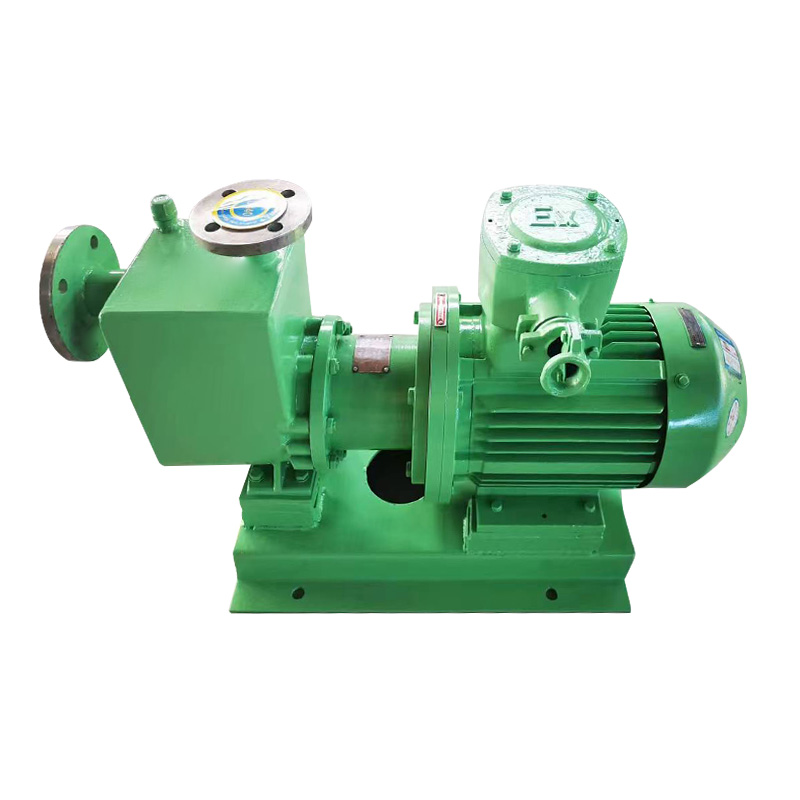
The Huanyu IH series is built in exactly this configuration: single-stage, end-suction, with a back-pull-out frame and wetted parts in 304, 316L, 904, 2205, 2507, CD4, Hastelloy or titanium.
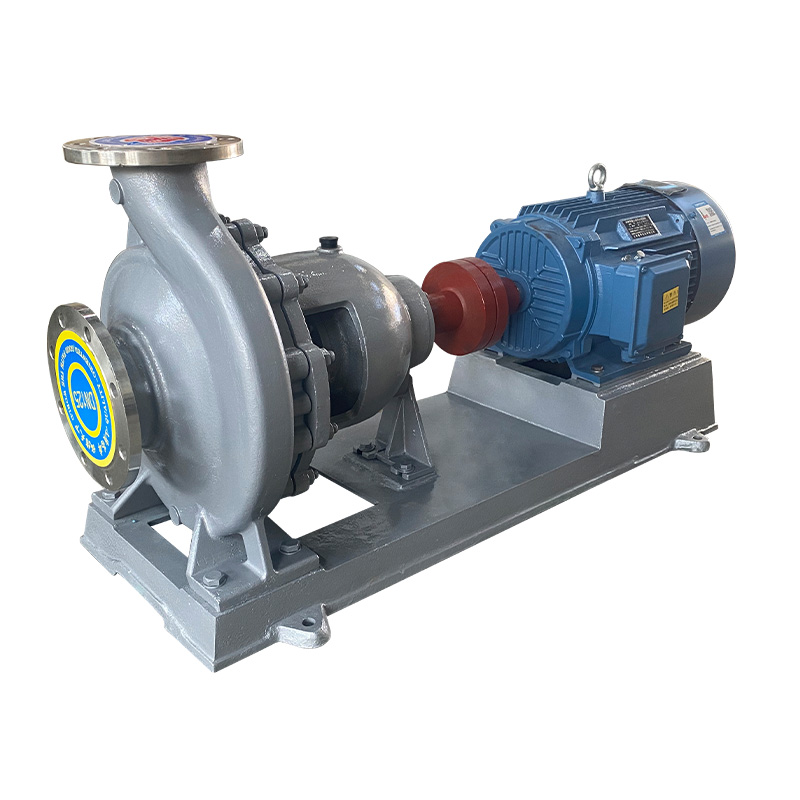 Huanyu IH Series Corrosion-Resistant Centrifugal PumpSingle-stage end-suction pump for corrosive liquids, with multiple wetted-material options and flow to 400 m³/h; check suitability near best efficiency point.View Product →
The Duty Point Is a Range, Not a Number
A horizontal centrifugal pump runs efficiently only near its best efficiency point; at 70% or 130% of BEP flow, radial thrust and shaft deflection rise fast enough to cut seal and bearing life regardless of how good the casting is.
API 610 requires the rated point of an OH-type pump to sit between 80% and 110% of BEP flow and treats 70-120% as the preferred operating region. Below roughly 50% of BEP, recirculation at the impeller eye starts to damage the casing and wear rings, and that damage is hydraulic rather than metallurgical, so upgrading to duplex steel does not fix it.
Typical curve shape for an ISO 2858 end-suction pump. The figures are relative efficiency indices, not test data from a specific model.
The affinity laws explain the rest. Flow follows speed, head follows the square of speed and power follows the cube. A 5% impeller trim removes about 10% of head but roughly 14% of absorbed power, which is why a trimmed impeller often beats a variable speed drive on units below 30 kW.
Viscosity is the hard boundary. Above about 100 cSt at pumping temperature, centrifugal efficiency falls away quickly and a screw or rotary pump becomes the cheaper machine to own.
Metallurgy Sets Service Life, Not the Purchase Price
Material selection for a horizontal centrifugal pump is governed by chloride concentration, temperature and solids content; the casting price is the least important variable in the decision.
Type 304 handles clean water, dilute organic acids and near-zero chlorides. Type 316L takes dilute sulfuric and phosphoric acid and mild brine, but its practical ceiling sits near 60 degrees C once chlorides climb past a few hundred ppm, because chloride stress corrosion cracking starts in the grain boundaries rather than on the visible surface.
| Grade | Typical service | Watch-out |
| 304 | Clean water, dilute organic acids | Chlorides above 50 ppm at temperature |
| 316L | Dilute sulfuric and phosphoric acid, brine | Chloride cracking risk near 60 degrees C |
| 904 | Sulfuric and phosphoric acid with chlorides | Weld procedure and lead time |
| 2205 | Chloride-rich solutions, light abrasion | Not for hot concentrated caustic |
| 2507 | Seawater, high chloride, high strength duty | Casting availability |
| CD4 | Abrasive-corrosive slurry, phosphoric acid | Machining time |
| Hastelloy | Wet chlorine, hypochlorite, mixed acids | Cost, verify with test data |
| Titanium | Seawater, oxidizing chlorides | Not for dry chlorine or reducing acids |
| 2520 | High-temperature oxidation duty | Low resistance to reducing acids |
Two habits separate reliable buyers from the rest. They ask for the heat number and melt certificate against the wetted parts, and they ask for a corrosion reference from a comparable medium instead of accepting "equivalent to 316L" as a description. Huanyu casts in-house across those nine grades, so the alloy on the drawing is the alloy in the casing.
The Seal Decides Maintenance Cost
Shaft sealing, not hydraulics, accounts for most horizontal centrifugal pump outages; on clean chemical duty a single mechanical seal to API 682 with a Plan 11 flush is the baseline, and packing belongs only where abrasives would destroy seal faces within weeks.
The seal chamber has to be treated as its own process. A Plan 11 flush tapped from the discharge keeps the chamber above the fluid's vapour pressure and below its temperature limit. Where the product is close to boiling at suction pressure, or where it is toxic or flammable, a dual pressurized seal with a Plan 53A or Plan 54 barrier becomes the only defensible choice, with barrier pressure held 1.5 to 2 bar above seal chamber pressure.
If the product is toxic, flammable or above 150 degrees C, price the dual seal into the first quotation. A retrofit means new piping, a barrier reservoir, a pressure switch and a second shutdown.
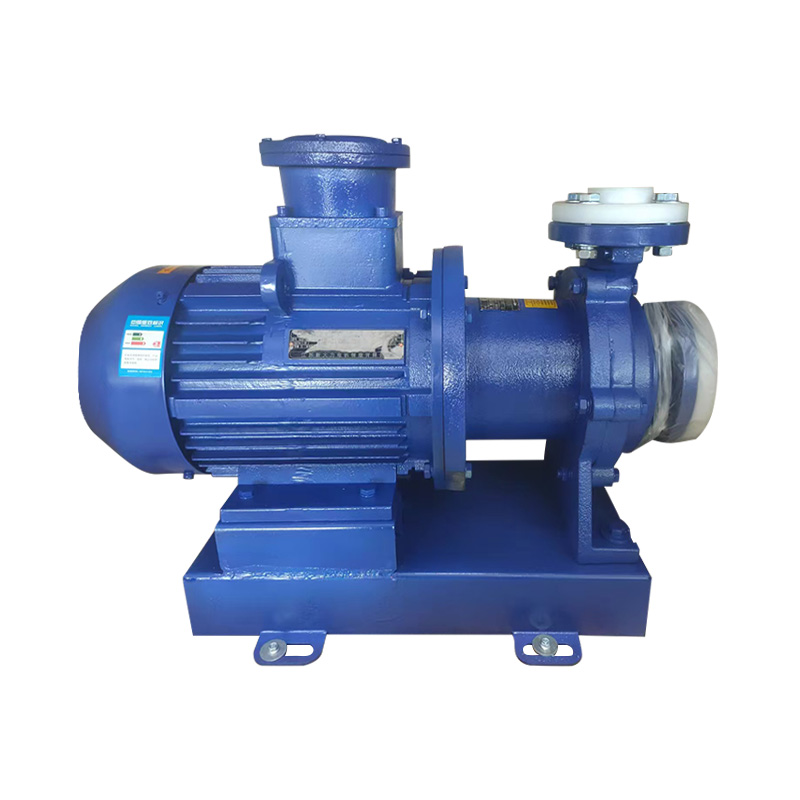
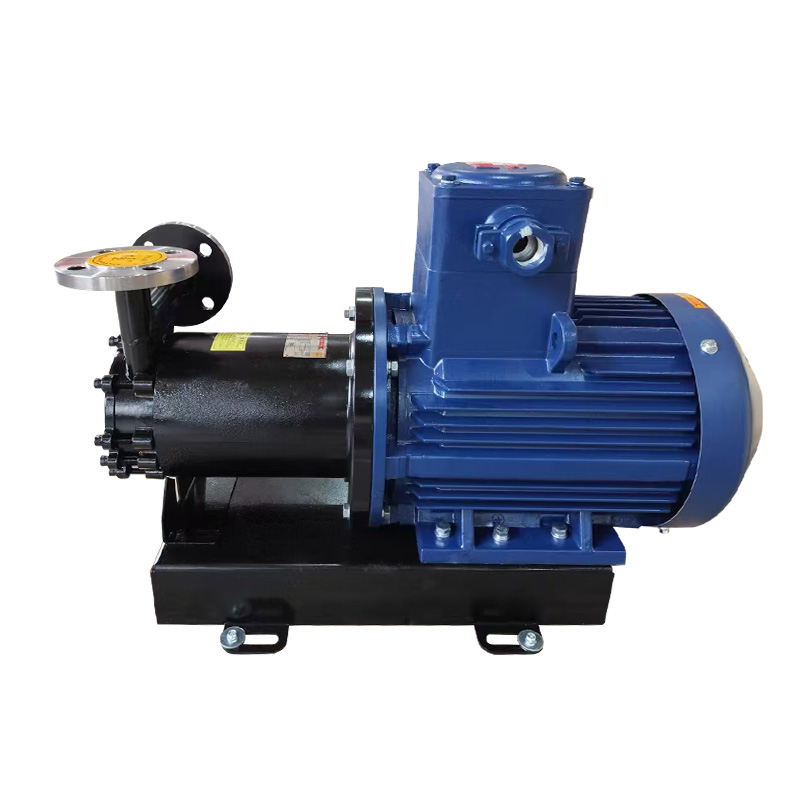
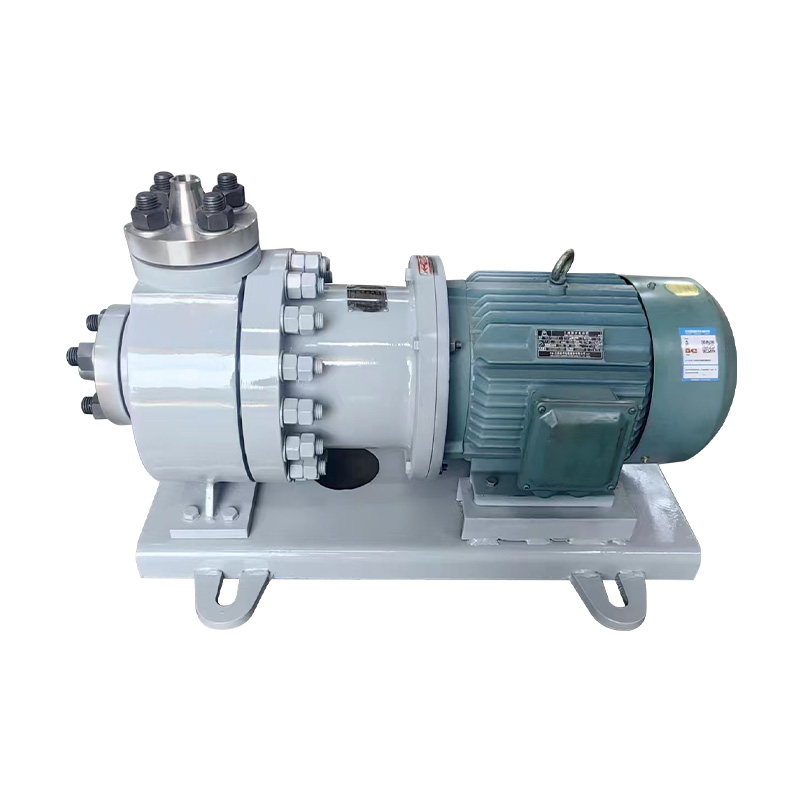
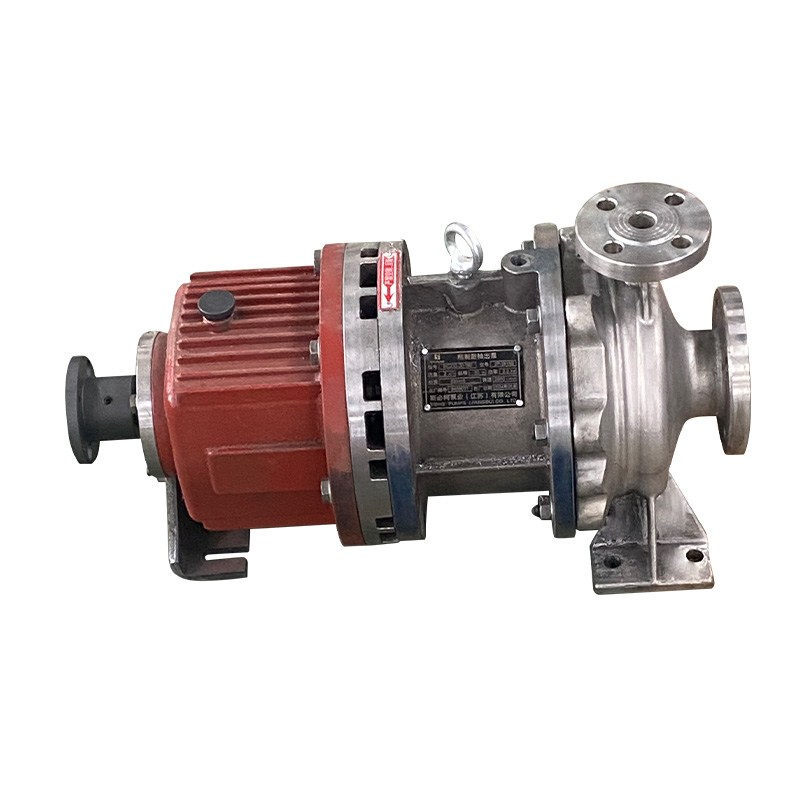
The seal-less alternative is a magnetic drive, where a static containment shell replaces the dynamic seal path. It removes the leak path entirely, but it tolerates less dry running and less solids, so it suits clean, aggressive media rather than slurry.
ISO 2858 or API 610: Decide by Consequence of Failure
ISO 2858 and ISO 5199 cover general chemical duty; API 610 OH2 covers refinery and petrochemical duty with a 25-year bearing life target, a 3 mm corrosion allowance on wetted steel parts and API 682 sealing as standard.
ISO 2858 / ISO 5199
- 16 bar rated casing with PN16 flanges
- Performance test to ISO 9906 Grade 1B
- Interchangeable footprint across makers
- Transfer, circulation and utility duty
API 610 OH2
- 25-year bearing life target, 3 years continuous
- 3 mm corrosion allowance on wetted steel
- Centerline casing support for thermal growth
- API 682 seal, four-point performance test
The deciding question is not the price difference per unit but the cost of an unplanned stop. On a 200 m3/h transfer duty running 8,000 hours a year, a single avoided seal failure usually covers the API upgrade. Huanyu builds the CZ series for ISO-style process duty; refinery-class work moves to the ZA series.
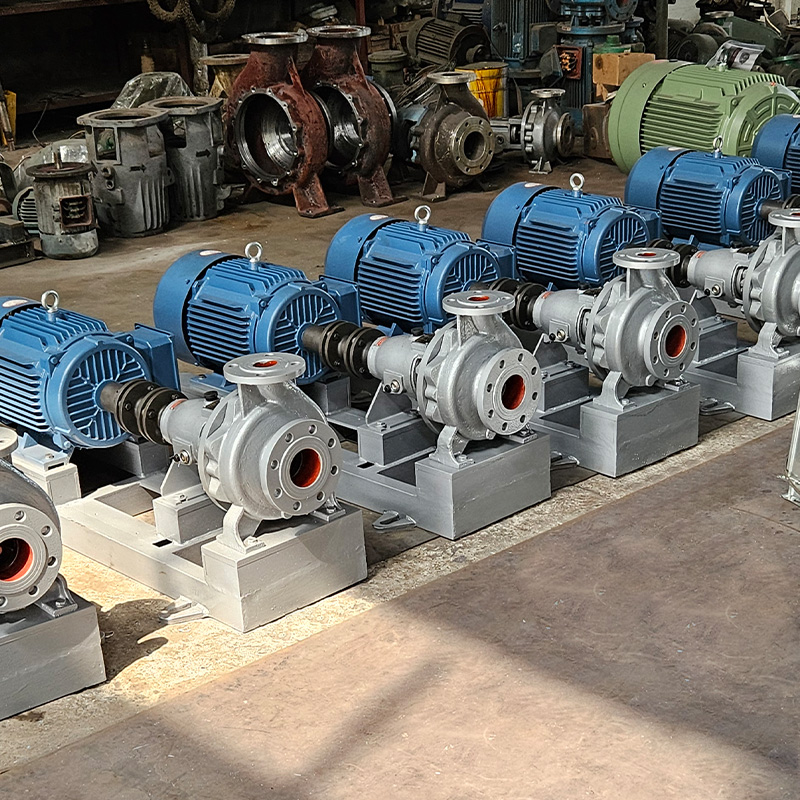 CZ Series ISO-Standard Chemical Process PumpHorizontal single-stage pump for chemical and petrochemical transfer, with flow up to 2000 m³/h and temperature range -40 to 150°C; review NPSH and alignment.View Product →
Installation Details That Outlive the Warranty
NPSH margin, suction piping and shaft alignment decide most early failures, and all three are fixed before the first start.
API 610 asks for available NPSH at least 1 m above the required value or 1.1 times NPSHr, whichever is greater. On a 1450 rpm pump with an NPSHr of 3.5 m that means 4.5 m of available head, measured at maximum flow rather than at the rated point, because NPSHr rises with flow.
- Suction line one nominal size larger than the pump flange, with no elbow within five pipe diameters of the inlet.
- Laser alignment to 0.05 mm offset and 0.03 mm per 100 mm angular before grouting, re-checked after the first hot run.
- Baseplate grouted on a pad of at least 25 mm, with no pipe strain carried on the flanges.
- Vibration checked against ISO 10816-7 zone limits at the first loaded run, not after the first complaint.
Acceptance is measured, not assumed. ISO 9906 Grade 1B allows plus or minus 5% on guaranteed head at rated flow, so a unit reading 3% low is inside contract while one reading 8% low is not, and that argument is worth having before the warranty clock starts.
Where It Belongs, and Where It Does Not
A horizontal centrifugal pump fits clean to mildly contaminated transfer, circulation, reflux and cooling water duty between roughly 6 and 400 m3/h; it does not fit high-solids slurry, high-viscosity product or a duty with almost no NPSH margin.
- Chemical transfer and tank farm duty with low solids content.
- Column reflux, circulation and heat transfer loops.
- Cooling water and brine circuits in power and fibre plants.
- Dilute acid and caustic service where the grade is matched to the chloride level.
The alternatives are specific rather than general. Above 5% solids by weight, a slurry pump with an open or vortex impeller holds wear life far longer. Where the liquid level sits below the pump and available NPSH is measured in centimetres, a vertical long-shaft unit removes the suction problem entirely. Where leakage itself is the hazard, a magnetic drive closes the last dynamic leak path.
For refinery-class heavy duty, the ZA process pump covers higher pressure and temperature with centerline support and API-style bearing housings.
 ZA Series API 610 Petrochemical Process PumpRefinery-class pump for clean or slightly particle-containing liquids, with centerline support extending temperature range to -80 to 450°C; consider for higher-pressure duty.View Product →
Six Checks Before the Purchase Order
- Fix minimum, normal and maximum flow and head. A single rated point hides the turndown the process will actually run.
- Write the fluid data in full: composition, chloride ppm, specific gravity, viscosity, temperature, solids by weight and vapour pressure at pumping temperature.
- Calculate available NPSH at maximum flow and confirm at least 1 m or 1.1 times NPSHr of margin.
- Select the wetted grade from a corrosion table for the actual medium, not from the last project's specification.
- Confirm the seal plan, the flush source and whether a barrier system is needed, then check the piping has room for it.
- State the test standard in the order: ISO 9906 Grade 1B performance, hydro test at 1.5 times rated pressure, vibration and noise limits.
Buyers who want a longer treatment of transfer duty selection can read the chemical transfer pump selection guide before the enquiry goes out.
Practical Questions Buyers Ask
What is the difference between a horizontal and a vertical centrifugal pump?
A horizontal unit carries its shaft in an external bearing frame and is serviced from the side; a vertical long-shaft pump keeps the impeller submerged and solves a low NPSH available. Horizontal machines are easier to align and maintain, need a flooded suction or a priming arrangement, and cover 6 to 400 m3/h at up to 125 m of head per stage, while vertical units reach sumps 5 m and deeper where a horizontal pump cannot follow the liquid level.
How is a horizontal centrifugal pump sized for a chemical duty?
Size on three points, not one: minimum, normal and maximum flow, with the head at each. Place the rated point between 80% and 110% of BEP flow, confirm viscosity stays below about 100 cSt, and check that available NPSH at maximum flow clears NPSHr by at least 1 m or 1.1 times NPSHr.
What NPSH margin should be specified?
Specify available NPSH at least 1 m above NPSHr or 1.1 times NPSHr, whichever is larger, measured at maximum flow. Below about 0.5 m of margin the impeller eye sees cavitation, and the resulting erosion pits show up in the casing within a few thousand running hours.
When is API 610 worth the extra cost?
When an unplanned stop costs more than the pump. API 610 brings a 25-year bearing life target, a 3 mm corrosion allowance, centerline casing support above 150 degrees C and API 682 sealing. For a 100 m3/h utility transfer at ambient temperature, ISO 2858 with ISO 5199 requirements is the better commercial choice.
Huanyu has manufactured chemical pumps at Jingjiang since 1987, with more than ten series and 300 specifications across 304, 316L, 904, 2205, 2507, CD4, Hastelloy, titanium and 2520. Send the duty point, the fluid data and the available NPSH through the contact page and the answer comes back as a model number with a material grade and a seal plan attached.