English
 русский
 Español
Content
- 1 A double suction pump splits the flow before the impeller sees it
- 2 Double suction vs single suction: five differences you can measure
- 3 Where the design earns its place in chemical and power plants
- 4 How to size a double suction pump without oversizing it
- 5 Installation and piping mistakes that ruin a good pump
- 6 When the double suction design is the wrong purchase
- 7 Frequently asked questions about double suction pumps
A pump specified at 1,200 m3/h and 55 m of head can be built two ways: one impeller eye, or two. Both versions are quoted against the same duty point, and both pass a short factory test. The difference appears after commissioning, in how much suction head the pump needs, how hot the thrust bearings run and how often the mechanical seal is replaced. Above roughly 500 m3/h, the double suction layout is usually the version that stays in service.
A double suction pump splits the flow before the impeller sees it
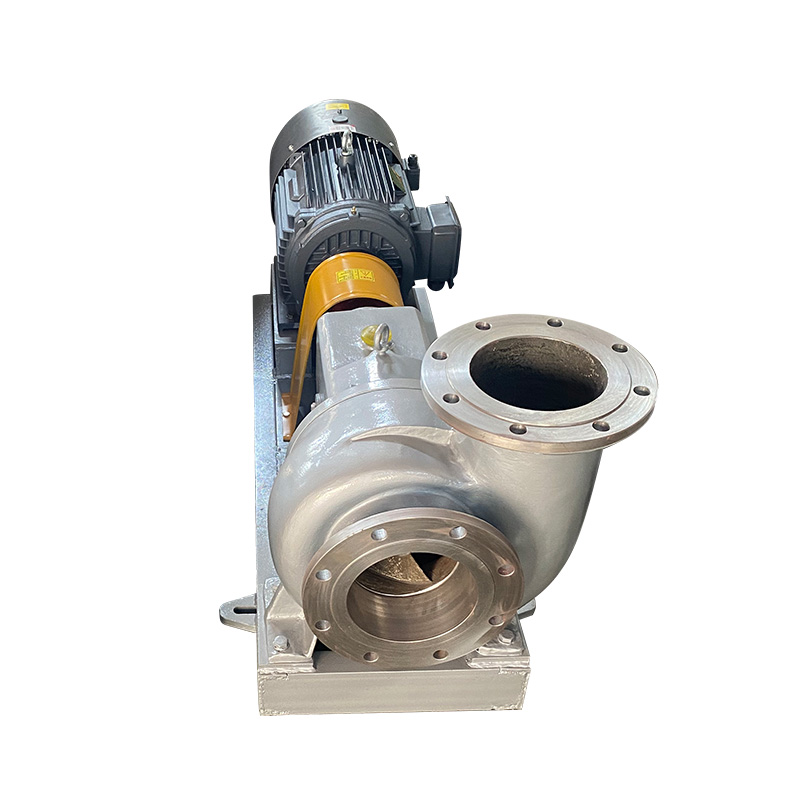
A double suction pump is a centrifugal pump whose impeller takes suction from both sides, so the liquid enters through two opposed impeller eyes and the two streams rejoin at the centre of the impeller. The casing feeds both eyes from a single suction nozzle, and the impeller is hydraulically symmetrical about its centre line.
Doubling the inlet area halves the velocity of the liquid at the impeller eye. Lower inlet velocity means less friction and acceleration loss between the suction flange and the impeller vanes, and that loss is exactly what NPSHr describes. A double suction pump at 1,200 m3/h therefore typically needs 1.5 m to 3 m less net positive suction head than a single suction pump running the same flow and speed.
The second benefit is mechanical. On a single suction impeller, the pressure difference across the impeller pushes the rotor towards the suction side with a force that grows with head, and the thrust bearing carries all of it. On a double suction impeller, the same pressure acts on two opposite shrouds, so the axial forces cancel. Only residual load from machining tolerances and wear ring clearances remains, and the bearings are sized with much more margin because of it.
A double volute casing is normally part of the package on larger sizes. It divides the discharge flow into two channels and reduces radial load on the shaft at flows away from the best efficiency point, which matters when a unit runs at part load for most of the year.
Double suction vs single suction: five differences you can measure
Against a single suction pump at the same duty point, a double suction pump delivers more flow per unit of suction head, needs less NPSH, produces almost no axial thrust and keeps its bearings and seals alive longer. It also costs more and occupies more floor space, and those two facts decide a surprising number of orders.
| Parameter | Single suction | Double suction |
| Suction path | one eye, one inlet passage | two eyes fed from a single nozzle |
| Flow ceiling at 1,450 rpm | about 800 m3/h | about 3,000 m3/h |
| NPSHr at 1,200 m3/h | about 5.1 m | about 3.4 m |
| Axial thrust | rises with head, carried by the thrust bearing | balanced by symmetry, small residual load |
| Bearing life | baseline | longer, because the dominant thrust load is gone |
| First cost and footprint | lower and smaller | higher, wider and heavier |
Where the design earns its place in chemical and power plants
The double suction pump is the default choice for clean or mildly aggressive liquids above roughly 500 m3/h with low to medium head. Typical duties include cooling water and circulating water in power, steel and chemical plants, scrubber make-up and quench water, brine and solvent transfer, and refinery process water.
- Circulating and cooling water loops where flow is large and head is modest, often 20 m to 80 m.
- Scrubber make-up, quench water and process cooling circuits that run continuously.
- Brine, caustic and solvent transfer where 316L, duplex 2205 or 2507 is required for chloride service.
- Tank farm and terminal transfer duties where low vibration and stable running matter more than first cost.
- Petrochemical and refinery water services specified to API 610, with the testing and documentation that standard demands.
Material selection decides how long the casing survives. Cast iron and ductile iron are enough for neutral water. For chemicals, 304 and 316L cover dilute acids and solvents, duplex 2205 and 2507 resist chlorides and seawater, CD4MCu suits abrasive-corrosive service, and Hastelloy, titanium or 2520 are specified for hot acids and high temperature duties. Jiangsu Huanyu Chemical New Materials Co., Ltd., the manufacturer behind the Huaning brand, casts and machines the S/SH double suction range in these alloys at its Jingjiang works, which keeps casing and impeller metallurgy matched after an overhaul. Refineries that buy against API 610 petrochemical process pump requirements should confirm the material certificates, hydrostatic test and vibration limits before the order is placed.
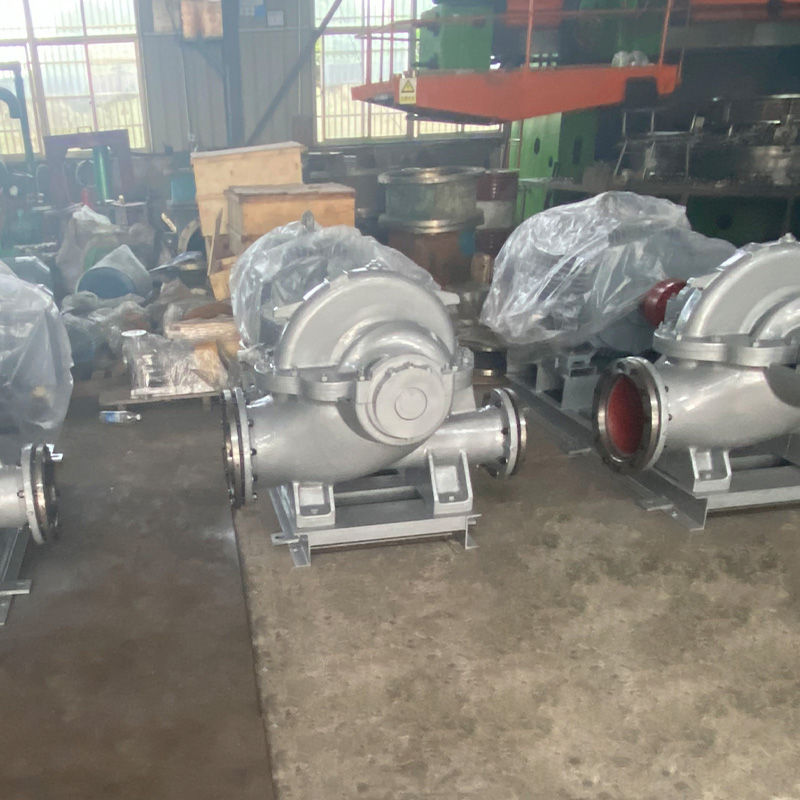 S SH Double Suction Pump by Jiangsu HuanyuWholesale S SH double suction pump page from Jiangsu Huanyu, with alloy casing material options and an inquiry path for petrochemical process pump buyers.View Product →
How to size a double suction pump without oversizing it
Four inputs decide whether the unit runs quietly for a decade or fails at the first seal change: the duty point, the NPSH margin, the running speed and the flow window around the best efficiency point.
Fix the real duty point
Record flow, head, fluid, temperature, density, viscosity and solids content, and note the range the process will actually visit. Most oversizing comes from designing for a future capacity that never arrives.
Set the NPSH margin
Calculate NPSHa for the worst case: highest liquid temperature, lowest tank level, fouled strainer. The standard selection rule keeps NPSHa at 1.1 times NPSHr, with an absolute margin of at least 0.5 m so that small values do not vanish into measurement error.
Choose the speed
1,450 rpm at 50 Hz, or 1,750 rpm at 60 Hz, gives lower NPSHr, slower wear and longer seal life. 2,950 rpm is only worth considering when head is high and a slower casing would become oversized and heavy.
Check suction specific speed
Push suction specific speed too high and the impeller recirculates at part load, which shows up as noise, vibration and erosion at the eye. A double suction impeller reaches large flows without pushing that number, and that is part of why it is specified.
Define the operating window
Design the loop so the pump runs between 70% and 120% of the best efficiency point. Below roughly 30% to 40% of that point, recirculation and shaft vibration begin regardless of how good the pump is.
Installation and piping mistakes that ruin a good pump
Most first-year failures on double suction pumps are piping and alignment problems, not hydraulic ones. The casing is usually the last thing at fault.
- Keep 5 to 10 pipe diameters of straight run ahead of the suction flange so the flow reaches the casing evenly.
- Fit an eccentric reducer with the flat side up, never a concentric reducer that traps air at the top of the line.
- Never land a vertical elbow directly on the suction nozzle. Uneven flow sends unequal flow to the two eyes, and the imbalance loads the shaft.
- Support the suction pipe independently. The pump nozzle is not a pipe support, and flange strain closes internal clearances.
- Realign after grouting and again after the first hot run. Thermal growth moves a casing even at 60 m of head.
- Flood and vent the casing before every start. A double suction casing holds more air than a single volute and will run dry on the seal faces.
- Remove temporary start-up strainers on schedule. A clogged screen is the fastest way to lose an NPSH margin that looked comfortable on paper.
| Symptom | Likely cause | Corrective action |
| Vibration at running speed | misalignment, soft foot, pipe-induced strain | realign cold and hot, recheck baseplate grouting |
| Rumbling with falling head | cavitation, NPSH margin lost | raise tank level, clean strainer, reduce speed |
| Bearing temperature climbing | residual thrust, lubricant breakdown, bearing setting | verify bearing setting and wear ring clearances |
| Seal leaking at start-up | air in casing, seal running dry | flood and vent, confirm seal flush flow |
When the double suction design is the wrong purchase
A double suction pump is the wrong purchase when the duty is low flow with high head, when the liquid carries hard abrasive solids, when the pump must self-prime, or when the flow is very high but the head is very low.
Specify double suction when
- Flow is above about 500 m3/h
- Head stays below roughly 150 m
- The liquid is clean or only mildly aggressive
- The pump runs continuously and bearing life matters
- Floor space allows a wider, heavier casing
Choose another pump type when
- Flow is under 200 m3/h at head above 80 m
- Solids settle or abrade, and wear allowance is essential
- The line runs dry on start, so self-priming is required
- Flow is very high and head very low
- The liquid is viscous, so a screw or displacement pump fits better
Above roughly 5,000 m3/h at low head, a mixed flow casing such as the SP series is lighter and cheaper per cubic metre than a double suction pump, and for abrasive slurry duty a wear-resistant slurry pump with thick wetted sections is the safer specification. A double suction casing does not automatically include that wear allowance, so never assume the two are interchangeable.
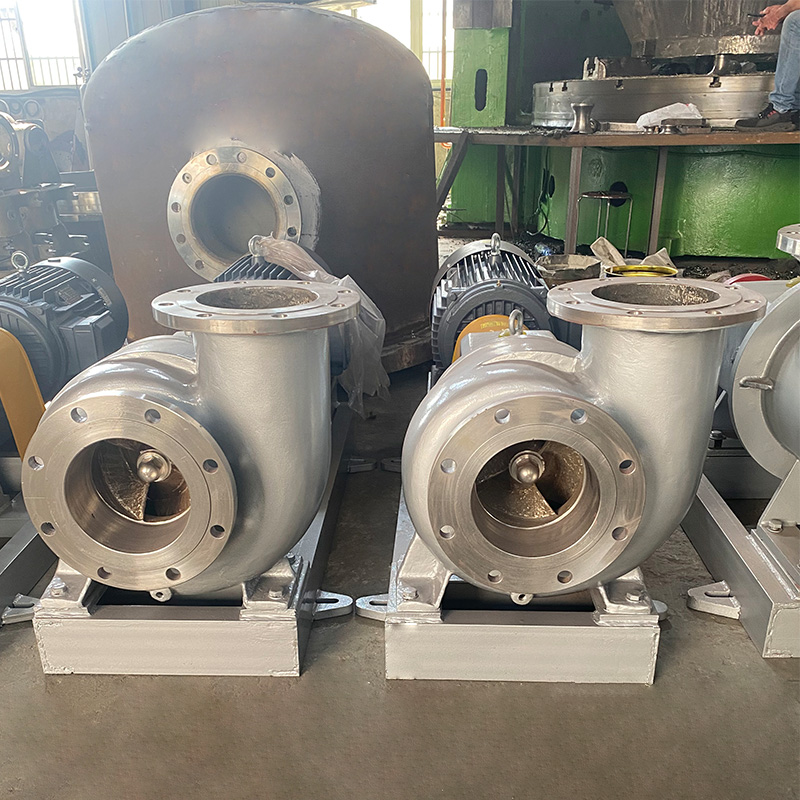 Wholesale SP Mixed Flow Pump from Jiangsu HuanyuWholesale SP mixed flow pump page from Jiangsu Huanyu, with specification, application and inquiry tabs for high-flow, low-head duties.View Product →
Frequently asked questions about double suction pumps
What is the difference between a double suction pump and a single suction pump?
A single suction pump pulls liquid into one side of the impeller, so the rotor carries a one-directional axial thrust and inlet area is limited to one eye. A double suction pump feeds two opposed eyes from one nozzle, which halves inlet velocity, lowers NPSHr and cancels most of the axial thrust. The practical result is more flow per casing size and longer bearing and seal life.
Does the double suction impeller eliminate axial thrust completely?
No. Machining tolerances, wear ring clearance differences and casing wear leave a small residual thrust, and the bearings are sized for it. What disappears is the large head-dependent thrust that dominates single suction designs, and that is why bearing temperatures stay lower on the same duty.
At what flow should a double suction pump be selected?
From about 500 m3/h upwards, and earlier when the available NPSH is tight. Below 200 m3/h with head above 80 m, a single suction or multistage pump is normally cheaper and easier to install. Flow alone is not the deciding factor: the NPSH margin and the interval between overhauls matter just as much.
Can a double suction pump handle seawater or abrasive slurry?
Seawater is a normal duty once wetted parts are specified in duplex 2205 or 2507, CD4MCu or a comparable alloy. Abrasive slurry is a different question, because a standard double suction casing does not include the thick wear allowance and heavy-section impeller a slurry pump needs. Check wear material and clearances before ordering.
Send the complete duty point, including flow, head, fluid, temperature, solids content and the NPSH available in the worst operating case, and contact the pump engineers at Jiangsu Huanyu Chemical New Materials Co., Ltd. for a performance curve, a material recommendation and an outline drawing. The company has cast, machined and assembled chemical pumps at its Jingjiang works since 1987, including the S/SH double suction range built for flows up to about 3,000 m3/h.