English
 русский
 Español
Content
COMPATIBILITY
What Chemicals Can a Magnetic Drive Pump Handle Safely?
The answer depends almost entirely on wetted-part material selection, not on the pump mechanism itself. Because magnetic drive pumps use non-metallic containment shells in most chemical-grade configurations, they outperform conventional centrifugal pumps across a remarkably wide fluid range.
Acids and Corrosive Fluids
Polypropylene (PP) and ETFE-lined pump bodies handle sulfuric acid concentrations up to 96% at temperatures below 60 C. PTFE-lined variants extend coverage to hydrofluoric acid (HF) at concentrations up to 48%, a fluid that destroys stainless steel within hours. In semiconductor fabrication, magnetic drive pumps transfer 37% hydrochloric acid (HCl) continuously without corrosion degradation for service lives exceeding five years.
Alkalis and Caustic Solutions
Sodium hydroxide (NaOH) at 50% concentration is routine for polypropylene-bodied pumps rated to 80 C. Potassium hydroxide (KOH) used in battery manufacturing and ammonia solutions in refrigeration circuits are also within standard compatibility envelopes for PVDF-wetted configurations.
Solvents and Organic Compounds
Methanol, ethanol, acetone, and toluene are handled by pumps with PTFE or PVDF wetted parts and ceramic bearings. Flow rates from 1 L/min to over 500 L/min are achievable. One critical limit: aromatic hydrocarbons above 120 C require metallic magnet containment cans (Hastelloy C or 316 SS) rather than polymer shells, as thermal expansion of plastics risks containment failure.
Chemical Compatibility Quick Reference
| Chemical | Concentration | Recommended Material | Max Temp (C) | Rating |
|---|---|---|---|---|
| Sulfuric Acid | Up to 96% | PP / ETFE lining | 60 | Excellent |
| Hydrofluoric Acid | Up to 48% | PTFE lining | 50 | Excellent |
| Hydrochloric Acid | Up to 37% | PP / PVDF | 60 | Excellent |
| Sodium Hydroxide | Up to 50% | PP / PVDF | 80 | Excellent |
| Methanol / Ethanol | 100% | PTFE / PVDF + ceramic bearing | 80 | Good |
| Hydrogen Peroxide | Up to 35% | PTFE lining | 40 | Good |
| Toluene / Xylene | 100% | PVDF + Hastelloy can | 100 | Moderate |
| Nitric Acid | Up to 65% | PTFE lining only | 50 | Good |
Always cross-reference fluid temperature, concentration, and vapor pressure against the pump manufacturer's compatibility chart. Mixtures of multiple chemicals can behave differently from individual components, particularly oxidizer-solvent combinations.
DESIGN
How Magnetic Drive Pumps Eliminate Leakage in Chemical Processing
Conventional centrifugal pumps rely on mechanical seals or packing glands where the rotating shaft exits the pump casing. These interfaces wear, degrade, and eventually leak -- releasing toxic, flammable, or environmentally regulated fluids. The magnetic drive pump removes this failure mode at the architectural level.
The Magnet Coupling Mechanism Explained
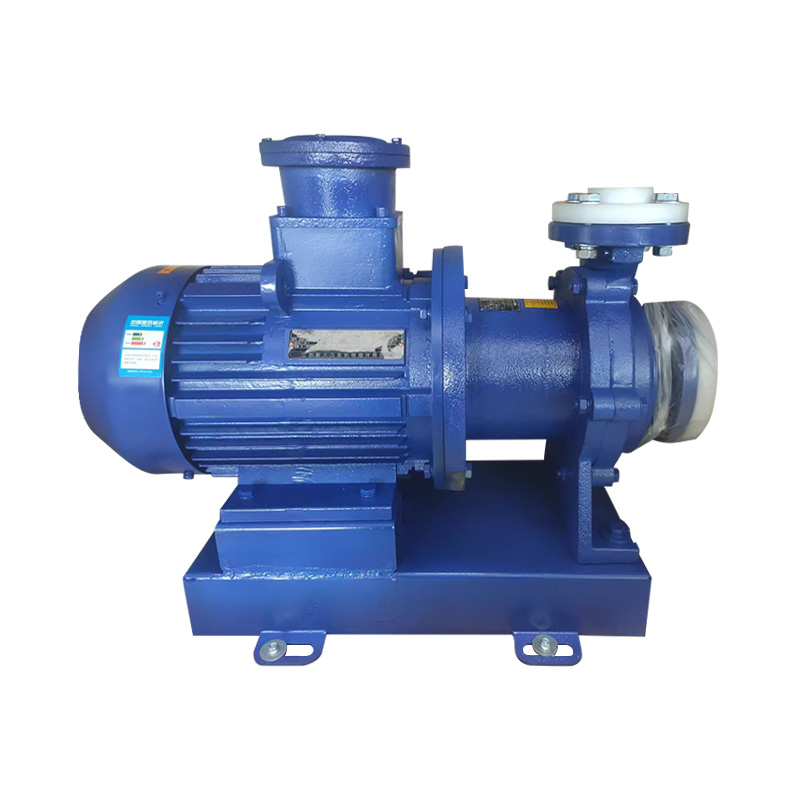
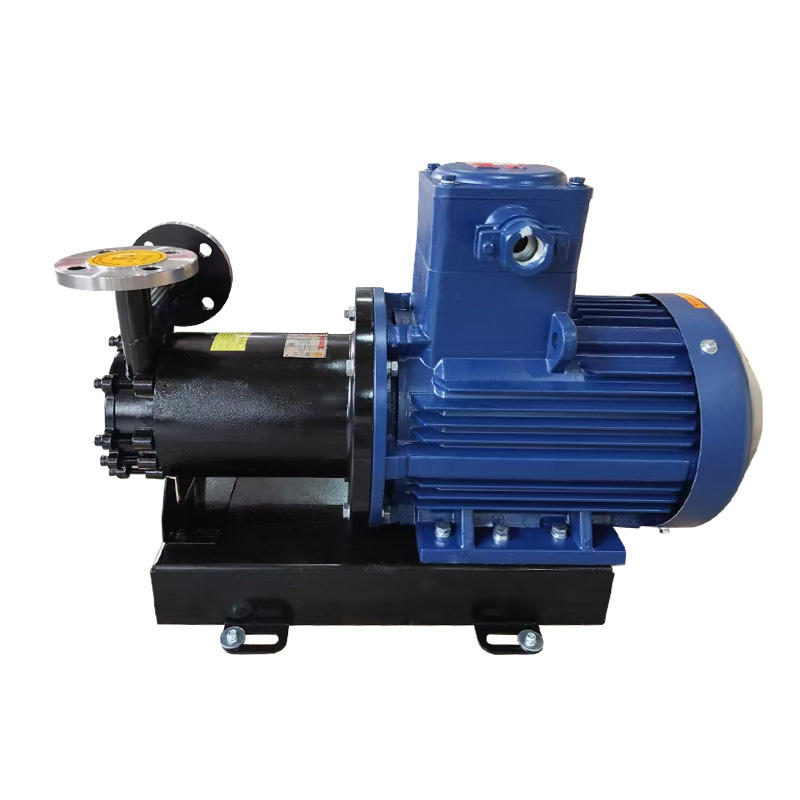
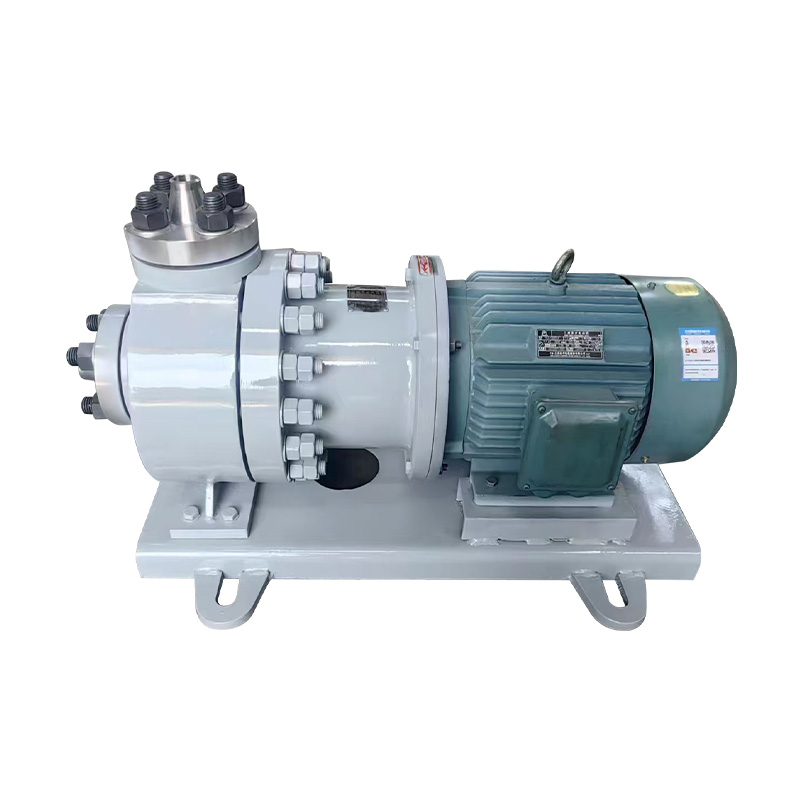
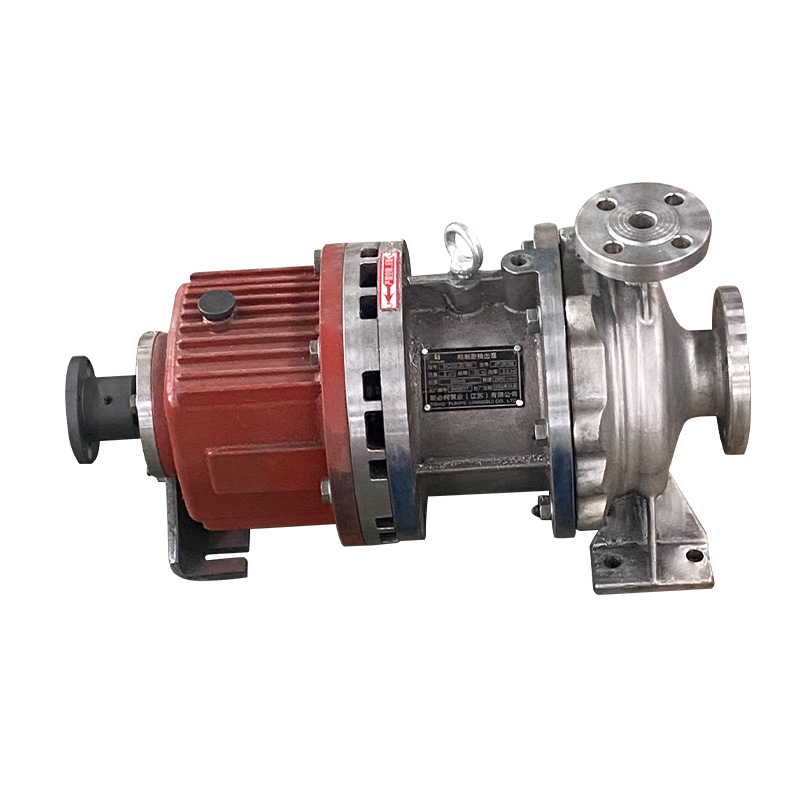
The drive motor rotates an outer magnet assembly. Inside the pump, an inner magnet assembly is coupled to the impeller. Between the two magnet assemblies sits a stationary containment shell -- hermetically sealed and pressure-rated. The outer magnets pull the inner magnets through the shell wall via magnetic flux, spinning the impeller without any shaft penetration of the fluid boundary. The result is a pump with no dynamic seals on the process side whatsoever.
Containment Shell Materials and Pressure Limits
The containment shell is the single most critical component in leak-free design. Material choices and their impact on performance vary significantly:
- PTFE shells: Maximum continuous pressure 10 bar at 80 C. Preferred for HF, concentrated acids, and oxidizers. Low eddy current losses improve efficiency.
- PEEK (polyether ether ketone) shells: Rated to 16 bar and 200 C. Used in high-temperature solvent transfer and pharmaceutical processing where FDA-grade materials are mandated.
- Hastelloy C-276 shells: Rated to 40 bar. Required when operating temperatures exceed polymer limits or when pump powers exceed 15 kW, where magnetic hysteresis heating in metallic cans becomes a thermal management consideration rather than a disqualifier.
- SiC (silicon carbide) bearings: Standard in all chemical-grade magnetic pumps. SiC runs dry for brief periods without seizure and has a hardness of 9.5 Mohs -- resistant to abrasive particulates in slurry applications up to 20% solids by volume.
Decoupling Protection: Preventing Dry-Run Damage
The one operational vulnerability specific to magnetic drive pumps is magnet decoupling. If the hydraulic resistance exceeds the magnet coupling torque -- caused by dry running, excessive viscosity, or blocked inlet -- the inner magnet stops while the outer magnet continues spinning. This generates rapid frictional heat that can destroy bearings and containment shell within 30 seconds.
Modern installations address this with three layers of protection: a flow sensor with auto-shutoff relay (response time under 200 ms), a power draw monitor that detects the torque spike preceding decoupling, and a minimum-flow bypass line sized at 10 to 15% of rated flow. Plants implementing all three layers report zero decoupling-related failures over multi-year operating periods.
GUIDE
Where Chemical Magnetic Drive Pumps Deliver the Strongest ROI
Not every application justifies the 20 to 40% price premium over sealed centrifugal pumps. The business case is strongest where fluid toxicity, regulatory compliance, or maintenance burden makes seal failures expensive.
Ultra-pure acid and solvent transfer where a single contamination event from a failed seal can scrap an entire wafer batch. Contamination costs easily exceed USD 100,000 per incident, making the pump price premium negligible.
FDA 21 CFR and EU GMP regulations require zero product contamination from external sources. PEEK-lined magnetic pumps with full traceability documentation meet these requirements. Mechanical seals introduce lubricant contamination risk that disqualifies them from clean-room service.
Chromic acid, nickel sulfate, and cyanide baths are all highly toxic. OSHA permissible exposure limits (PELs) for hexavalent chromium are 5 micrograms per cubic meter -- a threshold that seal leakage can breach within minutes in enclosed plating rooms.
Sodium hypochlorite (bleach) at 12 to 15% concentration attacks conventional seal materials within weeks. Magnetic drive pumps in PVDF or PP handle continuous hypochlorite dosing with service intervals measured in years rather than months.
Key Specification Parameters at a Glance
- Flow Range0.5 to 800 L/min (standard chemical-grade models)
- Head RangeUp to 80 m (polymer body); up to 200 m (metallic body)
- Temperature-20 C to 200 C depending on wetted material
- PressureUp to 40 bar (metallic containment shell)
- Viscosity LimitUp to 200 mPa.s (standard); higher requires torque derating
- StandardsISO 2858, DIN 24256, ASME B73.3, ATEX (for flammable fluids)
For any chemical processing application where fluid toxicity, environmental compliance, or maintenance cost is a concern, the Chemical Magnetic Drive Pump is the technically superior choice over mechanically sealed alternatives. Its hermetically sealed architecture physically eliminates the primary leakage pathway, its broad material matrix covers virtually every industrial chemical at practical concentrations and temperatures, and its lower maintenance burden delivers total cost of ownership advantages that compound over multi-year service cycles. Specify wetted materials against your exact fluid matrix, protect against dry-run with appropriate instrumentation, and this pump class will deliver decades of leak-free chemical transfer.