English
 русский
 Español
Content
- 1 Engineering Depth: The Strategic Role in Modern Industry
- 2 Core Advantages and Design Principles: The Vertical Submersible Edge
- 3 Critical Application Domains and Selection Guide
- 4 FAQ
- 4.1 How does the efficiency of a vertical submersible pump compare to a traditional vertical turbine pump?
- 4.2 What are the most critical maintenance aspects for a vertical submersible pump in a mining application?
- 4.3 For a deep well project, what factors determine the number of stages needed in a multistage pump?
- 4.4 In wastewater applications, what type of impeller is best to prevent clogging, and why?
Engineering Depth: The Strategic Role in Modern Industry
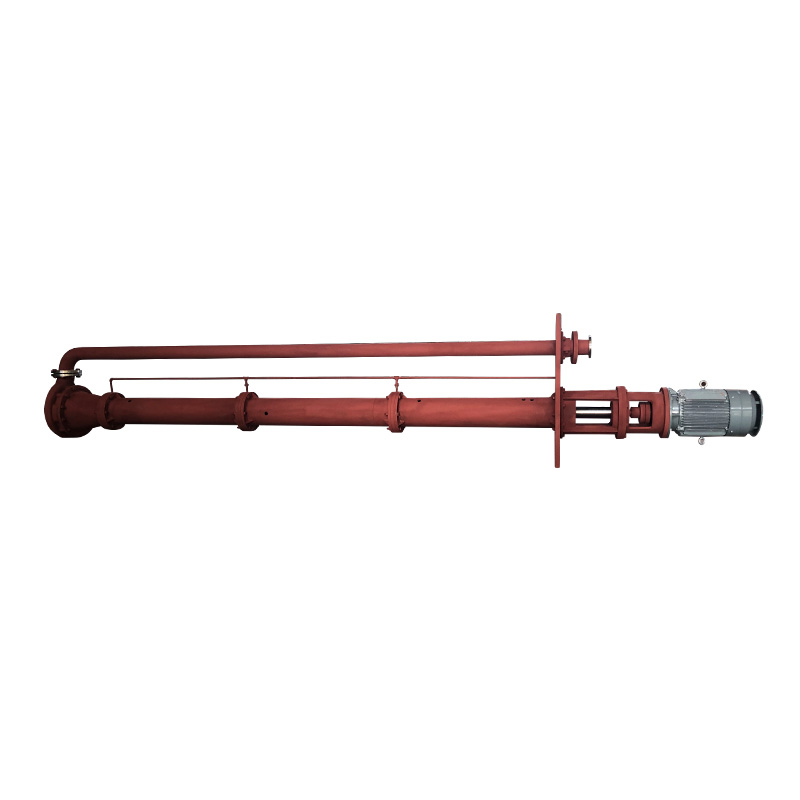
In the demanding world of industrial fluid handling, Vertical High-Performance Submersible Pumps represent a pinnacle of targeted engineering. Unlike standard pumps, these units integrate the motor and pump into a single, sealed assembly designed to operate while fully submerged in the fluid they are pumping. The vertical orientation is not merely a design choice; it is a critical feature for deep installations, space-constrained sites, and applications requiring robust, reliable operation with minimal maintenance intrusion. This guide delves beyond basic specifications to explore the core engineering advantages, critical application matches, and technical decision-making processes that define successful deployment of these powerful industrial tools. We will address how they solve specific challenges in sectors from mining to municipal water, providing a framework for engineers and project managers to make informed selection decisions.
Core Advantages and Design Principles: The Vertical Submersible Edge
The distinct configuration of a vertical submersible pump provides inherent benefits that make it the default choice for numerous challenging applications. Understanding these principles is key to recognizing where their performance justifies the investment.
First, the vertical, submerged design eliminates the need for long, complex shafting and above-ground priming systems required by vertical turbine pumps in deep settings. This leads to a simpler, more reliable installation with a smaller surface footprint. The pump is supported by the column pipe and submerged in the fluid it pumps, which provides natural cooling for the motor, a critical factor for high-performance operation and longevity. Furthermore, this immersion often allows for a shorter, more rigid shaft between the motor and impeller(s), reducing deflection and vibration, which directly translates to extended bearing and seal life. The design inherently mitigates cavitation risk, as the pump intake is directly within the fluid source.
- Key Insight: The cooling provided by the surrounding fluid is a major factor enabling the compact, high-power-density motors used in these pumps, allowing for significant power in a relatively small diameter to fit in deep, restricted wells or boreholes.
Critical Application Domains and Selection Guide
Selecting the right pump is about matching its engineered capabilities to the specific demands of the application. Here, we explore how Vertical High-Performance Submersible Pumps are tailored to conquer some of industry's toughest pumping challenges.
Conquering Depth: Reliable Pumping for Deep Well Applications
For deep well applications, the primary challenges are generating sufficient pressure to lift water hundreds of meters and ensuring reliability in a confined, inaccessible environment. This is the domain of the multistage vertical submersible pump. By stacking multiple impellers and diffusers on a single shaft, each stage incrementally increases the discharge pressure, enabling the pump to achieve the necessary high pressure specification for deep lifts. Selection for deep wells must carefully consider materials resistant to corrosion and abrasion (like stainless steel alloys), the motor's ability to withstand high starts against deep head pressure, and the integrity of the cable and sealing systems over the long, pressurized column.
Mastering Harsh Conditions: High-Flow Demands in Mining
The mining industrial environment is notoriously abrasive and demanding. De-watering open pits, handling tailings slurry, and managing process water require pumps built for punishment. A high flow vertical submersible pump for mining is engineered with extra-heavy-duty components. This includes hardened metal or elastomer-lined wear parts, large-diameter shafts for torsional strength, and impellers designed to pass solids without clogging. The motor is often specially protected against the ingress of fine abrasive particles. Efficiency remains important, but durability and ease of maintenance—such as designs that allow for wet-end replacement without pulling the motor—are paramount.
The Municipal Backbone: Ensuring Stability in Wastewater Treatment
In wastewater treatment plants, pumps must handle variable flows, fibrous materials, and highly corrosive environments. Reliability is non-negotiable to prevent process disruption. When evaluating the best vertical submersible pump brand for wastewater treatment, key features extend beyond name recognition. Look for pumps with vortex or semi-open impellers that resist ragging and clogging, dual mechanical seals with seal failure monitoring, and motors with high-grade corrosion protection (e.g., epoxy coating, stainless steel hardware). Brands that offer robust duty-specific designs, comprehensive warranty support, and readily available service networks typically provide superior long-term value in this critical sector.
| Application Focus | Deep Well Water Supply | Mining & Slurry Handling | Wastewater Treatment |
| Primary Pump Type | Multistage Submersible | Single-Stage, Heavy-Duty Submersible | Vortex or Non-Clog Submersible |
| Key Material Concern | Corrosion Resistance | Abrasion Resistance | Corrosion & Clogging Resistance |
| Critical Design Feature | High-Pressure Stages, Long Motor Life | Reinforced Wear Parts, Solids Handling | Clog-Free Impeller, Robust Sealing |
The Core Choice: Oil-Filled vs. Water-Filled Submersible Motor
A fundamental technical decision is the internal cooling and lubrication medium of the submersible motor. The oil filled vs water filled vertical submersible motor debate centers on trade-offs between cooling efficiency, maintenance, and environmental safety. Oil-filled motors use a dielectric oil that provides excellent cooling and lubrication to bearings but poses a contamination risk if the seal fails. Water-filled motors use clean water or a water-glycol mix, eliminating the contamination risk and often allowing simpler, less expensive construction, but they may have slightly lower heat transfer efficiency and require careful material selection to prevent internal corrosion.
| Criteria | Oil-Filled Motor | Water-Filled Motor |
| Cooling/Lubrication Medium | Dielectric Oil | Purified Water or Water-Glycol Mix |
| Primary Advantage | Superior heat transfer, excellent bearing lubrication. | Environmentally benign leak, no soil contamination risk. |
| Primary Disadvantage | Potential environmental hazard if seal fails; higher fluid cost. | Potentially lower cooling capacity; corrosion inhibitors needed. |
| Typical Application | Deep wells, high-temperature fluids, high-reliability demands. | Potable water, environmentally sensitive areas, lower-cost projects. |
FAQ
How does the efficiency of a vertical submersible pump compare to a traditional vertical turbine pump?
In optimal conditions for both types, peak efficiencies can be comparable. However, Vertical High-Performance Submersible Pumps often have an advantage in real-world deep-well applications because they eliminate long line shafting, which creates significant frictional losses. The submersible motor's direct drive and efficient cooling also contribute to a favorable overall system efficiency. The key is selecting a submersible pump whose performance curve is well-matched to the specific well's yield and dynamic head, ensuring it operates in its best efficiency zone.
What are the most critical maintenance aspects for a vertical submersible pump in a mining application?
For a high flow vertical submersible pump in mining industrial use, proactive maintenance is vital. The top priorities are: 1) Monitoring Wear: Regularly checking (via performance trend analysis or physical inspection) the clearance of wear rings, impellers, and liners to maintain efficiency and prevent catastrophic failure. 2) Seal Integrity: Ensuring the mechanical seal and its protection system (like expeller vanes or throttle bushings) are functioning to prevent abrasive slurry from entering the motor chamber. 3) Electrical Health: Periodic megger testing of the motor and cable insulation resistance is crucial, as abrasive environments and frequent starts/stops can degrade insulation over time.
For a deep well project, what factors determine the number of stages needed in a multistage pump?
The number of stages in a multistage vertical submersible pump is directly calculated from the total dynamic head (TDH) requirement and the performance of a single impeller/diffuser stage at the desired flow rate. The formula is essentially: Number of Stages = Total Required Head (in meters) / Head per Stage (at selected flow). Engineers must also consider the well's diameter, which limits the maximum outer diameter of the pump stages, and the available motor power. It's standard practice to add a small margin (e.g., 5-10%) to the calculated stages to account for future wear and ensure the pump meets its high pressure specification throughout its service life.
In wastewater applications, what type of impeller is best to prevent clogging, and why?
For reliable operation in wastewater treatment, vortex impellers or single-channel "non-clog" impellers are generally considered the best choice to prevent clogging. A vortex impeller creates a powerful vortex that draws solids through the pump without them ever contacting the impeller itself, making it extremely resistant to ragging. A single-channel impeller has a large, rounded passage designed to pass spherical solids up to a specified diameter. Both designs sacrifice a small amount of hydraulic efficiency for vastly improved reliability in raw sewage and sludge applications, a trade-off that is essential for minimizing downtime and maintenance costs.