English
 русский
 Español
Content
- 1 Where to Find Genuine Flowmore Horizontal Pump Spare Parts?
- 2 How to Read a Flowmore Horizontal Split Case Pump Efficiency Curve?
- 3 When Should You Replace a Flowmore Horizontal Pump Mechanical Seal?
- 4 Where to Find Quality Used Flowmore Horizontal Pumps for Sale?
- 4.1 The Refurbishment Factor: What to Inspect Before Buying
- 4.2 Critical Documentation: Original Test Reports and Material Certifications
- 4.3 When Used Makes Sense: Capital Projects vs. Temporary Redundancy
- 4.4 Risk Mitigation: Pressure Testing and Non-Destructive Examination (NDE)
- 4.5 A Cost-Effective Alternative: Custom-Engineered New Pumps from Jiangsu Huanyu
- 5 Flowmore Horizontal Pump vs. Vertical Turbine Pump: Which Is Right?
- 6 Frequently Asked Questions (FAQ)
- 6.1 1. What is the typical lead time for Flowmore horizontal pump spare parts, and how can I expedite critical replacements?
- 6.2 2. How do I calculate the remaining useful life of a used Flowmore pump before purchase?
- 6.3 3. What are the API 610 requirements for horizontal pumps, and do Flowmore pumps typically meet them?
- 6.4 4. How does fluid viscosity affect the performance of a Flowmore horizontal split case pump?
- 6.5 5. What is the maximum allowable misalignment for a Flowmore horizontal pump coupling?
- 7 References
In the industrial pumping sector, procurement decisions hinge on lifecycle cost, reliability under specific operating conditions, and supply chain efficiency. For engineers and procurement specialists evaluating flowmore horizontal pump systems, understanding the technical nuances of maintenance, performance optimization, and configuration selection is critical. This guide provides an engineering-level analysis of key considerations, supported by material science and hydraulic principles, to aid in informed decision-making for B2B applications in chemical, petroleum, and power generation sectors.
Where to Find Genuine Flowmore Horizontal Pump Spare Parts?
Sourcing authentic replacement components is essential for maintaining hydraulic performance and mean time between repairs (MTBR). A verified flowmore horizontal pump spare parts list ensures compatibility and material integrity, particularly in corrosive or high-temperature services.
OEM vs. Aftermarket: Critical Differences You Must Know
The choice between original equipment manufacturer (OEM) and aftermarket components impacts fit tolerance, material traceability, and warranty validation. The following table outlines the technical distinctions.
| Parameter | OEM Components | Aftermarket Components |
|---|---|---|
| Material Certification | Full traceability to mill test reports (MTRs); compliance with ASTM/ASME standards | Variable; often limited documentation or generic material grades |
| Dimensional Tolerances | ISO 9906 or API 610 Grade 2 tolerances; verified by OEM drawings | Nominal fit; may require field modification |
| Hydraulic Performance | Guaranteed to meet original curve specifications | Potential deviation; efficiency losses of 2-5% documented in field tests |
| Warranty Coverage | Full system warranty retained | Void of OEM system warranty; component-level coverage only |
Essential Components on a Flowmore Spare Parts List
A comprehensive flowmore horizontal pump spare parts list for critical inventory should prioritize wear components with defined replacement intervals based on L10 bearing life and erosion rates.
Casing Wear Rings and Impeller Rings
- Function: Maintain close clearance between stationary and rotating parts to minimize internal recirculation losses.
- Failure Mode: Erosive wear increases clearance, reducing volumetric efficiency and increasing vibration.
- Material Options: Bronze (standard service), 316L (corrosive service), or duplex 2205 (high-chloride environments).
Shaft Sleeves and Mechanical Seals
- Function: Protect the shaft from wear at the gland area and provide a sealing surface.
- Failure Mode: Grooving from packing or seal set screws leads to shaft replacement costs.
- Procurement Specification: Specify hardened sleeves (minimum 40 HRC) for abrasive services.
Bearing Assemblies and Lubrication
- Bearing Types: Angular contact bearings for thrust loads; deep groove for radial loads.
- Lubrication: Oil bath vs. grease; regreasing intervals per ISO 281.
Sourcing Strategy: Balancing Cost and Lead Time
- Critical spares (impellers, casings): Maintain 100% OEM stock; lead times of 12-20 weeks common.
- Consumables (gaskets, bearings): Cross-reference to standard industrial sizes for local sourcing.
- Obsolescence mitigation: For legacy Flowmore models, consider reverse engineering with laser scanning and solid modeling to enable replication by qualified foundries.
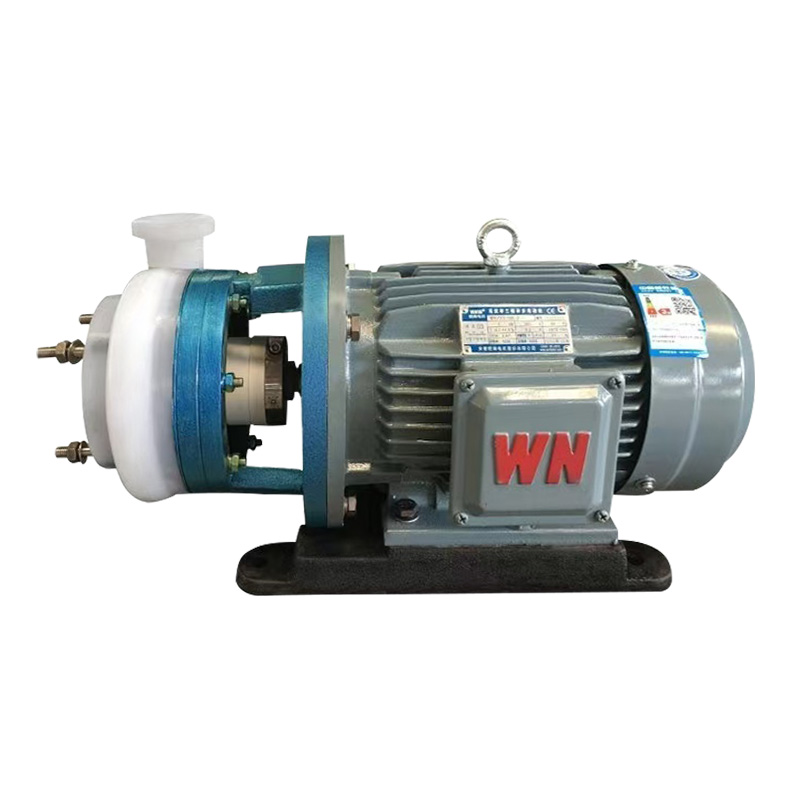
Material Compatibility: Why Standard Spares Fail in Chemical Service
Corrosion rates follow predictable patterns based on the NACE MR0175/ISO 15156 framework. For example, 316L stainless steel exhibits corrosion rates exceeding 0.5 mm/year in 5% hydrochloric acid at 50°C, necessitating upgrade to Hastelloy C-276 or titanium. Jiangsu Huanyu Chemical New Materials Co., Ltd., established in 1987, specializes in supplying replacement components for Flowmore pumps using advanced alloys including 904L, 2507 super duplex, and CD4MCu. Our foundry integrates investment casting with full traceability, enabling production of wear rings, impellers, and casings that meet or exceed original specifications for aggressive chemical, metallurgical, and petrochemical applications. With over 300 pump specifications across ten series, we offer OEM/ODM capabilities for custom alloy components delivered to Malaysia, Thailand, Russia, and beyond.
How to Read a Flowmore Horizontal Split Case Pump Efficiency Curve?
The flowmore horizontal split case pump efficiency curve is the primary tool for predicting performance and identifying the optimal operating window. Proper curve interpretation prevents cavitation, excessive vibration, and premature bearing failure.
Anatomy of a Pump Curve: Head, Flow, and Efficiency
- Head (H): Expressed in meters or feet; represents energy imparted to the fluid, independent of fluid density.
- Flow (Q): Volumetric rate in m³/h or GPM.
- Efficiency (η): Percentage of input power converted to hydraulic energy; peaks at the Best Efficiency Point (BEP).
- Power (P): Brake horsepower required at the pump shaft; calculated as P = (Q × H × SG) / (η × K).
The Best Efficiency Point (BEP): Why It Matters for Longevity
Operating at BEP minimizes radial thrust and vibration. The Hydraulic Institute recommends operation within 70-110% of BEP flow for split-case pumps. Deviation beyond this range increases:
- Recirculation (low flow): Causes cavitation damage at impeller inlet; temperature rise in casing.
- Excessive flow: Increases NPSH required; risk of cavitation at impeller outlet.
- Bearing loads: Radial thrust increases exponentially as flow deviates from BEP.
Understanding Net Positive Suction Head Required (NPSHr)
NPSHr is a function of impeller inlet design and rotational speed. To avoid cavitation, the available system NPSH (NPSHa) must exceed NPSHr by a safety margin (typically 0.5-1.0 meters for water, higher for hydrocarbons). The 3% head drop criterion (per HI 9.6.1) defines the onset of cavitation .
Affinity Laws: Predicting Performance at Different Speeds
For variable speed applications, the affinity laws govern performance changes:
| Parameter | Relationship | Example (90% speed) |
|---|---|---|
| Flow (Q) | ∝ Speed (N) | 90% of rated flow |
| Head (H) | ∝ N² | 81% of rated head |
| Power (P) | ∝ N³ | 72.9% of rated power |
These relationships assume constant efficiency, though actual efficiency may decrease slightly at reduced speeds.
How Custom Engineering Optimizes Curve Matching
When standard Flowmore curves fail to align with system requirements, hydraulic re-rating through impeller trimming or volute modification becomes necessary. Jiangsu Huanyu's engineering team, backed by continuous product development since 1987, offers custom hydraulic design services. Using CFD analysis and performance testing, we can modify impeller geometry or develop entirely new volute configurations to place your operating point precisely at BEP. Our forced circulation pumps and single-stage chemical centrifugal pumps are routinely customized for clients in Laos, Tanzania, and beyond, ensuring maximum efficiency and minimum vibration in demanding applications.
When Should You Replace a Flowmore Horizontal Pump Mechanical Seal?
Mechanical seal failure accounts for approximately 70% of unscheduled pump downtime in chemical processing. Recognizing the precursors to failure in a flowmore horizontal pump mechanical seal replacement scenario enables condition-based maintenance rather than reactive repairs.
Visual Indicators: What Leakage Tells You
- Droplet leakage (>3 drops/minute): Primary seal faces worn or damaged; immediate replacement indicated.
- Mist or vapor: Flashing across faces due to inadequate cooling or excessive temperature.
- Discolored fluid: Possible product contamination from secondary seal failure.
Performance Monitoring: Pressure Drops and Power Consumption
- Stator current analysis: Research by Zou et al. (2021) demonstrates that mechanical seal degradation produces detectable changes in motor stator current harmonics, enabling non-invasive monitoring .
- Stuffing box pressure fluctuation: Sudden drops indicate seal face separation or failure.
- Power consumption: Increased friction from seal face distress raises motor amperage.
Planned vs. Reactive Maintenance: The Cost Analysis
| Factor | Planned Replacement | Reactive (Run-to-Failure) |
|---|---|---|
| Downtime Cost | Scheduled; minimal production loss | Unplanned; 3-5x higher impact |
| Secondary Damage | None; contained failure | Shaft sleeve, bearing, and possibly casing damage |
| Labor Efficiency | Optimized with prepared tools/parts | Emergency call-out; overtime premium |
| Parts Cost | Seal kit only | Seal + sleeve + bearings + potential shaft repair |
Seal Selection: Matching Faces and Elastomers to Your Fluid
Mechanical seal failures often stem from incorrect material selection. Common failure modes include thermal cracking, blistering, and face wear .
- Seal Face Materials:
- Carbon vs. Silicon Carbide: General service; good dry-run resistance.
- Tungsten Carbide vs. Silicon Carbide: Abrasive slurries; high hardness.
- Silicon Carbide vs. Silicon Carbide: Corrosive services; excellent chemical resistance.
- Elastomers:
- FKM (Viton): General chemical; temperature to 200°C.
- EPDM: Hot water, steam, ketones; not compatible with oils.
- FFKM (Kalrez/Chemraz): Extreme chemical/temperature; highest cost.
Beyond Flowmore: Upgrading Seal Reliability with Advanced Materials
For severe services exceeding standard Flowmore seal capabilities, upgrading to advanced metallurgy and face materials extends MTBR significantly. Jiangsu Huanyu supplies replacement mechanical seals and seal chambers engineered for pumps operating in sulfuric acid, molten sulfur, and high-temperature hydrocarbon services. Our material availability includes duplex 2205, super duplex 2507, Hastelloy C-276, and titanium, with seal faces in reaction-bonded silicon carbide or tungsten carbide. Located near the Jiangyin Yangtze River Bridge, we provide rapid logistics support to Southeast Asian and Russian markets for urgent flowmore horizontal pump mechanical seal replacement requirements.
Where to Find Quality Used Flowmore Horizontal Pumps for Sale?
The market for used flowmore horizontal pumps for sale offers capital cost savings of 40-60% compared to new equipment, but requires rigorous technical due diligence to avoid inheriting latent defects.
The Refurbishment Factor: What to Inspect Before Buying
- Casing integrity: Ultrasonic thickness testing (UTT) to verify remaining wall thickness; minimum 80% of original required for pressure retention.
- Shaft runout: TIR (Total Indicator Reading) not to exceed 0.002 inches (0.05 mm) at mechanical seal areas.
- Impeller condition: Inspect for pitting, erosion, or balancing cuts; imbalance increases bearing loads.
- Bearing housing: Bore concentricity and fit tolerance per ISO 286.
Critical Documentation: Original Test Reports and Material Certifications
- Hydrostatic test reports: Verify casing pressure rating (typically 1.5× design pressure).
- Performance curve test: Original shop test data confirms hydraulic performance at BEP.
- Material traceability: Mill test reports (MTRs) for pressure-containing parts.
- Service history: Previous fluid handled; hours of operation; maintenance records.
When Used Makes Sense: Capital Projects vs. Temporary Redundancy
Used equipment is viable for:
- Non-critical standby or spare duty.
- Short-term capacity expansion (<2 years).
- Pilot plants with uncertain future requirements.
Avoid used pumps for:
- Critical continuous processes (e.g., 24/7 refining).
- Services with unknown corrosion history (risk of stress corrosion cracking).
- Applications requiring API 610 latest edition compliance.
Risk Mitigation: Pressure Testing and Non-Destructive Examination (NDE)
Before commissioning a used Flowmore pump, mandate:
- Dye penetrant testing (PT): Impeller vanes and shaft fillet radii for cracks.
- Magnetic particle testing (MT): Ferritic casing pressure boundaries.
- Hydrostatic test: At 1.3× maximum allowable working pressure (MAWP) for 30 minutes minimum.
- Run test: Vibration measurement per ISO 10816-3; bearing temperature stabilization.
A Cost-Effective Alternative: Custom-Engineered New Pumps from Jiangsu Huanyu
Buyers searching for used flowmore horizontal pumps for sale often discover that reconditioning costs, unknown service history, and lack of material certifications erode initial savings. Jiangsu Huanyu offers a compelling alternative: custom-engineered new pumps built to Flowmore mounting and performance dimensions, often at prices competitive with used equipment. With over 100 employees and 300+ specifications spanning materials from 304 to titanium, we provide new pumps with full material traceability, performance testing, and warranty coverage. Our products serve clients from Tanzania to Russia, proving that new, certified equipment can be cost-effective while eliminating the operational risks of used machinery.
Flowmore Horizontal Pump vs. Vertical Turbine Pump: Which Is Right?
The selection between a flowmore horizontal pump vs vertical turbine pump involves trade-offs in footprint, hydraulics, maintenance access, and system NPSH. Each configuration offers distinct advantages depending on application constraints.
Footprint and Installation Constraints
| Parameter | Horizontal Pump | Vertical Turbine Pump |
|---|---|---|
| Floor Space Required | Large; requires mounting base and access clearance | Minimal; only discharge head occupies floor |
| Elevation Requirement | Single-level installation | Requires pit or sump depth (typically 3-10 meters) |
| Foundation | Heavy concrete base required | Minimal; supported at grade by discharge head |
| Indoor Installation | Practical; all components accessible | Limited by pit depth; may require building modifications |
Net Positive Suction Head (NPSH) Considerations
- Horizontal pumps: Generally require positive suction head (flooded suction) or short suction piping to meet NPSHr.
- Vertical turbine pumps: First stage impeller can be submerged, providing maximum NPSHa; ideal for low liquid levels or suction lift applications.
- Cavitation risk: Vertical pumps inherently lower risk due to submergence.
Maintenance Access and Ease of Service
- Horizontal pumps: All components accessible at grade; bearing and seal replacement without disturbing piping (back pull-out design).
- Vertical turbines: Requires pulling entire column assembly for impeller or bearing maintenance; crane capacity and headroom needed.
- Mean Time To Repair (MTTR): Horizontal: 4-8 hours; Vertical: 24-48 hours (typical).
Efficiency Comparison Across Operating Ranges
Both configurations can achieve peak efficiencies of 80-88% when properly selected. However:
- Horizontal split-case pumps maintain flat efficiency curves over wider flow ranges (70-120% of BEP).
- Vertical turbines show sharper efficiency drop-off outside 80-110% of BEP.
- Line shaft bearings in vertical pumps add mechanical losses (1-3% total).
Priming and Suction Lift Capabilities
- Horizontal pumps: Not self-priming; require flooded suction or external priming system.
- Vertical turbines: Inherently self-priming when submerged; can handle suction lift up to 6-7 meters theoretically, though cavitation limits apply.
- Application guidance: Use vertical turbines for river intake, sump drainage, or marine applications; use horizontal for process transfer, building services, and tank farm duties.
How Jiangsu Huanyu Helps You Make the Right Selection
The choice between horizontal and vertical configurations impacts long-term operating costs, reliability, and site-specific feasibility. Jiangsu Huanyu's application engineering team, leveraging 35+ years of pump manufacturing experience, provides unbiased selection support backed by comprehensive hydraulic analysis. We manufacture both configurations extensively: horizontal pumps including single-stage chemical centrifugal and pipeline pumps for general transfer duties, and vertical configurations for limited footprint or pit installations. With alloys ranging from CD4MCu to 2520 stainless steel, and applications spanning chemical fiber to power generation, we deliver solutions optimized for your specific site conditions, fluid properties, and maintenance philosophy. We welcome clients to visit our facility near the Jiangyin Yangtze River Bridge for firsthand discussions.
Frequently Asked Questions (FAQ)
1. What is the typical lead time for Flowmore horizontal pump spare parts, and how can I expedite critical replacements?
Standard lead times for OEM Flowmore cast components (casings, impellers) range from 12-20 weeks due to pattern availability and foundry scheduling. For critical expedites, consider sourcing from specialized aftermarket foundries with pattern libraries or reverse engineering capabilities. Jiangsu Huanyu maintains digital pattern databases for many Flowmore models and can deliver precision-investment cast components in 4-6 weeks using 3D scanning and CNC machining, with full material certification for alloys including 316L, CD4MCu, and Hastelloy.
2. How do I calculate the remaining useful life of a used Flowmore pump before purchase?
Remaining life estimation requires: (1) Ultrasonic thickness testing of casing at critical wear areas (cutwater, volute throat); compare to minimum design wall thickness per ASME B31.3. (2) Shaft fatigue assessment based on operating hours and stress cycles; if previous service history is unknown, assume 50% of design life consumed. (3) Impeller condition scoring based on erosion patterns. A quantitative method involves calculating a "Remaining Life Factor" = (Measured Wall Thickness - Minimum Required) / (Original Wall Thickness - Minimum Required) × 100%, with values below 60% indicating high risk .
3. What are the API 610 requirements for horizontal pumps, and do Flowmore pumps typically meet them?
API 610 (11th edition) specifies mechanical design, materials, and testing for refinery service pumps. Key requirements include: bearing L10 life of 25,000 hours minimum, 3% head drop NPSH testing, and vibration limits of 3.0 mm/s. Standard Flowmore pumps are generally designed to ISO 5199 (industrial duty) rather than full API 610. For API-compliant applications, buyers should specify API 610 construction with options for Plan 11/21/53 seal support systems and fully confined gaskets. Jiangsu Huanyu can manufacture to API 610 specifications with appropriate material upgrades and testing protocols .
4. How does fluid viscosity affect the performance of a Flowmore horizontal split case pump?
Viscosity corrections follow the Hydraulic Institute method (ANSI/HI 9.6.7). For viscosities above 30 cSt, correction factors apply to head, flow, and efficiency. At 100 cSt, head may derate by 5-8% and efficiency by 10-15% compared to water performance. Pump selection for viscous fluids should use corrected performance curves; oversizing based on water curves leads to off-BEP operation and potential cavitation. For highly viscous fluids (>300 cSt), positive displacement pumps may be more appropriate than centrifugal designs .
5. What is the maximum allowable misalignment for a Flowmore horizontal pump coupling?
Maximum allowable misalignment depends on coupling type and speed. For flexible element couplings at 1,800 RPM: Angular misalignment ≤ 0.1 mm/mm of coupling diameter; parallel offset ≤ 0.05 mm. For gear couplings: Angular ≤ 0.2 mm/mm; parallel ≤ 0.1 mm. Alignment should be checked hot (at operating temperature) as thermal growth alters alignment. Use laser alignment systems achieving precision within 0.02 mm; shims should be stainless steel to prevent corrosion creep. Misalignment beyond limits accelerates seal wear, bearing failure, and shaft fatigue .
References
- Boyce, M. P. (2010). An Overview of Pumps. In Handbook for Cogeneration and Combined Cycle Power Plants (2nd ed.). ASME Press.
- Zou, J., Luo, Y., Han, Y., & Fan, Y. (2021). Research on stator current characteristics of centrifugal pumps under different mechanical seal failures. Proceedings of the Institution of Mechanical Engineers, Part C: Journal of Mechanical Engineering Science, 236(11), 5748-5762.
- Song, Y., Guo, S., Liu, S., & Ma, J. (2018). Oil film characteristics and failure mechanism analysis of one kind of mechanical seal under the effect of fluid-structure-thermal coupling. Semantic Scholar.
- Yu, Z. (2007). The failure analysis of mechanical seal of pump shaft. Semantic Scholar.
- Hydraulic Institute. (2016). ANSI/HI 9.6.7 - Rotodynamic Pumps: Guideline for Effects of Liquid Viscosity on Performance.
- American Petroleum Institute. (2010). API Standard 610: Centrifugal Pumps for Petroleum, Petrochemical and Natural Gas Industries (11th ed.).
- ISO. (2012). ISO 10816-3: Mechanical vibration - Evaluation of machine vibration by measurements on non-rotating parts.
- ASME. (2020). ASME B31.3: Process Piping Code. American Society of Mechanical Engineers.
- ISO. (2015). ISO 9906: Rotodynamic pumps - Hydraulic performance acceptance tests.
- ISO. (2007). ISO 281: Rolling bearings - Dynamic load ratings and rating life.