English
 русский
 Español
Content
- 1 What Counts as a Chemical Process Pump
- 2 Match Wetted Materials to the Medium Before You Size Anything
- 3 Sizing a Chemical Process Pump Without Over-Sizing It
- 4 Seals and Containment Decide Your Maintenance Bill
- 5 A Specification Checklist That Prevents Field Failures
- 6 Chemical Process Pump Questions Engineers Ask Most
A 316L stainless steel pump that ran six years on cooling water can pit through in four months on a 15% sodium hypochlorite line at 45 degrees Celsius. Same duty point, same shaft speed, same supplier. The variable that changed was the medium, and that is why a chemical process pump has to be specified from a fluid data sheet rather than from a flow rate.
On most of the field failures that reach a pump manufacturer's service desk, the hydraulics were fine. The wetted metallurgy, the seal arrangement, or the assumed operating range was wrong. Jiangsu Huanyu Chemical New Materials Co., Ltd. has built pumps in Jingjiang, Jiangsu since 1987, and its catalogue now covers more than ten series and 300-plus specifications across stainless steel, duplex stainless, nickel alloy, titanium, and fluoroplastic constructions.
What Counts as a Chemical Process Pump
A general-purpose water pump and a process pump can look identical on a general arrangement drawing and behave nothing alike in service. Process construction adds wall thickness for a corrosion allowance, a casing drain, back pull-out design so the rotating assembly leaves the casing without breaking pipework, a seal chamber sized for the seal actually fitted, and bearings rated for continuous duty.
- Corrosion allowance on casing and cover, typically 3 mm for aggressive service.
- Back pull-out assembly and a seal chamber matched to the chosen flush plan.
- Bearing life and vibration limits written into the purchase specification, not measured afterwards.
Four standards cover most of the market, and each one locks down a different set of decisions.
| Standard | Typical service | What it fixes |
| ASME B73.1 | Horizontal centrifugal, general chemical plant duty | Nozzle and foot dimensions, seal chamber, 316L and duplex options |
| ISO 2858 and ISO 5199 | Back pull-out chemical pumps on international projects | Performance envelope and Class II tolerances |
| API 610 / ISO 13709 | Refinery and petrochemical heavy duty | OH2 and BB2 layouts, 25,000 hour bearing life, high-temperature materials |
| API 675 and API 682 | Dosing duty and seal support systems | Metering accuracy and flush plan selection |
Match Wetted Materials to the Medium Before You Size Anything
Wetted material decides whether a pump lasts five years or five months, and the inputs that matter are chloride content, pH, temperature, and solids, in that order.
316L is the default for good reasons: it is weldable, widely available, and inexpensive next to nickel alloys. It is also the grade most often misapplied. Above roughly 200 ppm chloride and 60 degrees Celsius, 316L is exposed to pitting and crevice corrosion, and a pinhole through a casing wall does not announce itself before it fails. Super-austenitic 904L and duplex 2205 or 2507 extend the chloride window, CD4MCu adds erosion resistance where slurries are involved, Hastelloy C-276 survives mixed acids and hypochlorite, and titanium is excellent in wet chlorine and oxidizing chlorides but is the wrong answer in dry chlorine or methanol.
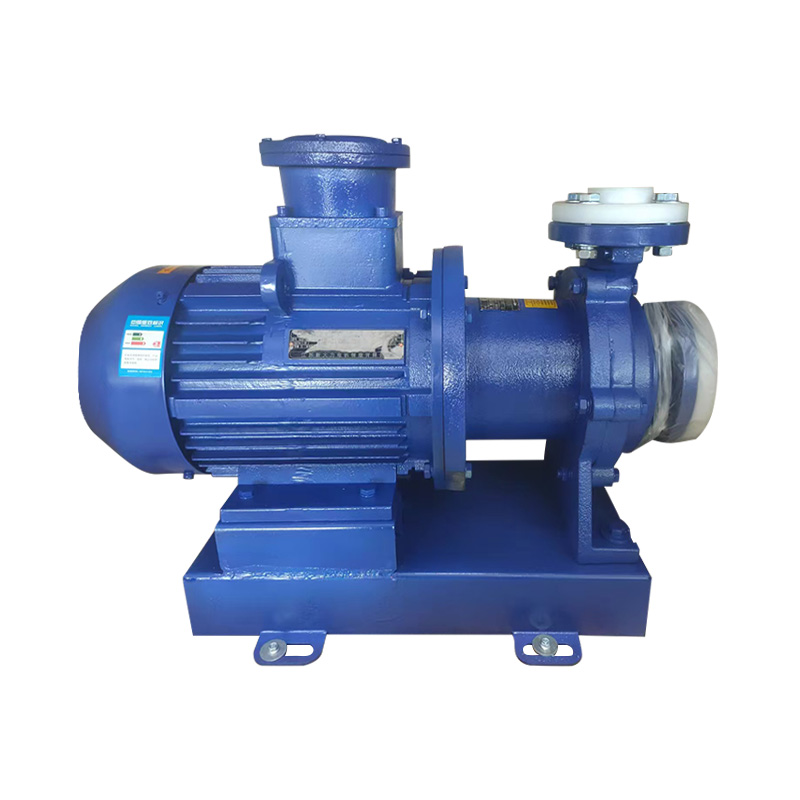
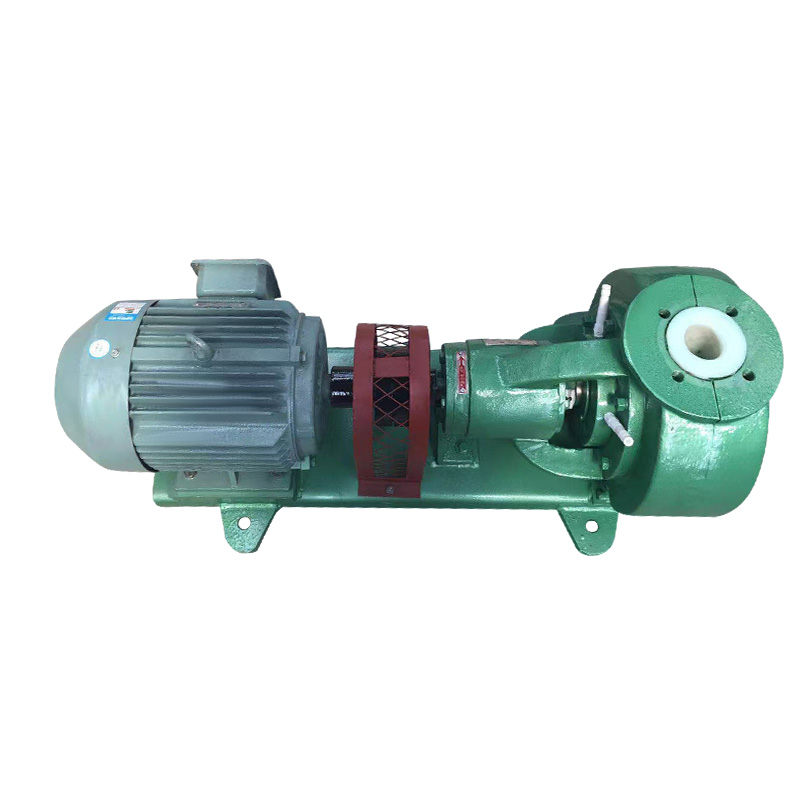
When the medium attacks even those grades, the answer is to remove metal from the wetted path entirely. Fluoroplastic lining handles hydrochloric acid, mixed acids, and ferric chloride at temperatures that would destroy standard stainless steel, and the same lining can be applied across centrifugal, submersible, or magnetic drive platforms.
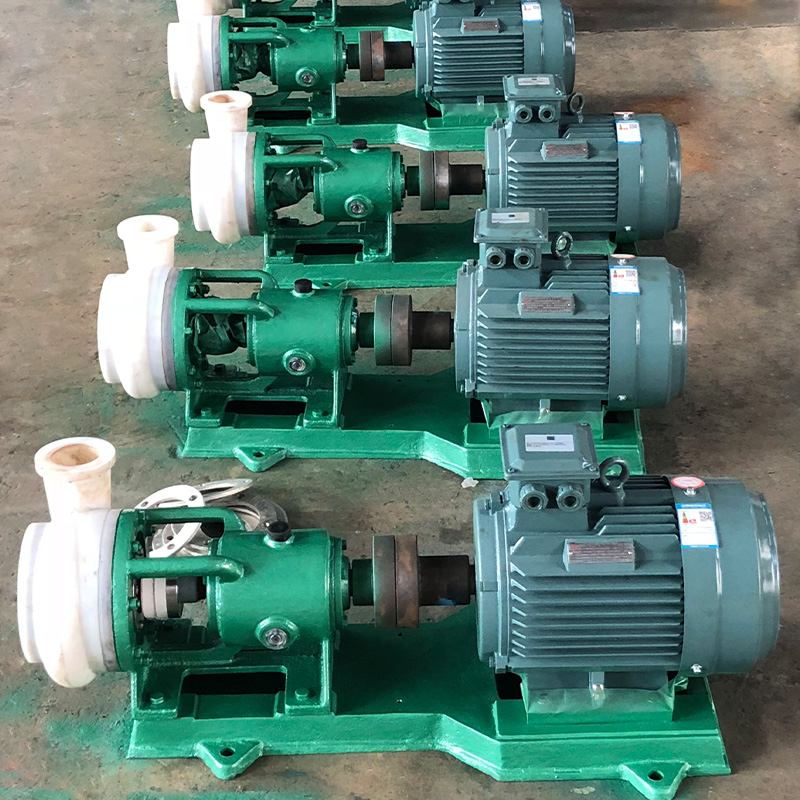 FSB Fluoroplastic Chemical Pump for Corrosive Acid ServiceFor aggressive acids and oxidizing media where metal wetted parts are unsuitable, this fluoroplastic chemical pump handles flows to 1400 m³/h.View Product →
Sizing a Chemical Process Pump Without Over-Sizing It
A chemical process pump should be sized at the worst credible operating case, then checked so that the normal case still lands inside the efficient band.
Add 10% to the calculated flow and 5% to 10% to head, but stop there. Over-sizing pushes the impeller far to the left of its best efficiency point, where internal recirculation raises vibration and loads the shaft. Keep the normal operating point between 80% and 110% of BEP, and treat anything below 70% as a design fault rather than a control problem. Viscosity is the quiet trap: a fluid at 500 cP can move the duty point by more than 20% once correction factors are applied, and heavy slurries usually need head derating plus wider running clearances.
Specified at the normal case
The pump sits at 45% of BEP on the everyday line, recirculates, and needs a bypass or a variable speed drive to stay stable. Shaft deflection and seal face wear climb within months.
Specified at the rated case
The pump sits between 80% and 110% of BEP at the normal point and still covers the upset case. Throttling losses stay low and seal life becomes predictable.
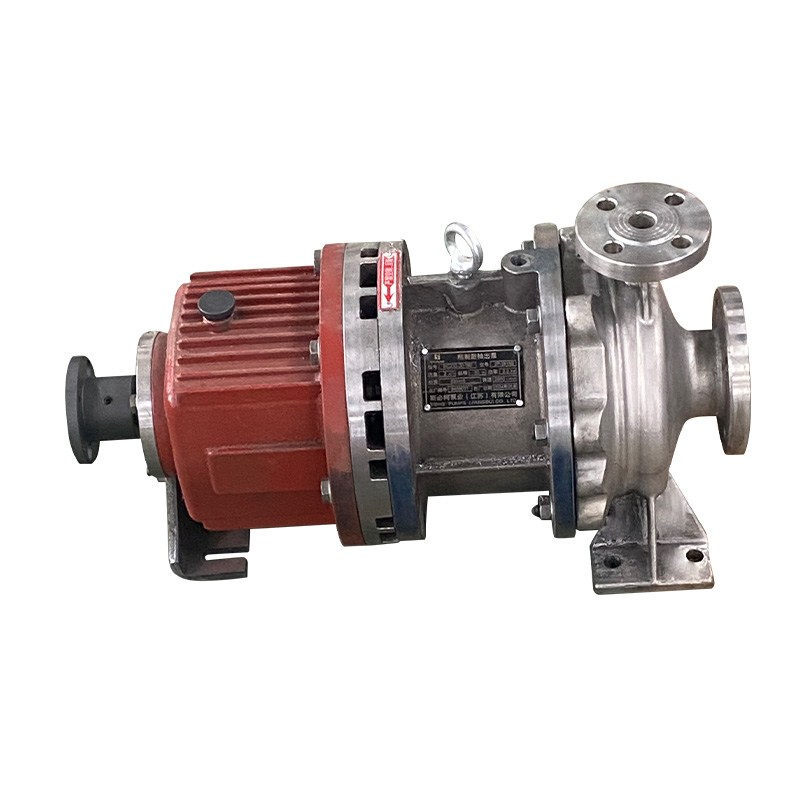
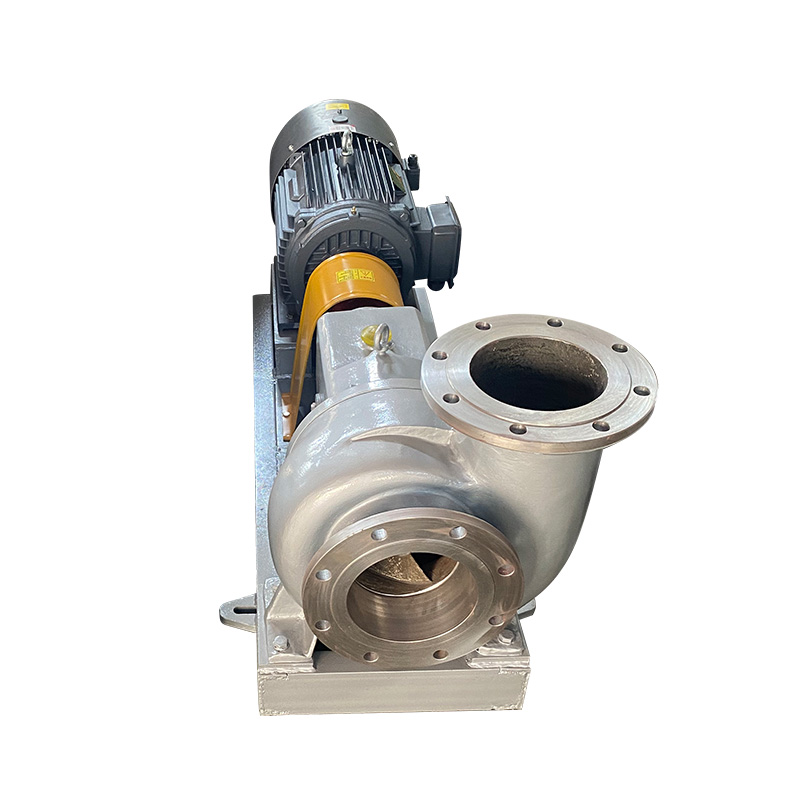
For refinery and petrochemical streams, where the rated case includes high temperature and intermittent upsets, a heavy-wall back pull-out design in the CZ petrochemical process pump family covers the middle of the flow and head range without a bespoke casting.
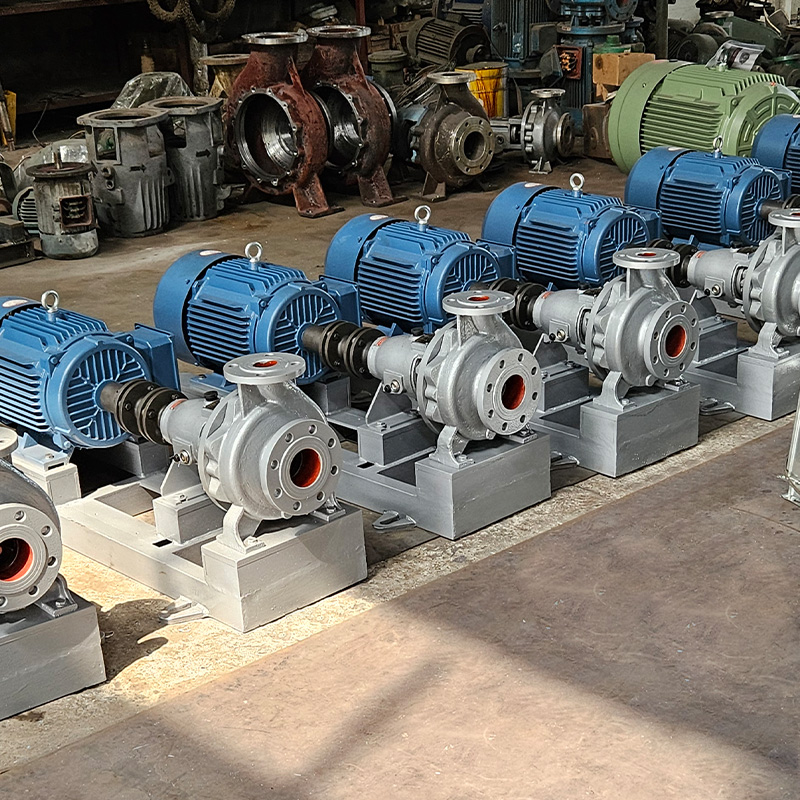 CZ Series Petrochemical Process Pump for Refinery and Chemical DutyHeavy-wall back pull-out CZ pump for refinery and petrochemical streams, covering flows to 2000 m³/h and heads to 140 m.View Product →
Seals and Containment Decide Your Maintenance Bill
Sealing, not hydraulics, causes most chemical process pump leaks and unplanned shutdowns, so the seal decision deserves the same attention as the impeller selection.
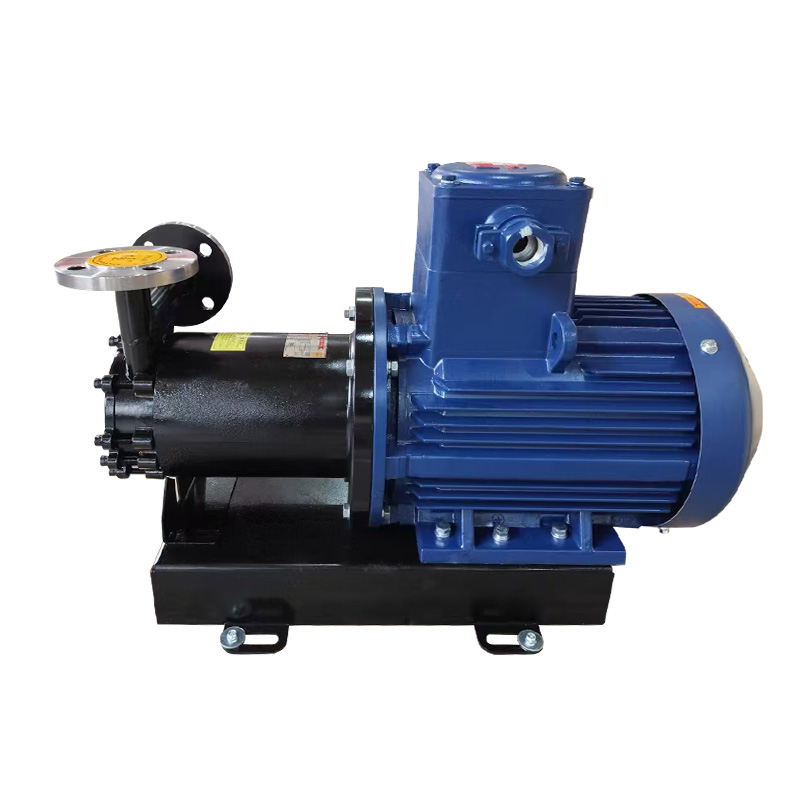
A single mechanical seal with a Plan 11 flush is adequate for clean, non-toxic fluids. Dual pressurized seals with Plan 53A or 53B are the standard answer for toxic, crystallizing, or high vapor pressure media, and they need a barrier fluid supply the plant can actually maintain. External flush, Plan 32, is common when solids exceed about 2% by weight, although flush water dilutes the product and adds an effluent load. Where a leak means a lost-time incident rather than a cleanup job, the seal plan is a safety decision as much as a maintenance one.
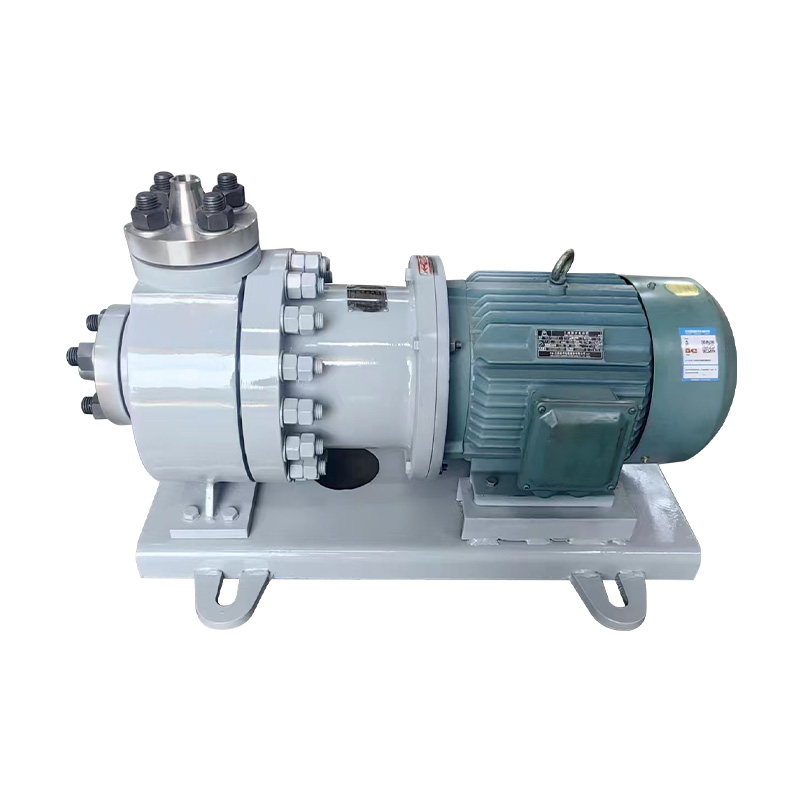
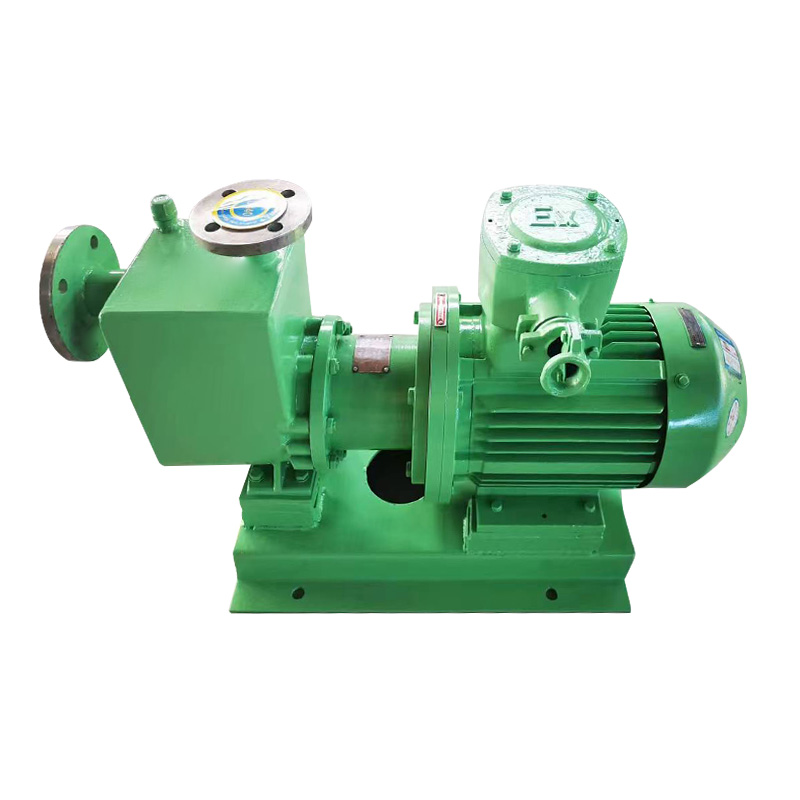
Where the seal has to be eliminated under pressure, a high-pressure magnetic drive design with a secondary containment shell keeps the medium inside the pump even if the primary shell is breached.
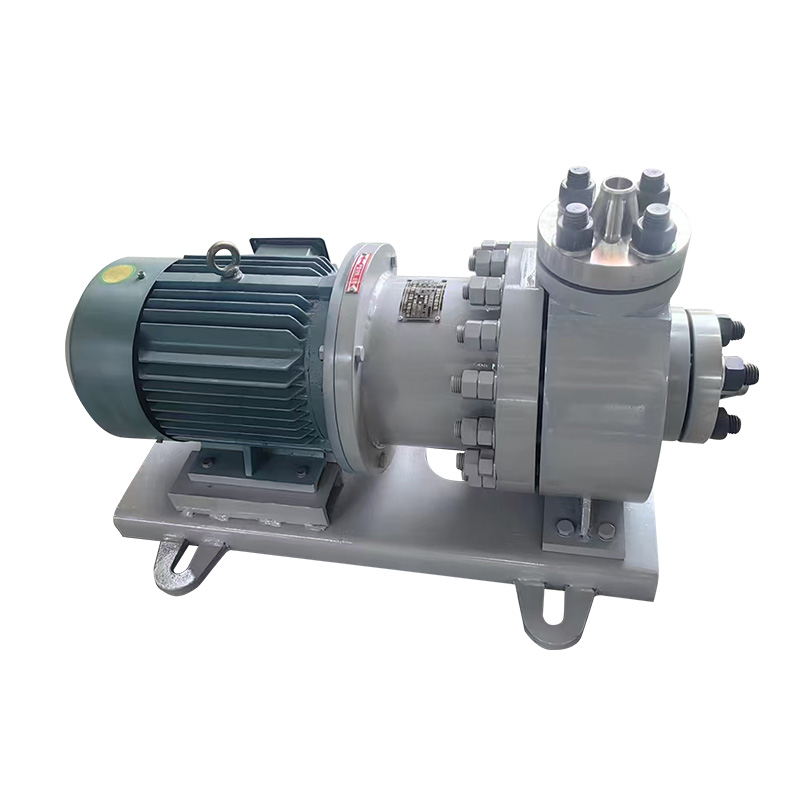 HMD High Pressure Sealless Magnetic Drive Centrifugal PumpSealless magnetic drive pump for high-pressure corrosive service, with Hastelloy C276 isolation sleeve and ratings to 25 MPa and 300°C.View Product →
A Specification Checklist That Prevents Field Failures
Seven items close the gaps that turn a sound hydraulic selection into a bad installation.
- Fluid data sheet: composition, concentration range, normal and maximum temperature, specific gravity, viscosity, vapor pressure, pH, chloride in ppm, and solids by size and percentage.
- Wetted material selection with a stated corrosion allowance, plus a note on what the medium does during cleaning and shutdown.
- Duty point: normal, rated, and minimum flow, head, NPSH available, and fluid temperature at each case.
- Seal plan, barrier or flush fluid supply, and the pressure and flow that supply can deliver.
- Standard and documentation: ISO 5199 or API 610, material certificates, and a dimensional drawing for approval.
- Testing: performance test, hydrostatic test at 1.5 times design pressure, and vibration readings across the operating range.
- Spares: seal faces, wear rings, shaft sleeve, and a bearing set matched to the real duty.
Send the completed sheet to the manufacturer before the quotation stage rather than after. The contact page lists the phone, mobile, and email channels used for technical enquiries, and a short conversation about the medium usually prevents a costly second round of selection.
Chemical Process Pump Questions Engineers Ask Most
What is the difference between a chemical process pump and an ordinary centrifugal pump?
A process pump is built for continuous duty on corrosive or hazardous fluids, so it carries a corrosion allowance, a larger seal chamber, back pull-out construction, and bearings rated for 24-hour operation. An ordinary centrifugal pump is designed for water-like fluids at ambient conditions and has none of those provisions.
Should I choose a magnetic drive pump or a mechanical seal pump?
Choose a magnetic drive when the fluid is toxic, volatile, or expensive and zero leakage is the priority, provided the medium is clean and the temperature stays inside the magnet limit. Choose a mechanical seal with a documented flush plan when solids are present, when viscosity is high, or when the duty runs close to the dry-running boundary.
What NPSH margin should a chemical process pump have?
Keep NPSH available at least 1 m above NPSH required at rated flow, and increase that margin for high-energy pumps or fluids near their vapor pressure. A thin margin at rated flow disappears at the minimum flow case, which is where cavitation damage usually begins.
How long should a chemical process pump last?
With correct material selection, a stable duty point between 80% and 110% of BEP, and a maintained seal plan, expect five to ten years on the casing and impeller, with seal replacement at roughly 8,000 to 20,000 running hours. Shorten those numbers sharply if any of the three is wrong.